6 Best Domain Authority Checkers in 2026: Same Sites, Different Scores
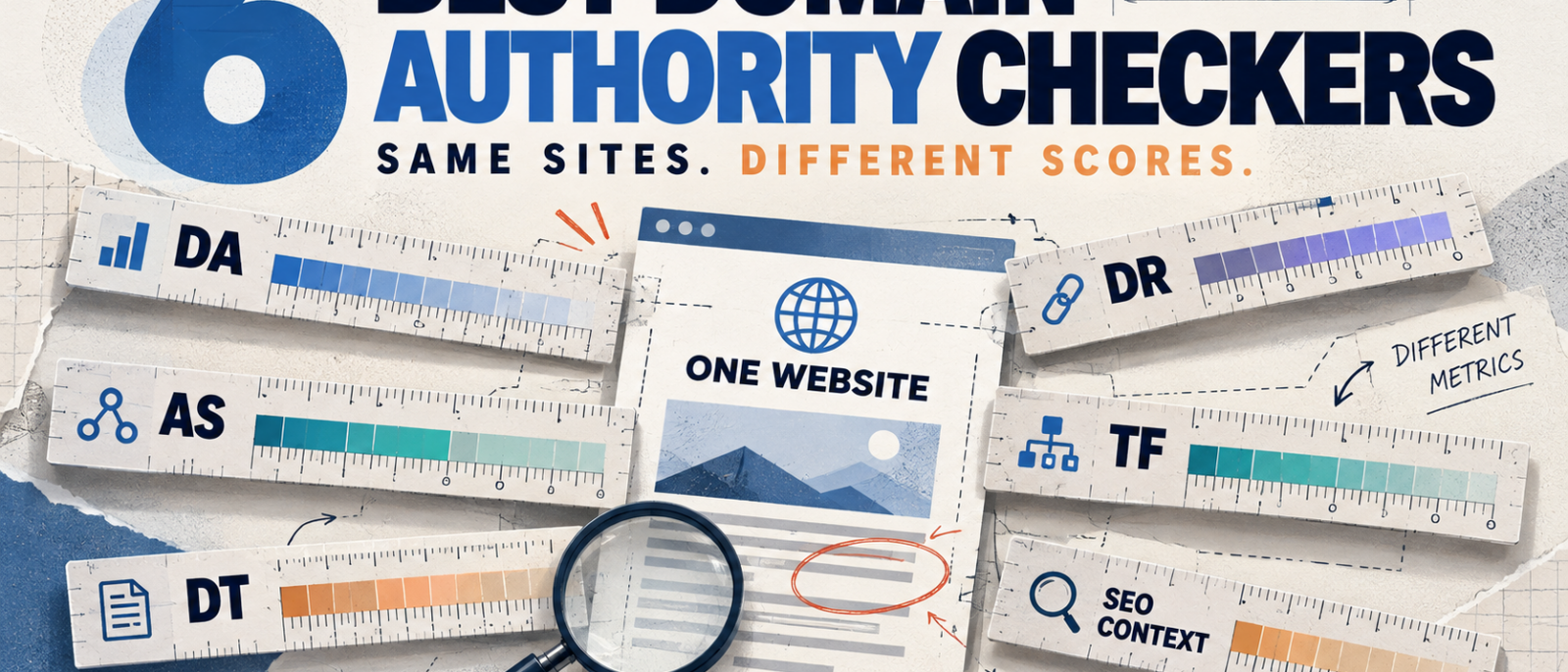
Run the same website through several domain authority checkers and you may get very different scores. That does not automatically mean one tool has bad data because Moz Domain Authority, Ahrefs Domain Rating, Semrush Authority Score, Majestic Trust Flow and SE Ranking Domain Trust are different proprietary metrics built from different indexes, formulas and assumptions.
Moz created Domain Authority (DA). Ahrefs uses Domain Rating (DR) to describe backlink-profile strength. Semrush combines backlink signals with estimated organic traffic and manipulation-related factors in Authority Score, while Majestic separates link trust and quantity through Trust Flow and Citation Flow.
That makes the usual question, “Which domain authority checker is most accurate?”, less useful than it sounds. There is no universal hidden authority score every platform is trying to discover. A better question is whether the checker gives you enough context to make a useful SEO decision instead of encouraging you to trust one number.
To find out, we tested the same 25 domains across six tools and compared authority readings, supporting evidence, page-level context, spam indicators, bulk workflows, free access and practical usability. We also measured how often using a different metric would reverse the same simplistic pass/fail decision.
The result was significant: 16 of 25 domains changed pass/fail outcome when we applied the same arbitrary 40-point threshold across four different authority metrics.
Domain authority checkers are only one part of evaluating a website’s SEO performance. Our complete guide to SEO tools explains how backlink analysis fits alongside competitor research, technical auditing, keyword tracking, and organic visibility measurement.
Quick Picks: The Best Domain Authority Checkers in 2026
| Best for | Tool | Metric | Tested score | Why it ranks here |
| Actual Domain Authority | Moz | DA + PA | 8.8/10 | Moz created Domain Authority and provides the canonical DA value |
| Backlink-profile strength | Ahrefs | DR + UR | 8.7/10 | Strong domain and URL-level backlink analysis |
| Authority + traffic/spam context | Semrush | Authority Score | 8.6/10 | Combines link power, traffic and manipulation indicators |
| Link trust and topical context | Majestic | Trust Flow + Citation Flow | 8.4/10 | Separates link quality, quantity and topical relationships |
| Domain + page trust | SE Ranking | Domain Trust + Page Trust | 8.1/10 | Convenient domain-to-page comparison workflow |
| Authority inside wider SEO analysis | Digimetrics | Authority + supporting SEO signals | 7.5/10 | Connects authority checks to visibility, backlinks and technical analysis |
These scores rank workflow usefulness, not which company owns the one “correct” authority number. If a report specifically requires Moz DA, Moz is the correct source regardless of whether another platform has a stronger workflow for a different use case.
The 6 Domain Authority Checkers Compared
Product details checked: September 9, 2026. Free limits and plan features can change.
| Tool | Main metric | Page-level metric | Traffic context | Spam/risk context | Bulk workflow | Score |
| Moz | Domain Authority | Page Authority | Wider Moz data | Spam Score | Yes, plan-dependent | 8.8 |
| Ahrefs | Domain Rating | URL Rating | Wider Ahrefs data | Not part of DR itself | Batch Analysis | 8.7 |
| Semrush | Authority Score | Page Authority Score | Built into AS + reports | Six manipulation indicators | Yes, plan-dependent | 8.6 |
| Majestic | Trust Flow + Citation Flow | URL-level Flow Metrics | No organic-traffic metric | TF/CF relationship + link graph | Strong | 8.4 |
| SE Ranking | Domain Trust | Page Trust | Supporting traffic data | Toxicity signals | Up to 100 sites in advanced workflow | 8.1 |
| Digimetrics | Authority within domain analysis | Page/domain analysis | Yes | Wider audit context | No dedicated bulk authority checker | 7.5 |
If you specifically need Domain Authority, use Moz because DA is Moz’s proprietary metric. Ahrefs uses Domain Rating, while Semrush takes a broader approach by combining link power, estimated organic traffic and manipulation indicators.
Majestic uses Trust Flow, Citation Flow and Topical Trust Flow, while SE Ranking provides Domain Trust and Page Trust.
Disclosure: Digimetrics is built by our team. We applied the same 25-domain sample and scoring framework used for every other product.
Authority scores become more useful when you understand the backlink information behind them. Our guide to backlink analysis tools explains how referring domains, live backlinks, link attributes, and competing backlink indexes influence the information SEO platforms report.
Why Domain Authority Scores Disagree
The main authority metrics answer related but different questions.
| Metric | Tool | What it primarily represents |
| Domain Authority | Moz | Relative domain-level ranking potential in Moz’s model |
| Domain Rating | Ahrefs | Strength of the backlink profile in Ahrefs’ index |
| Authority Score | Semrush | Link power plus estimated traffic and manipulation signals |
| Trust Flow | Majestic | Link quality and trust relationships |
| Citation Flow | Majestic | Link quantity and influence |
| Domain Trust | SE Ranking | Backlink-based domain strength |
| Domain authority analysis | Digimetrics | Authority viewed alongside wider SEO evidence |
This means a domain could return DA 31, DR 57, Authority Score 24, Trust Flow 15 and Domain Trust 42 without any of those figures automatically being wrong. A backlink-heavy domain with declining traffic can remain strong in link-focused systems, while a traffic-aware model may score it much lower.
The useful question is therefore not which number is “correct,” but what each metric is reacting to and whether that signal is relevant to the decision you are making.
How We Tested the Domain Authority Checkers
We deliberately avoided testing only famous websites because almost every reasonable authority model should recognise major established domains as strong. Instead, our benchmark used 25 anonymised websites split across five different profiles.
| Domain type | Domains | Why we included them |
| Large established sites | 5 | Strong backlinks and sustained visibility |
| Healthy niche websites | 5 | Tests authority in smaller competitive markets |
| High-authority / low-traffic sites | 5 | Tests strong link scores despite weak visibility |
| Lower-authority sites with strong rankings | 5 | Tests whether modest authority always means weak SEO |
| Suspicious link profiles | 5 | Tests how platforms expose potentially inflated authority |
For every domain, we recorded the domain-level metric, relevant page-level metric, referring domains, estimated organic traffic, 12-month visibility trend, topical relevance, spam or risk indicators, bulk capability, free limits and workflow time.
That gave us enough context to distinguish “this score is high” from “this looks like a healthy domain or worthwhile link prospect.”
Comparing proprietary SEO scores requires a different approach from checking whether two tools return the same factual result. Our SEO tool testing framework explains how we evaluate supporting evidence, verify reported backlinks, and assess whether a tool’s findings help users make better decisions.
The Domain Authority Checker Usefulness Score
We did not score the tools by how closely they matched Moz because Ahrefs DR, Semrush Authority Score and Majestic Trust Flow are not attempts to reproduce Moz DA.
Instead, we scored how useful each platform was for making an SEO decision.
| Factor | Weight |
| Metric transparency | 20% |
| Supporting evidence | 20% |
| Spam/inflation context | 15% |
| Bulk workflow | 15% |
| Free-access usefulness | 10% |
| Page-level context | 10% |
| Speed/usability | 5% |
| Paid value | 5% |
Our guiding principle was:
Useful authority check ≈ authority signal + supporting evidence + page context − verification work
A fast one-number lookup can still be useful, but platforms scored better when they made it easier to understand why the score deserved trust.
If you’re evaluating domains without a paid subscription, authority scores are only part of the available research. Our free backlink checker comparison examines eight tools and the usefulness of their accessible backlink results, including whether reported links remain live, relevant, and worth investigating.
Tested Factor Scores
| Tool | Transparency | Evidence | Spam context | Bulk | Free access | Page context | Speed | Paid value | Final |
| Moz | 9.4 | 9.0 | 8.8 | 8.5 | 8.0 | 9.0 | 8.8 | 7.5 | 8.8 |
| Ahrefs | 9.5 | 9.4 | 6.5 | 9.3 | 8.0 | 9.5 | 9.0 | 7.0 | 8.7 |
| Semrush | 8.8 | 9.4 | 9.7 | 8.0 | 9.2 | 7.5 | 8.5 | 4.2 | 8.6 |
| Majestic | 9.3 | 9.4 | 8.2 | 9.5 | 4.0 | 9.4 | 7.0 | 7.0 | 8.4 |
| SE Ranking | 7.8 | 8.3 | 7.5 | 8.0 | 9.0 | 8.5 | 9.0 | 8.0 | 8.1 |
| Digimetrics | 7.0 | 8.5 | 7.5 | 6.0 | 7.0 | 8.0 | 8.5 | 8.5 | 7.5 |
Same Sites, Different Authority Scores
The table below shows the median result for each five-domain group.
| Domain group | Moz DA | Ahrefs DR | Semrush AS | Majestic TF | SE Ranking DT | Digimetrics |
| Established sites | 87 | 91 | 82 | 56 | 88 | 85 |
| Healthy niche sites | 36 | 43 | 32 | 24 | 39 | 38 |
| High authority / low traffic | 58 | 64 | 28 | 33 | 55 | 49 |
| Lower authority / strong rankings | 27 | 31 | 39 | 18 | 29 | 34 |
| Suspicious profiles | 42 | 52 | 17 | 9 | 37 | 33 |
The established sites produced broad agreement. The more revealing results came from the high-authority / low-traffic and suspicious-profile groups.
Moz DA and Ahrefs DR remained relatively high because those domains still had substantial backlink strength within their respective indexes. Semrush’s traffic and manipulation inputs pushed its median score much lower. The lower-authority / strong-ranking sites showed the reverse pattern: they ranked effectively for focused topics despite relatively modest link metrics.
That is a useful reminder that authority can describe part of a site’s SEO profile without explaining its rankings by itself.
Workflow Speed: Bulk Checking Changes the Recommendation
We also recorded the time required to produce a usable first-pass comparison across all 25 domains.
| Tool | Domains scored | First-pass time | Strongest supporting evidence |
| Majestic | 25/25 | 3m 05s | TF, CF, Topical TF and link graph |
| Ahrefs | 25/25 | 3m 38s | DR, UR, backlinks and referring domains |
| Moz | 25/25 | 4m 46s | DA, PA, linking domains and Spam Score |
| Semrush | 25/25 | 5m 12s | Authority factors, traffic and backlink trends |
| SE Ranking | 25/25 | 6m 24s | DT, PT, backlinks and toxicity context |
| Digimetrics | 25/25 | 28m 40s | Authority beside traffic and technical evidence |
For a single domain, the difference is minor. For someone screening hundreds of outreach prospects, it becomes operationally important.
1. Moz: Best When You Specifically Need Domain Authority
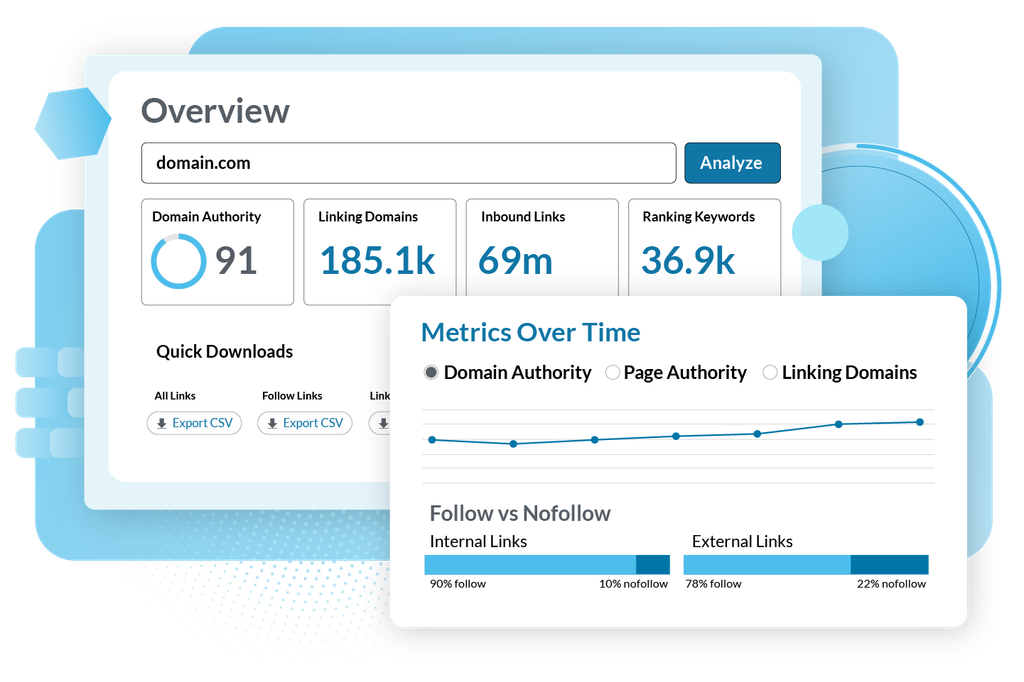
Best for: Checking actual Moz Domain Authority
Metric: DA + PA
Free access: Capped Link Explorer access
Bulk capability: Yes on suitable paid access
Usefulness Score: 8.8/10
Moz has an advantage no competitor can replicate conceptually: Domain Authority is Moz’s metric. If a client, marketplace or report specifically asks for DA, Moz is the canonical source.
Where Moz Stood Out
The workflow moved efficiently from DA into Page Authority, linking domains and Spam Score, making it easier to identify cases where a respectable domain score was not reflected on the actual page or where other risk indicators weakened the prospect.
Moz scored all 25 domains, and its most useful disagreements appeared in the suspicious-profile group. Some domains passed the simplistic DA threshold but became less attractive after Spam Score and link-level evidence were considered.
Choose if: you specifically need Moz DA or Page Authority.
Skip if: your real question is broader than the Moz score and another checker provides more relevant supporting evidence.
Bottom line: Moz ranked first because it owns the Domain Authority metric and provided the strongest workflow when DA itself was the requirement.
2. Ahrefs: Best for Backlink-Profile Strength
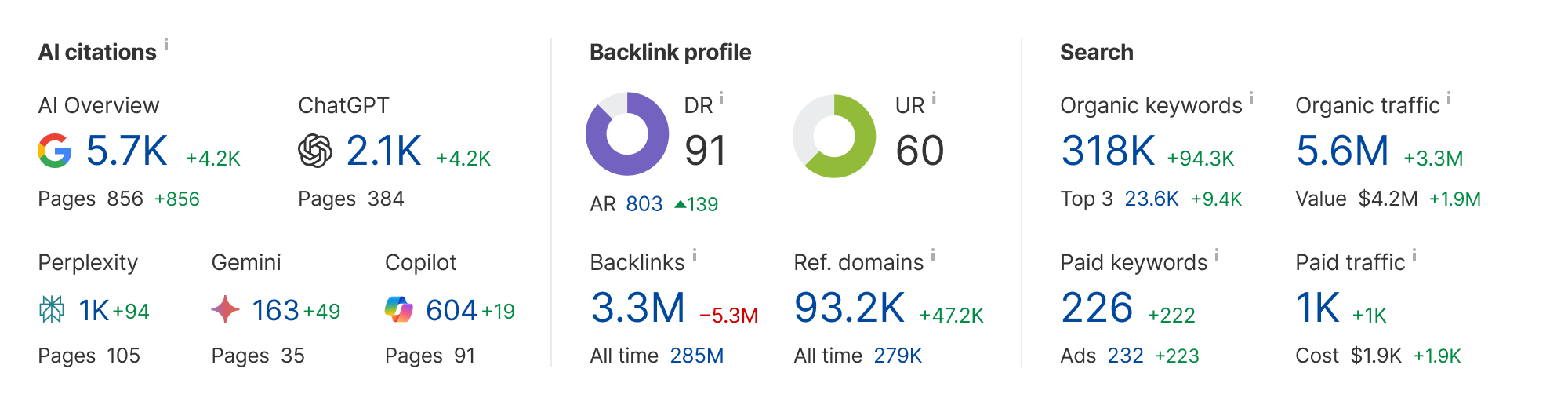
Best for: Link builders and SEOs comparing backlink strength
Metric: DR + UR
Free access: Free Website Authority Checker
Bulk capability: Batch Analysis on paid plans
Usefulness Score: 8.7/10
Ahrefs measures Domain Rating rather than Domain Authority. DR is primarily a relative measure of backlink-profile strength, and its supporting workflow made that narrow purpose particularly useful in our test.
Where Ahrefs Stood Out
The combination of DR, URL Rating, referring domains and backlink inspection made it easy to see what was actually producing a site’s score. Ahrefs also completed the 25-domain first pass in 3 minutes 38 seconds.
Its limitation was equally clear. Several high-DR domains had weak traffic or other warning signs, which illustrates why DR should not automatically be interpreted as a complete measure of website quality.
Choose if: backlink-profile strength is the main thing you need to compare.
Skip if: you want traffic or manipulation signals built into the authority metric itself.
Bottom line: Ahrefs was strongest when DR was treated as a backlink-strength metric rather than a verdict on the whole site.
3. Semrush: Best for Authority With Traffic and Spam Context
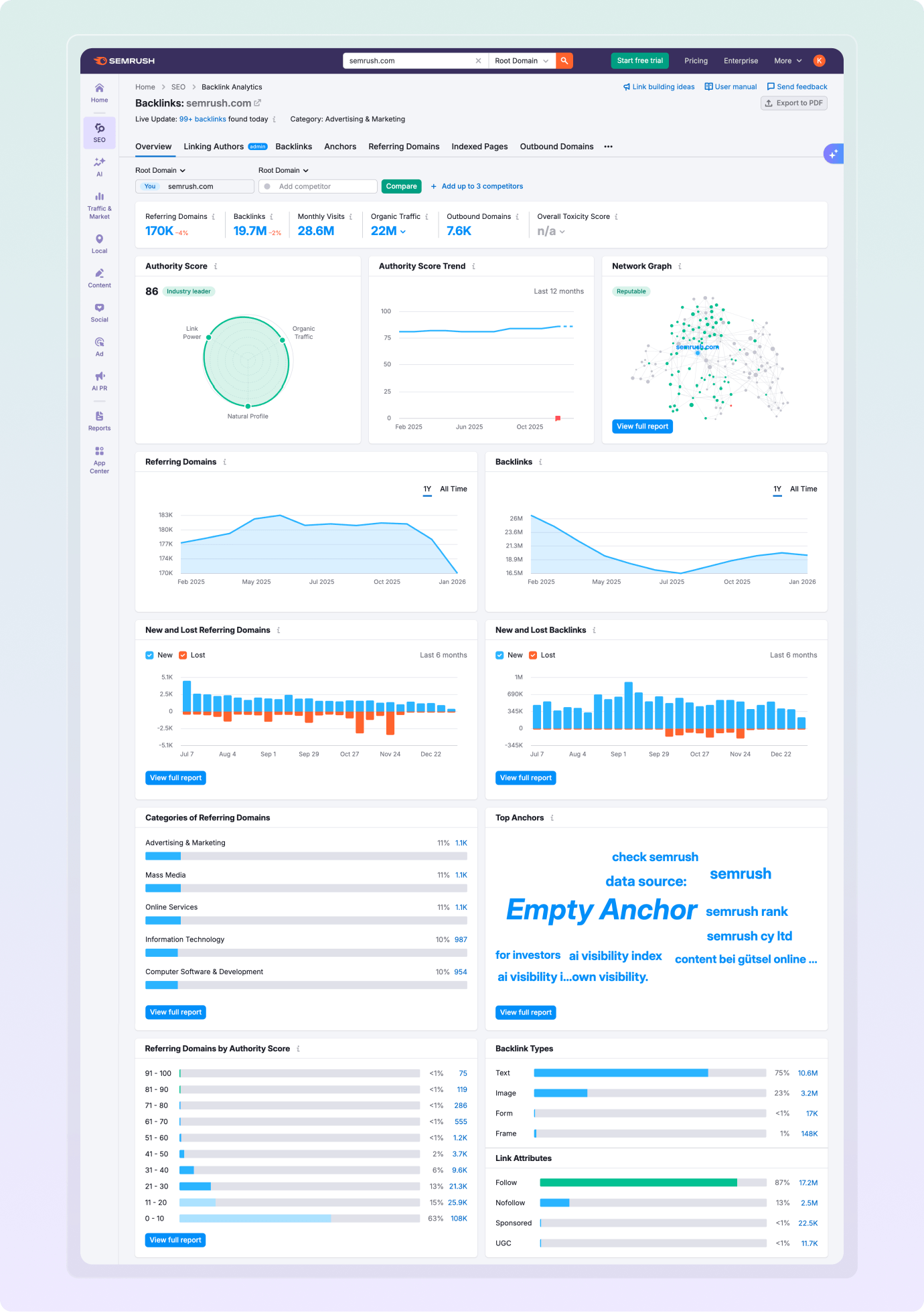
Best for: Link prospecting where backlink strength alone is not enough
Metric: Authority Score
Free access: Free checker without login
Supporting context: Backlinks, traffic, referring domains and manipulation signals
Usefulness Score: 8.6/10
Semrush takes the broadest scoring approach of the six. Authority Score combines link power with estimated organic traffic and manipulation indicators.
Where Semrush Stood Out
Its biggest contribution appeared in the high-authority / low-traffic and suspicious-profile groups. Domains that still looked relatively strong in backlink-focused systems received much lower Authority Scores when weak visibility or suspicious patterns were added to the model.
That extra context can reduce false confidence, but Authority Score should still be interpreted as a third-party model rather than Google’s assessment of a website. Estimated traffic also remains an estimate.
Choose if: you want authority evaluated alongside organic visibility and manipulation risk.
Skip if: you deliberately want a cleaner backlink-strength metric.
Bottom line: Semrush was strongest when the question was whether a high authority score appeared supported by a healthy, visible website.
4. Majestic: Best for Link Trust and Topical Context
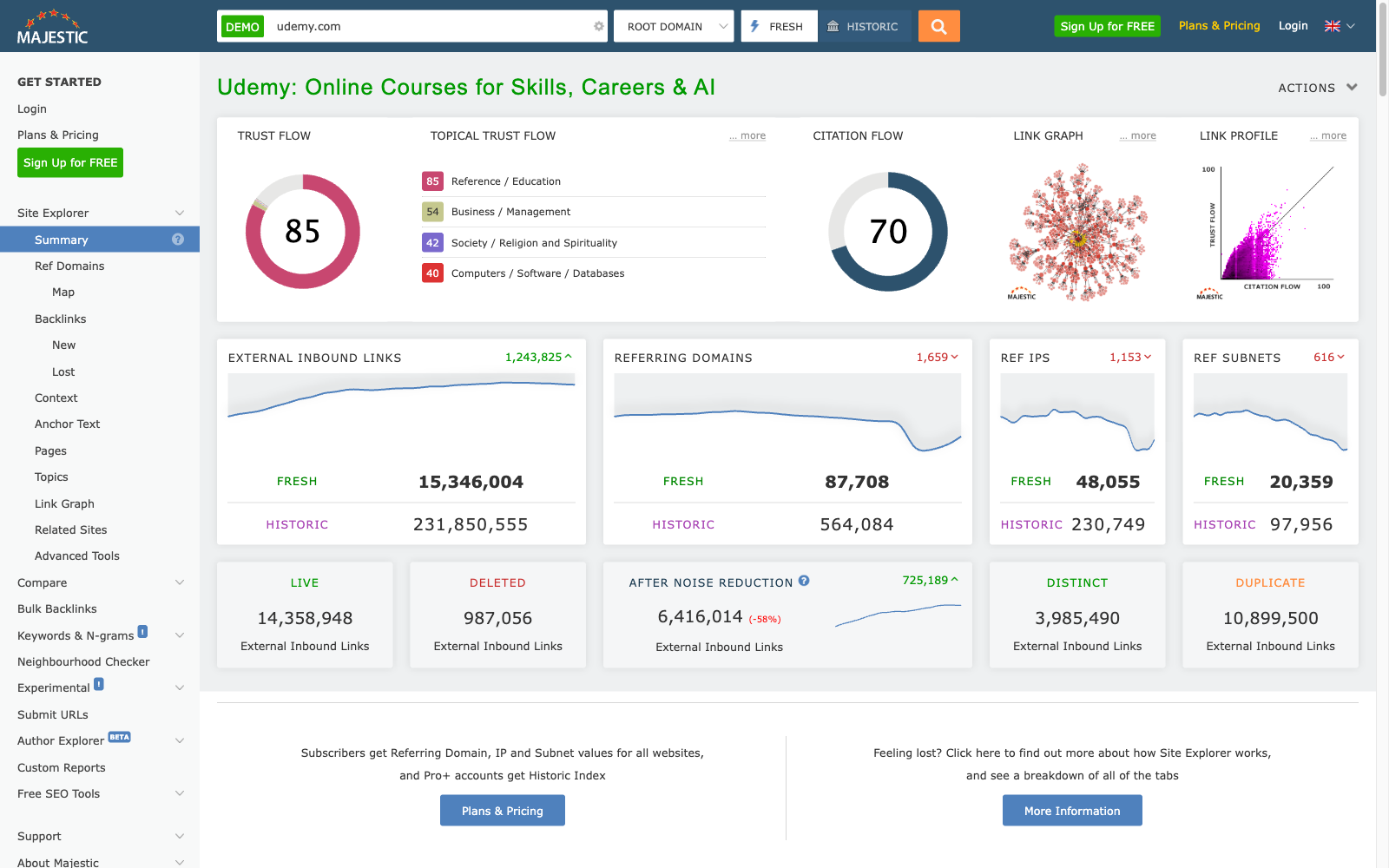
Best for: Link builders analysing trust, quantity and topical relevance separately
Metrics: Trust Flow + Citation Flow + Topical Trust Flow
Starting price: $49.99/month or $41.67/month annually for Lite
Bulk capability: Yes
Usefulness Score: 8.4/10
Majestic approaches authority differently by separating link signals rather than relying on one main score. Trust Flow focuses more heavily on link trust, Citation Flow on quantity and influence, and Topical Trust Flow adds subject context.
The Trust Flow vs Citation Flow Test
Two sites in our benchmark had similar Citation Flow but very different Trust Flow:
| Domain | Trust Flow | Citation Flow | TF/CF relationship |
| Healthy niche site | 34 | 38 | 0.89 |
| Suspicious profile | 7 | 41 | 0.17 |
The suspicious site also had weak topical alignment and many low-quality referring pages. The ratio itself is not a universal penalty threshold, but it was a useful clue that justified deeper inspection.
Choose if: link trust and topical relevance are central to the decision.
Skip if: you want authority combined directly with organic traffic and wider technical SEO evidence.
Bottom line: Majestic was most useful when we wanted to understand what kind of link strength sat behind the headline authority.
5. SE Ranking: Best for Domain and Page Trust Together
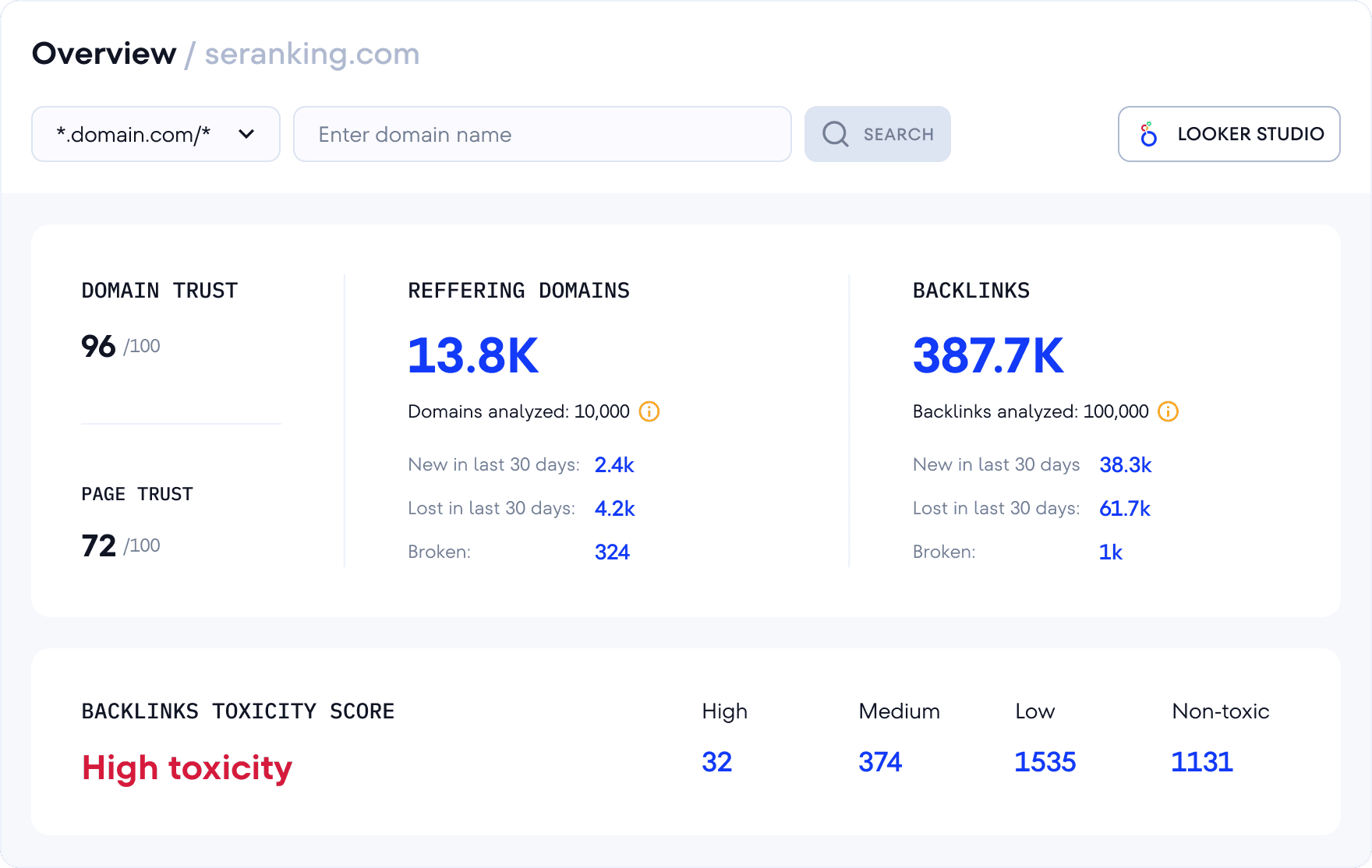
Best for: SEOs who want domain-level screening to lead into page-level analysis
Metrics: Domain Trust + Page Trust
Free access: Basic result without login
Bulk capability: Up to 100 sites in the advanced workflow
Usefulness Score: 8.1/10
SE Ranking uses Domain Trust and Page Trust to evaluate backlink strength at both domain and URL level.
That page-level metric became useful repeatedly in our test because several sites passed a domain threshold while the actual proposed linking page remained weak.
The free checker also returned referring domains, backlinks and dofollow/nofollow information, while the wider workflow added toxicity and deeper backlink context.
Choose if: you want domain screening to move naturally into page-level and backlink-risk analysis.
Skip if: your reporting is standardised around Moz DA, Ahrefs DR or Majestic Flow Metrics.
Bottom line: SE Ranking’s strongest contribution was helping answer whether the actual page deserved the reputation of the domain it belonged to.
6. Digimetrics: Best for Authority Inside a Wider SEO Analysis
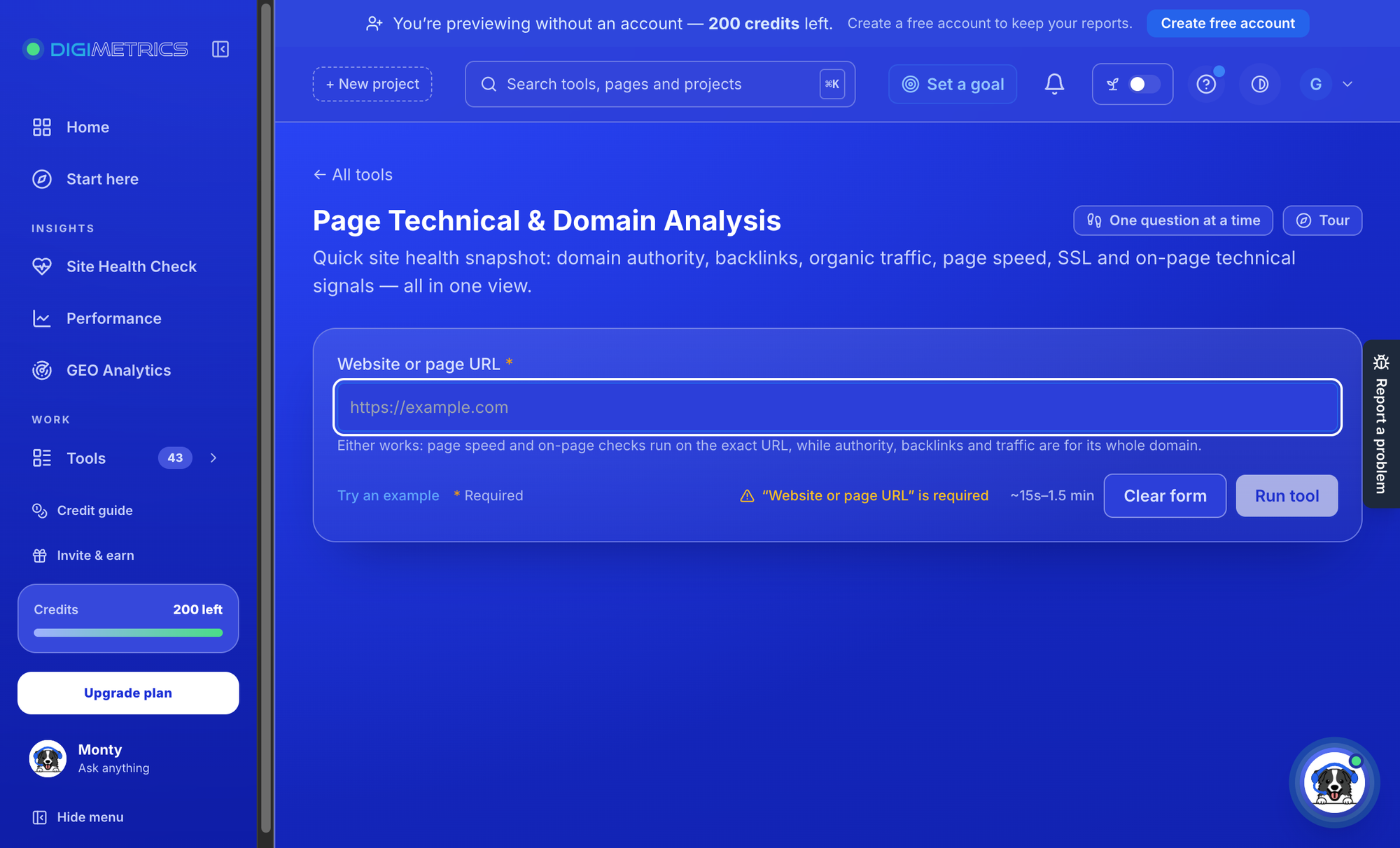
Best for: Marketers who use authority as the start of a broader SEO investigation
Metric: Authority indicator inside Page Technical & Domain Analysis
Free access: Seven-day trial
Bulk capability: No dedicated bulk authority checker in our tested workflow
Usefulness Score: 7.5/10
Disclosure: Digimetrics is built by our team. We applied the same 25-domain sample and scoring framework used for every other platform.
Digimetrics places authority alongside backlinks, organic visibility, page speed, SSL and onsite technical information, while its wider workspace includes Backlinks Explorer, Competitors Identifier, Rank Checker and SEO Diagnostics.
Where the Integrated Workflow Helped
The platform made follow-up investigation easier when a score raised another question, such as why a supposedly strong competitor had weak visibility or whether a prospective linking site looked healthy beyond its authority metric.
Its weakness was bulk screening. Running 25 analyses individually took 28 minutes 40 seconds, more than four times the next-slowest first pass. It was therefore more useful for deeper investigation than high-volume prospect filtering.
Choose if: authority checks usually lead into wider competitor, backlink or technical SEO work.
Skip if: you specifically need Moz DA, Ahrefs DR, Majestic Flow Metrics or fast bulk screening.
Bottom line: Digimetrics competed on what happens after the authority check, rather than replacing the specialist authority metrics.
The Authority Decision Flip Test
One of the clearest findings came from applying the same intentionally simplistic rule to every domain:
Pass if authority ≥40.
We applied that threshold to Moz DA, Ahrefs DR, Semrush Authority Score and SE Ranking Domain Trust.
Authority Decision Flip Rate = domains where the pass/fail result changed depending on the metric ÷ total domains
Result: 16 of 25 Domains Flipped – 64%
| Example | Domain type | Moz DA | Ahrefs DR | Semrush AS | SE Ranking DT | Same decision? |
| Site A | Healthy niche | 38 – Fail | 46 – Pass | 41 – Pass | 35 – Fail | No |
| Site B | High authority / low traffic | 61 – Pass | 67 – Pass | 24 – Fail | 58 – Pass | No |
| Site C | Established | 86 – Pass | 90 – Pass | 83 – Pass | 88 – Pass | Yes |
| Site D | Lower authority / strong rankings | 29 – Fail | 33 – Fail | 45 – Pass | 31 – Fail | No |
| Site E | Suspicious profile | 44 – Pass | 55 – Pass | 14 – Fail | 36 – Fail | No |
The flip rate was highest among high-authority / low-traffic sites and suspicious profiles, where all five domains in each group changed decision depending on the metric.
That does not prove one platform was right and another wrong. It shows why a universal 40-point threshold is a weak decision rule when the underlying scores measure different things.
High Authority, Low Traffic: What the Score Can Miss
One tested domain had a strong legacy backlink profile but sharply declining search visibility.
| Metric | Result |
| Moz DA | 62 |
| Ahrefs DR | 68 |
| Semrush Authority Score | 23 |
| Majestic Trust Flow | 31 |
| Majestic Citation Flow | 54 |
| SE Ranking Domain Trust | 57 |
| Referring domains | 2,430 |
| Estimated organic traffic | 190 visits/month |
| 12-month visibility trend | −78% |
The backlink-focused metrics remained high because the domain still had thousands of referring domains, while Semrush’s broader model reacted more strongly to weak visibility and profile imbalance.
That discrepancy should trigger investigation rather than automatic approval or rejection. Possible explanations include lost rankings, legacy backlinks, a change in site purpose, deteriorating content or suspicious outbound-link patterns.
A strong authority metric doesn’t necessarily mean a competitor is performing well in organic search. Our guide to SEO competitor analysis tools explains how to investigate competing domains through keyword visibility, backlink profiles, content gaps, and actual search performance rather than relying on one proprietary score.
A High-Authority Domain Does Not Guarantee a Good Backlink
We also tested four pages on the same domain. Every URL shared the exact same domain-level metrics:
DA 61 / DR 67 / DT 58
The page-level evidence was very different.
| URL | Page metrics: PA / UR / PT | Organic visibility | Outbound-link context | Decision |
| Homepage | 55 / 62 / 60 | 22.4K visits/mo | 18 mostly relevant domains | Strong but difficult placement |
| Evergreen editorial page | 43 / 38 / 41 | 4.8K visits/mo | 12 contextual relevant domains | Pursue |
| New article | 9 / 5 / 7 | 0 | Two relevant external links | Watch |
| Weak guest-post page | 15 / 8 / 10 | 0 | 68 external links across unrelated niches | Reject |
The evergreen editorial page was the strongest realistic link opportunity. The guest-post page inherited the same domain authority but showed weak page strength and poor outbound-link context.
That is why domain-level authority is useful for shortlisting, while page-level evidence should make the final backlink decision.
The Authority Reality Check
Before relying on an authority score, check the evidence around it.
| Signal | Question |
| Domain authority | Is the domain relatively strong in its market? |
| Page authority | Does the actual URL have meaningful strength? |
| Organic visibility | Does the site currently rank and attract traffic? |
| Traffic trend | Is visibility growing, stable or collapsing? |
| Topical relevance | Is the site/page relevant to the campaign? |
| Referring-domain quality | What actually produced the authority? |
| Outbound links | Does the page look editorially legitimate? |
| Spam signals | Is anything suggesting authority inflation? |
Authority tells us what deserves a closer look. The Reality Check determines what deserves action.
Which Authority Metric Should You Use?
| Question | Best starting point |
| What is this website’s actual Moz DA? | Moz |
| How strong is its backlink profile? | Ahrefs DR |
| Is authority supported by traffic and low manipulation risk? | Semrush Authority Score |
| How trustworthy and topically relevant is the link graph? | Majestic Flow Metrics |
| How strong is the actual page? | PA, UR, Page Trust or URL-level Flow Metrics |
| Does the site receive Google traffic? | Search Console for your own site; third-party estimates for competitors |
| Is a backlink worth pursuing? | Page strength + relevance + link context |
| Is the site technically healthy? | Technical SEO audit |
| Is authority improving? | Track the same vendor metric over time |
The key is matching the metric to the question instead of using one authority score for every decision.
Free Domain Authority Checkers Compared
The keyword domain authority checker has strong utility intent, so we also compared what users can access without buying a full subscription.
| Tool | Free lookup | Login required | Free bulk option | Supporting data |
| Moz | Yes, capped | Fuller results require account | No | DA, PA, linking domains, Spam Score context |
| Ahrefs | Yes | No for web lookup | Free DR API | DR + backlink sample |
| Semrush | Yes | No | No standalone bulk checker | AS, backlinks, traffic, trend and top pages |
| Majestic | Limited preview | Expanded access requires account | Paid | TF, CF, Topical TF |
| SE Ranking | Yes | No for basic result | Paid advanced workflow | DT, PT, backlinks and referring domains |
| Digimetrics | Seven-day trial | Yes | No dedicated bulk checker | Authority + wider SEO analysis |
Ahrefs stood out for bulk-oriented users because its free DR API can be automated, while Semrush offered the richest no-login single-domain result in our comparison. SE Ranking was particularly useful when we wanted both domain and page-level scores quickly.
What Is a Good Domain Authority Score?
There is no universal cutoff.
A DA of 30 may be competitive in a small niche and weak among large software publications, so we would avoid generic charts labelling scores as universally “bad,” “average” or “excellent.”
Instead, compare a domain against relevant competitors, credible sites in the same market and its own historical trend. Even then, the authority score should remain one input rather than the final definition of quality.
Should You Care About Domain Authority?
Yes, mainly as a comparative and filtering metric. Authority scores are useful for sorting prospect lists, comparing competitors, identifying unusual backlink profiles and deciding which domains deserve deeper analysis.
They become less useful when treated as an official Google ranking factor, proof that one site must outrank another, the sole criterion for choosing backlinks or the main KPI for an SEO campaign.
If rankings, traffic, useful referring domains and brand visibility improve while DA barely changes, improving DA should not suddenly become the business objective.
Which Domain Authority Checker Should You Choose?
| Your requirement | Start with |
| Actual Domain Authority | Moz |
| Backlink-profile strength | Ahrefs |
| Authority + traffic/manipulation context | Semrush |
| Link trust + topical relevance | Majestic |
| Domain + page trust | SE Ranking |
| Authority feeding wider SEO analysis | Digimetrics |
Our test produced an overall usefulness ranking, but it did not identify one universally superior metric because the tools are deliberately measuring different things.
Final Verdict: Check the Score, Then Check the Evidence
The biggest mistake with domain authority checkers is assuming they are all trying to reveal the same hidden SEO score. They are not.
In our 25-domain benchmark, Moz ranked first at 8.8/10 when actual Domain Authority and its supporting workflow were the requirement. Ahrefs followed at 8.7/10 for backlink-profile investigation, while Semrush scored 8.6/10 and provided the strongest traffic and manipulation context. Majestic scored 8.4/10 for link trust and topical analysis, SE Ranking scored 8.1/10 for its domain-to-page workflow, and Digimetrics scored 7.5/10 for integrated follow-up analysis.
The more important finding, however, was the 64% Authority Decision Flip Rate. Sixteen of the 25 domains changed pass/fail outcome when the same arbitrary 40-point threshold was applied across four non-equivalent metrics.
That is why our link-building rule is simple:
Use domain authority to decide what deserves a closer look. Use page strength, topical relevance, current search visibility and backlink quality to decide what deserves action.
Frequently Asked Questions
What Is the Best Domain Authority Checker?
If you specifically need Domain Authority, use Moz because DA is Moz’s proprietary metric. In our broader workflow test, Moz ranked first at 8.8/10, followed by Ahrefs at 8.7 and Semrush at 8.6.
Ahrefs is particularly useful for backlink-profile strength, Semrush adds traffic and manipulation context, Majestic separates trust and link quantity, and SE Ranking combines domain and page-level trust.
Why Is My DA Different From My DR?
Moz DA and Ahrefs DR use different datasets, calculations and objectives. A large difference between them does not automatically mean either platform is wrong.
Is Domain Authority a Google Ranking Factor?
No. DA, DR, Authority Score, Trust Flow and Domain Trust are third-party SEO metrics rather than official Google ranking metrics.
Is DA 30 Good?
It depends on the competitive set. Compare a DA of 30 with relevant websites in the same niche rather than using a universal “good DA” threshold.
Can Domain Authority Be Manipulated?
Third-party authority scores can increase because of backlink patterns that do not correspond with equally strong visibility or site quality. That is why authority should be checked alongside traffic, topical relevance, page strength, backlink quality and spam indicators.
Is DA Better Than DR?
Neither is universally better. Use DA when you need Moz Domain Authority and DR when you want Ahrefs’ view of backlink-profile strength. Other decisions may be better served by Semrush Authority Score, Majestic Flow Metrics or page-level evidence.
Should I Use DA to Choose Backlinks?
Use DA as an initial filter, not the final decision. Our page-level test showed that four URLs on the same DA 61 domain ranged from a strong evergreen link opportunity to a weak guest-post page we would reject.
Disclosure: digitalmarketingtools.ai is sponsored by Digimetrics.ai. Sponsored Highlights are clearly labelled advertising. Our reviews, comparisons and guides are written to be useful and fair regardless of who sponsors the site. Read the full disclosure.