
Google Keyword Planner for SEO in 2026: Which Numbers Can You Actually Trust?
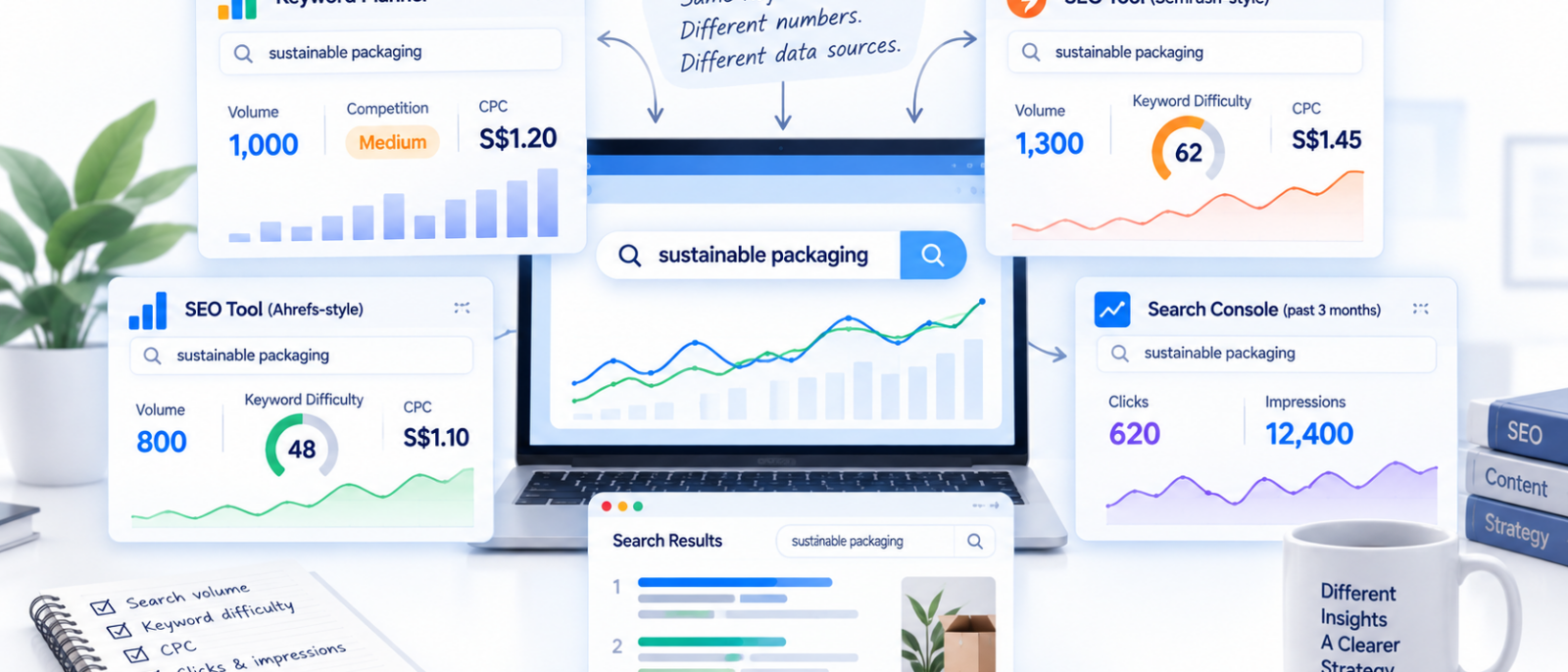
Google Keyword Planner, Semrush, Ahrefs and other SEO platforms can show different numbers for the same keyword. The trick is knowing what each metric was actually built to tell you.
Open Google Keyword Planner, enter a keyword and you might see healthy monthly demand with Low competition. Run the same query through Semrush and the volume changes while Keyword Difficulty suddenly looks intimidating. Ahrefs may show another estimate again.
Usually, asking which number is right is the wrong question. Google Keyword Planner was built for Google Ads, while Semrush and Ahrefs use their own SEO datasets and modelling. Search Console, meanwhile, reports first-party evidence from your own property. These sources are not all measuring the same thing for the same purpose.
Our rule is simple: use Keyword Planner for demand and advertising economics, SEO tools and the live SERP for organic competition, and first-party data to validate what actually happens once your site earns visibility.
Quick Answer: Which Keyword Planner Metrics Should You Trust?
| Metric or source | Trust it for | Do not treat it as |
| GKP Average Monthly Searches | Relative demand and market comparison | Exact future traffic |
| GKP Competition | Advertiser competition | Organic SEO difficulty |
| GKP top-of-page bids | Commercial-intent clues | Ranking difficulty |
| Semrush / Ahrefs volume | Comparing opportunities | Exact market demand |
| Keyword Difficulty | First-pass competition screening | Final go/no-go decision |
| Google Trends | Momentum and seasonality | Absolute monthly volume |
| Google Search Console | Your actual impressions, clicks and queries | Total market demand |
| Live SERP | What currently ranks and what you must compete with | Search volume |
| GA4 / business data | Whether traffic is useful | SEO competition |
The core principle is metric ownership. Every source gets a job, but no source gets to answer every question.
Is Google Keyword Planner Good for SEO?
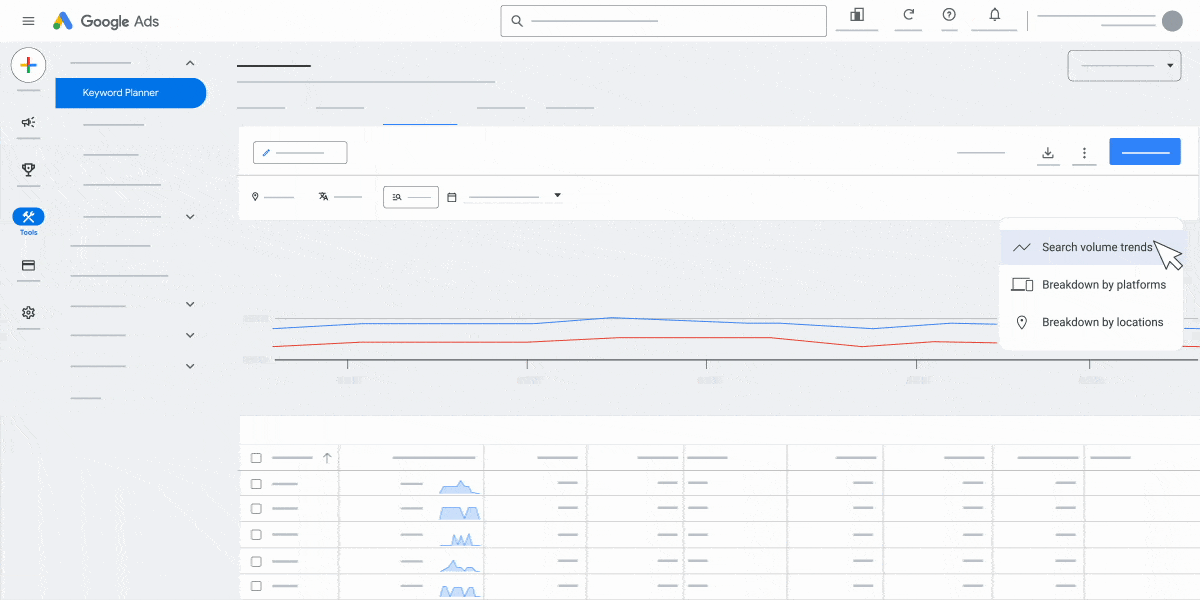
Yes. Google Keyword Planner remains useful for SEO research in 2026, especially when you need to compare relative demand, investigate locations, identify seasonal patterns or understand whether advertisers appear willing to pay for traffic around a topic.
What it is not is a complete organic SEO platform. Its Competition column does not tell you whether the current organic results are easy to outrank, its average monthly searches are estimates rather than guarantees of traffic, and it does not provide the same competitor-ranking history, backlink analysis or site-level SEO diagnosis available from specialist platforms.
The better question is therefore not whether Keyword Planner technically qualifies as an SEO tool, but which SEO decisions it can help you make reliably.
Is Google Keyword Planner Free in 2026?
Keyword Planner does not have its own separate subscription, but access is tied to Google Ads. Google’s current Keyword Planner documentation explains the account setup required to access its keyword-discovery functionality.
Once inside, there are two primary starting points:
| Keyword Planner mode | What it does | Useful SEO application |
| Discover new keywords | Generates ideas from keywords or a website | Expanding a topic or seed list |
| Get search volume and forecasts | Analyses an existing keyword list | Comparing demand and historical patterns |
Google also lets you refine keyword ideas by factors including average monthly searches, location, competition and bid ranges. Its keyword refinement documentation explains the available controls, but for SEO the more important skill is understanding what each resulting metric actually represents.
What Google Keyword Planner Metrics Actually Tell You
Keyword Planner was designed around paid search, so the safest way to use it for SEO is to give each metric a deliberately limited role.
Average Monthly Searches
Google describes average monthly searches as the average number of searches for a keyword and its close variants based on the selected period, location and Search Network settings. Its historical metrics documentation also makes clear that these values are estimates rather than guarantees of future search activity.
For SEO, we treat this as a demand signal. If Keyword Planner reports 1,000 monthly searches, that does not mean ranking first will deliver 1,000 organic visits. Searchers may click an ad, another organic result, a video, an AI-generated result or nothing at all. The useful question is whether enough demand appears to exist that the topic deserves deeper investigation.
Competition
This is the metric most likely to mislead someone new to SEO. Keyword Planner’s Low, Medium and High Competition labels relate to advertisers competing around the keyword, not the difficulty of ranking organically.
A keyword can therefore show Low competition while the organic SERP is dominated by major publishers, marketplaces or specialist sites with far stronger authority than yours. Nothing is broken; paid and organic competition are simply different systems.
For organic difficulty, inspect the ranking pages first and then use third-party difficulty metrics as supporting evidence.
Top-of-Page Bid
Keyword Planner also reports historical top-of-page bid estimates. Google’s top-of-page bid documentation explains that these figures relate to advertising bids rather than organic ranking difficulty.
The information can still be useful to an SEO because advertiser willingness to pay can reveal something about commercial intent. If two topics have similar estimated demand but advertisers consistently pay much more for one, that may indicate greater commercial value behind the search. We therefore use CPC and bid data as business clues, not ranking-difficulty metrics.
Forecasts
Keyword Planner forecasts are even more directly tied to paid search because they account for variables such as bids, budgets, seasonality and historical advertising performance.
That can be valuable when planning Google Ads, but for organic SEO we care more about historical demand, search intent, the live SERP and business relevance than projected ad clicks under a hypothetical campaign setup.
Why Google Keyword Planner and Semrush Show Different Volumes
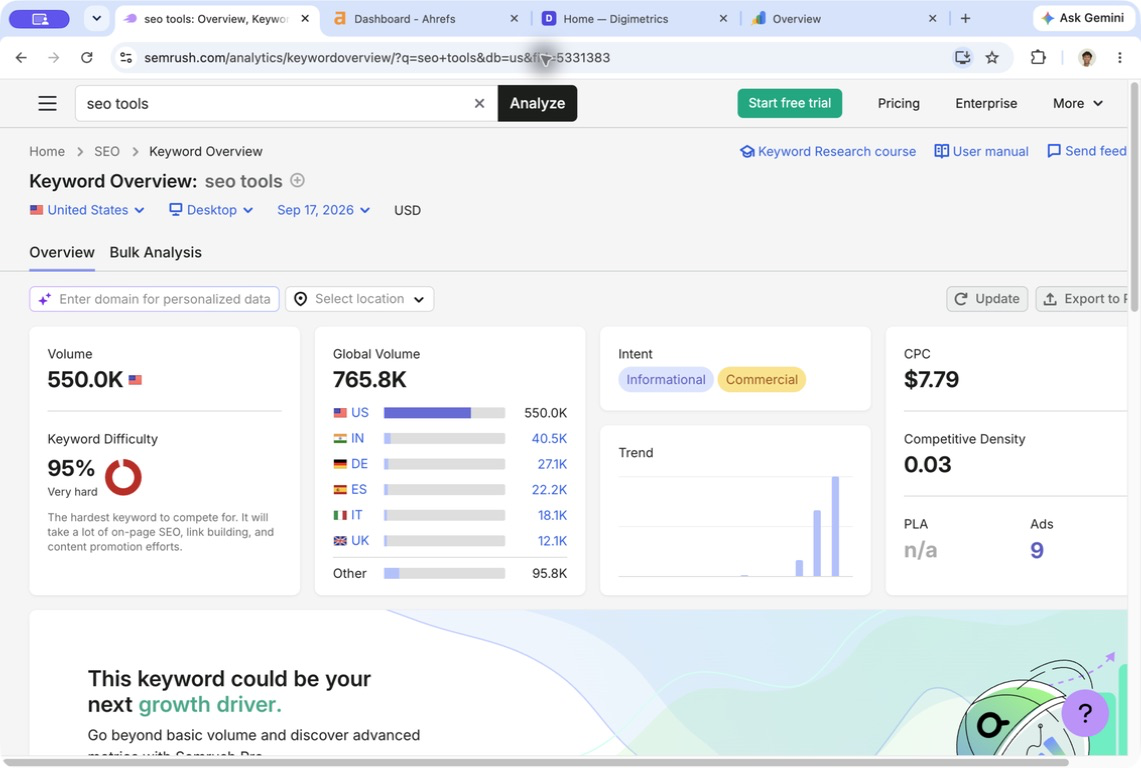
One of the most common reactions to mismatched keyword volume is to assume one platform has poor data. But Semrush is not simply republishing Google’s number.
According to Semrush’s search-volume methodology, its estimates combine third-party data, historical clickstream information and machine-learning models. Results can also vary depending on the geographic database selected.
So if Keyword Planner shows 2,400 monthly searches while Semrush reports 1,900, the important question is whether that difference materially changes the decision. If both suggest meaningful demand, the SERP fits the page you could create and the topic has commercial relevance, debating the last few hundred estimated searches may add very little value.
Ahrefs Uses Another Model Again
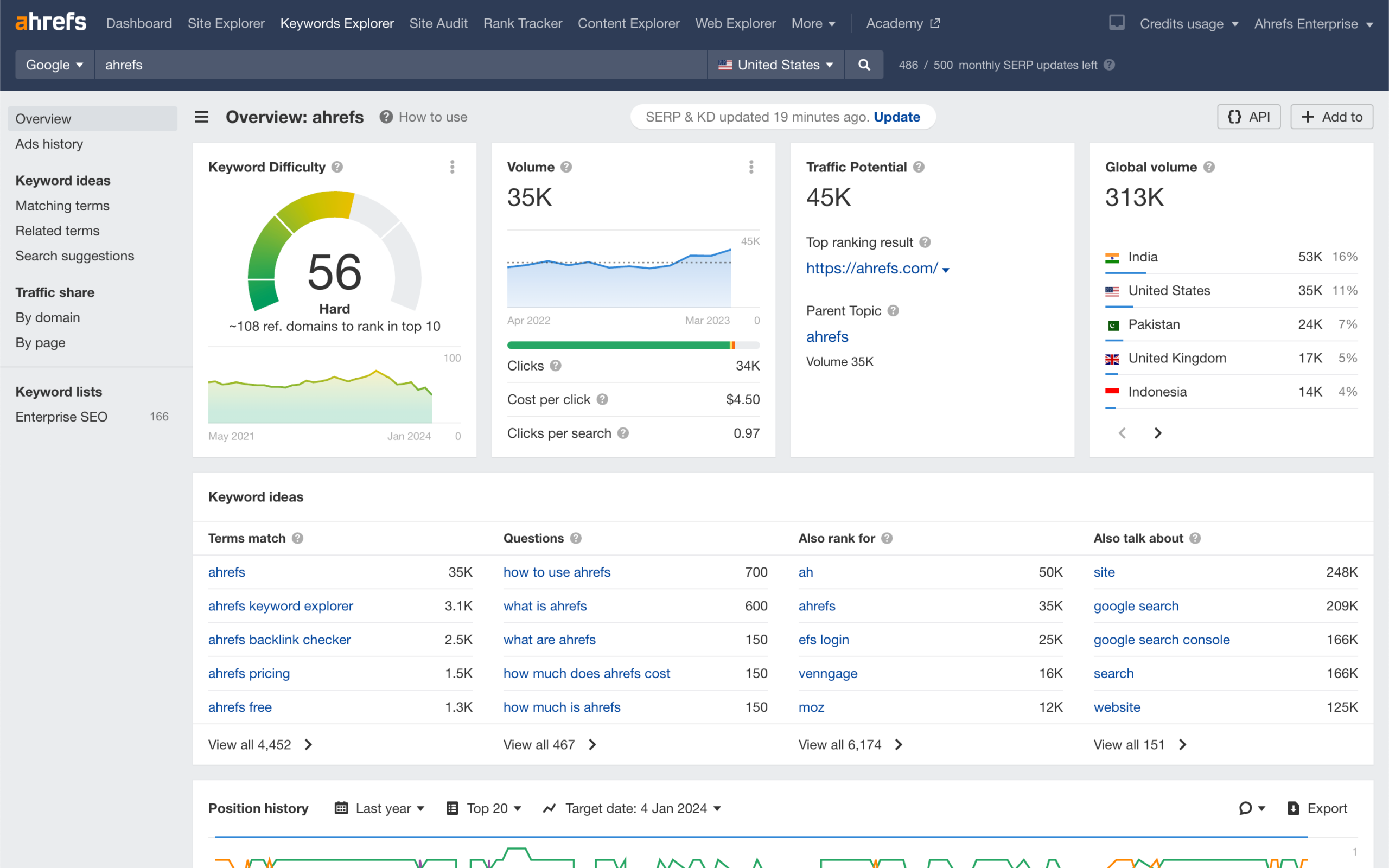
Ahrefs has its own methodology. In its explanation of keyword search-volume accuracy, Ahrefs also stresses that keyword volume from SEO platforms remains an estimate.
That means Keyword Planner, Semrush and Ahrefs can all show different values without one necessarily being defective. The purpose of keyword data is not to locate one hidden perfect number; it is to reduce uncertainty enough to make a sensible decision.
How Digimetrics Extends Keyword Research Into SEO Execution
Disclosure: Digimetrics is built by our team, MediaOne digital marketing agency. This article provides objective comparisons of SEO audit tools while acknowledging our affiliation with Digimetrics. All tools are evaluated using the same criteria (technical coverage, free capacity, evidence quality, prioritisation value, workflow depth and repeatability) to ensure fair assessment.
Keyword research rarely ends when you find a promising search-volume number. Once a keyword looks worth investigating, you still need to understand the intent, identify the real competitors, check whether your site already ranks, decide whether an existing page should be improved or a new one created, and determine what changes would give that page a better chance of performing.
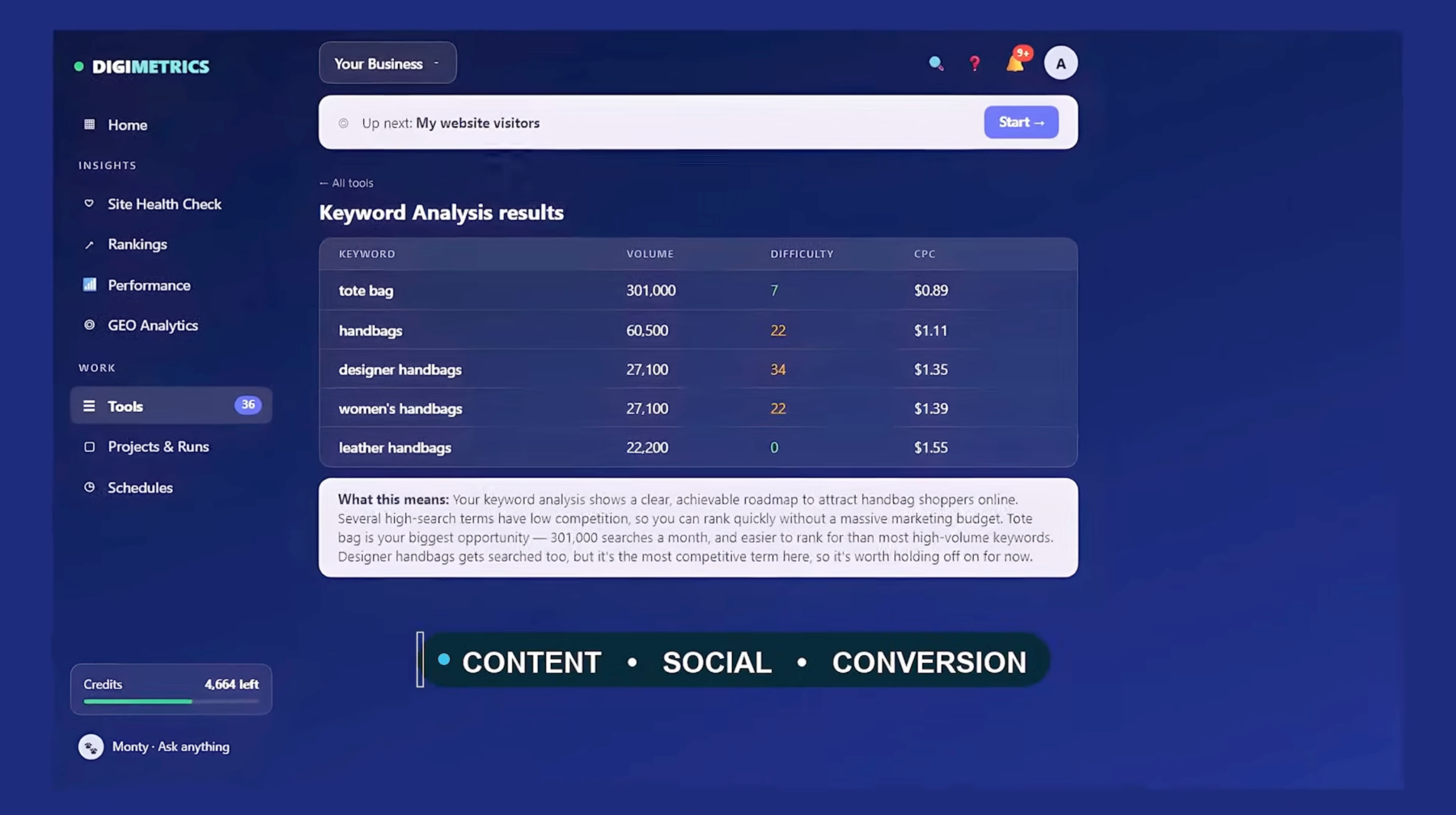
Digimetrics connects more of those steps inside one workflow. Its Keyword Analysis tool combines signals such as search volume, CPC, ranking difficulty and intent, while the wider SEO toolkit includes Competitors Identifier, Rank Checker, Time to Rank, SEO Strategy, SEO Diagnostics and On-Page Optimisation. Content can then move into Article Comparison and AI Content Optimiser, while connected Google Search Console and GA4 data adds first-party evidence about existing visibility and onsite performance.
From Keyword Idea to Page Decision
Suppose Google Keyword Planner surfaces an attractive commercial keyword. The volume estimate is only the beginning of the decision.
| Question you still need to answer | Digimetrics workflow |
| Who actually competes for this search? | Competitors Identifier |
| Where does our site rank today? | Rank Checker |
| How difficult does the opportunity appear? | Keyword Analysis + SERP evidence |
| How long could meaningful ranking improvement take? | Time to Rank |
| What is holding the existing page back? | SEO Diagnostics |
| How does our page compare with competing content? | Article Comparison |
| What should we improve on the page? | On-Page Optimisation / AI Content Optimiser |
| Are we already receiving relevant impressions and clicks? | Google Search Console integration |
| What happens after those visitors land? | GA4 integration |
| Is the page prepared for AI-driven search? | AI Readiness and GEO tools |
The advantage is not simply getting another keyword metric. It is being able to move from keyword discovery to competitor research, page diagnosis, content optimisation and performance validation without rebuilding the context across several disconnected tools.
That does not mean every specialist platform becomes unnecessary. A dedicated backlink database or advanced technical crawler may still provide greater depth for a particular job. Digimetrics is most useful when keyword research is part of a broader SEO, content and GEO workflow and reducing the handoffs between those stages matters as much as collecting another data point.
The MediaOne Keyword Data Trust Matrix
Instead of treating one source as universal ground truth, we use a simple metric ownership framework.
| Signal | What we trust it for | What we would not use it for |
| GKP average monthly searches | Relative demand and market comparison | Exact organic traffic |
| GKP Competition | Advertiser competition | SEO difficulty |
| GKP bid data | Commercial-intent clues | Organic ranking difficulty |
| Semrush / Ahrefs volume | Comparing opportunities | Exact known demand |
| Third-party Keyword Difficulty | First-pass competition screening | Final SEO decision |
| Digimetrics Keyword Analysis | Combining demand, CPC, difficulty and intent with wider workflow | Universal keyword ground truth |
| Google Trends | Direction, momentum and seasonality | Monthly search volume |
| Search Console | Your actual Google impressions, clicks and queries | Total market demand |
| GA4 | Behaviour after acquisition | Search demand |
| Live SERP | Search intent and actual ranking competition | Monthly volume |
| Business / CRM data | Commercial value | Ranking difficulty |
This prevents a common research failure: building a large spreadsheet and assuming every number is comparable simply because it appears in a column. These signals have different owners and different limitations.
Why “Low Competition” Can Still Be a Hard SEO Keyword
If Keyword Planner reports Low competition, all we know is that advertising competition is relatively low. Before treating the term as an SEO opportunity, search it and look at the page types, intent, ranking domains, result features and overall quality of the pages Google currently rewards.
Then use Semrush Keyword Difficulty, Ahrefs KD, Digimetrics or another SEO model as additional context. The order matters: SERP first, difficulty metric second. A proprietary score should help you interpret the search results rather than replace looking at them.
Why Similar Keywords Can Show Repeated or Strange Numbers
Keyword exports encourage another common mistake: assuming every row deserves a separate page. Google’s close-variant documentation explains that related variants can include singulars, plurals, misspellings, abbreviations, reordered wording and other expressions with closely related meaning.
Imagine your spreadsheet contains best keyword research tool, best keyword research tools and top keyword research software. If the search intent and ranking URLs substantially overlap, those terms probably belong on one strong page rather than three near-duplicates.
A keyword database giving you three rows does not mean Google wants three URLs. This is where keyword research becomes keyword mapping.
What Does Zero Search Volume Really Mean?
A zero or tiny volume estimate should trigger investigation rather than automatic deletion, particularly for niche B2B problems, emerging terminology, highly local searches, new technologies and specific long-tail questions.
Before discarding the keyword, check the surrounding evidence. Look at the live SERP, relevant Reddit or forum discussions, YouTube comments, Google Trends and Search Console if your site already has visibility around related language. A query searched by 50 highly qualified buyers can be more commercially valuable than a broad educational term searched thousands of times.
Volume is an input, not the business case.
Search Volume Is Not the Same as Traffic Potential
A page rarely ranks for one exact keyword alone, so judging an entire content opportunity from a single volume estimate can undervalue it.
Ahrefs illustrates the distinction through its Traffic Potential metric, which considers the estimated organic traffic of the leading page across the broader group of queries it ranks for.
A page primarily targeting google keyword planner could also gain visibility for searches such as google keyword planner free, Google keyword tool, how to use Keyword Planner, Keyword Planner search volume and free Google keyword research tool. The real opportunity is often the topic and intent cluster, not one exact keyword row.
Use Google Trends When Direction Matters More Than the Average
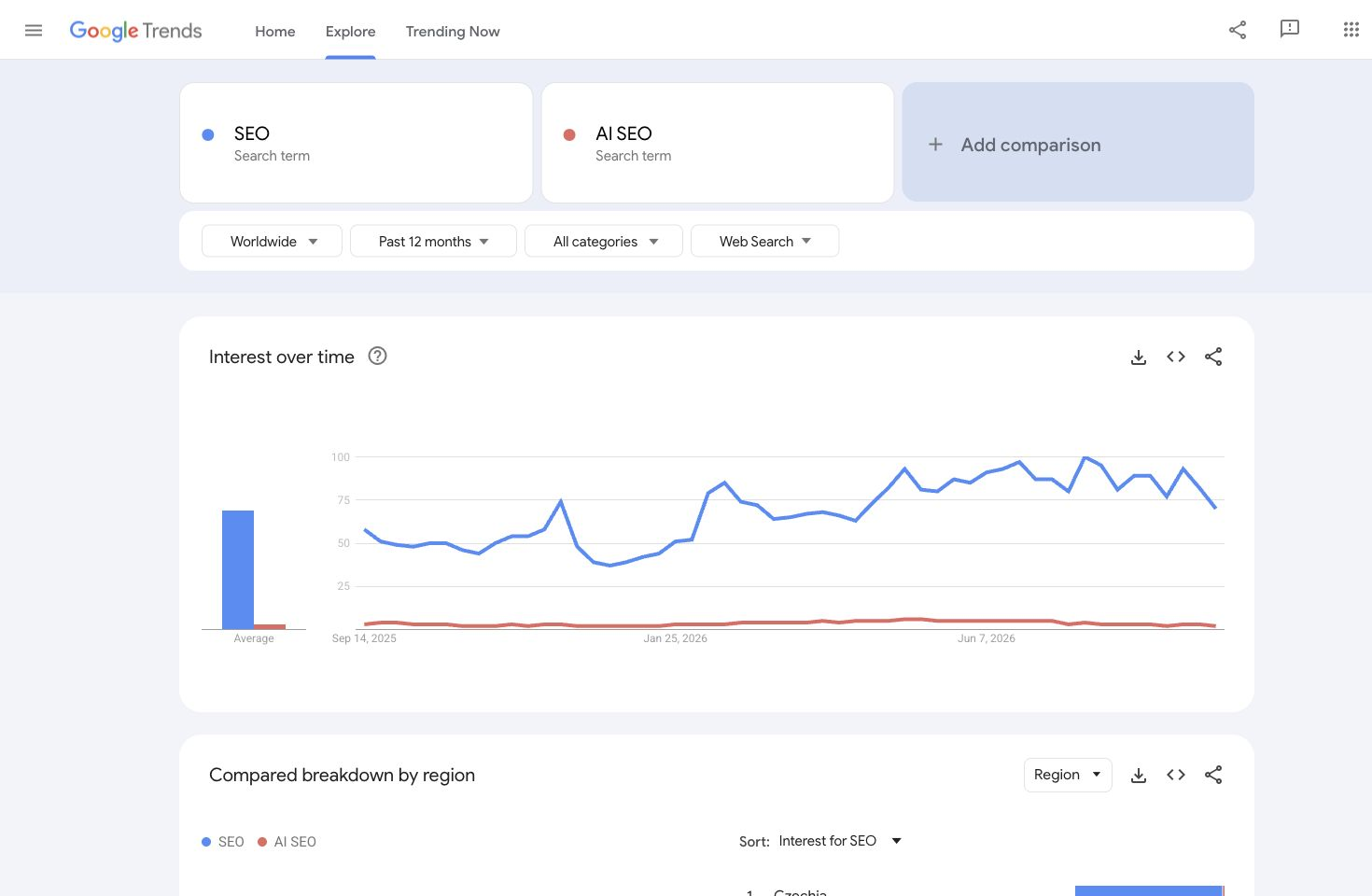
A 12-month average can hide what is happening now. When a topic is seasonal, terminology is changing or a new technology is gaining attention quickly, Google Trends adds directional context.
We would not use Trends as a substitute for conventional volume estimates. It answers a different question: is interest moving in a direction that the annual average hides? A keyword with modest average volume but rapid growth may deserve more attention than a larger term whose interest is steadily declining.
Use Search Console Once Your Site Has First-Party Evidence
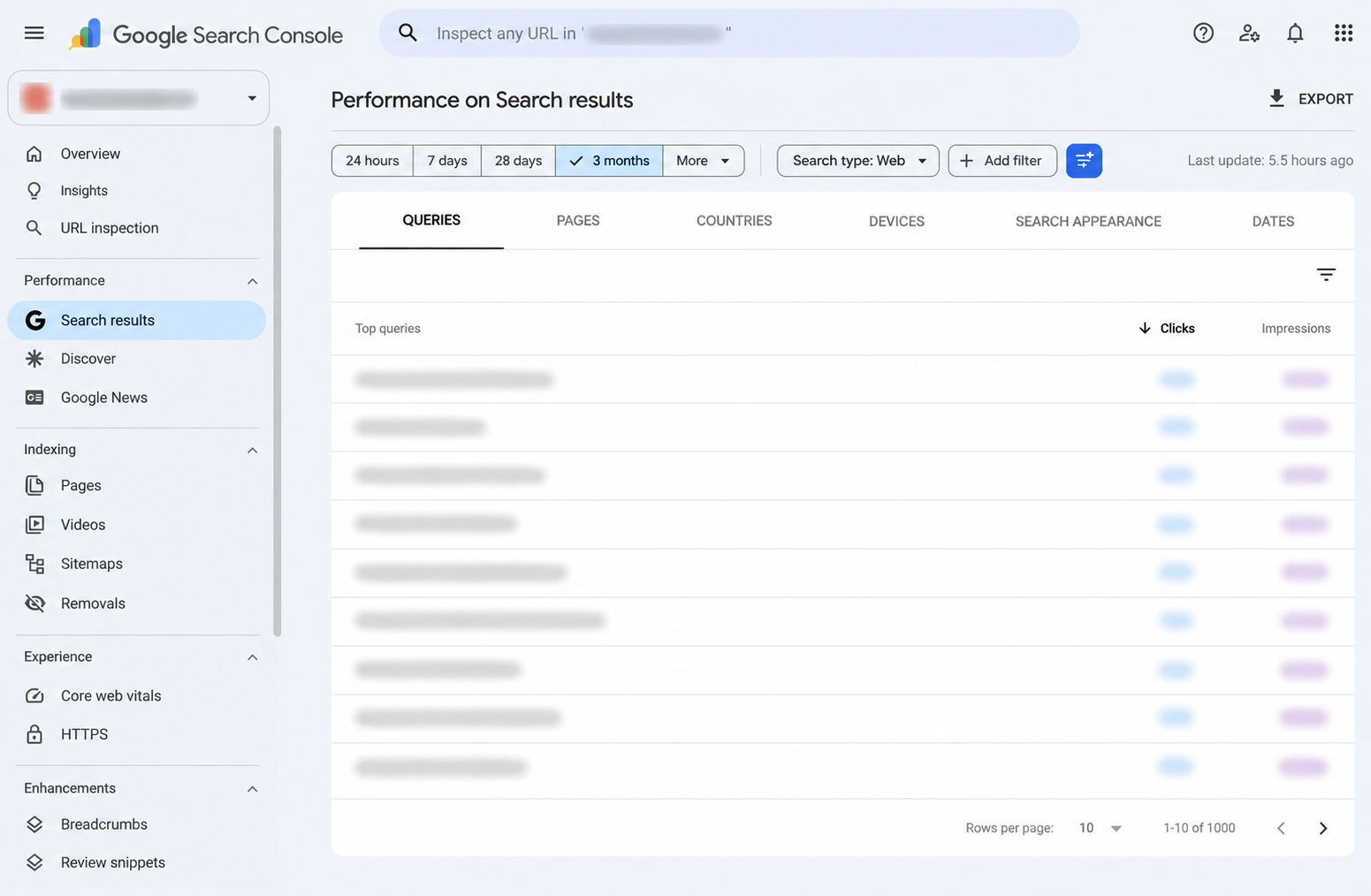
External keyword databases become less important once your own site has relevant Google visibility. The Search Console Performance report shows queries, impressions, clicks, CTR and average position associated with your property.
Suppose an external platform reports almost no search volume while Search Console shows hundreds of impressions around the same topic and closely related variants. At that point, first-party evidence deserves more weight. Search Console cannot replace market-wide research, but when your own evidence exists, it is often more useful than arguing over which external database has the more precise estimate.
Connect Search Evidence to What Happens After the Click
Search Console tells you how pages perform in Google Search; it does not tell you whether those visitors actually engage or convert. That is where GA4, CRM and business data enter the decision.
Digimetrics’ Search Console and GA4 integrations are useful here because keyword and SEO analysis can sit closer to actual search and onsite-performance evidence instead of living entirely in an isolated research database. Its broader integration layer also includes Google Ads, Meta Ads and LinkedIn Ads, which can add further commercial context where those channels are part of the workflow.
When Keyword Planner Is Enough, and When It Isn’t
Keyword Planner is stronger than many SEO marketers give it credit for. For a smaller site or early-stage project, it may provide enough information to discover ideas, compare demand, investigate geographic markets and understand commercial signals without immediately paying for a large suite.
Its limitations become more obvious when the questions shift from how much demand exists? to who ranks, why do they rank, what should we create and what should we improve?
| Tool | Best role | Main limitation |
| Google Keyword Planner | Demand, CPC, Ads competition and geography | Paid-search orientation |
| Semrush | Keyword discovery and competitive SEO research | Volume and difficulty remain estimates |
| Ahrefs | Competitor research, SERPs and traffic potential | Third-party modelling |
| Digimetrics | Keyword analysis connected to SEO, content, GEO and first-party workflows | Breadth does not automatically replace every specialist database |
| Google Trends | Momentum and seasonality | No absolute volume |
| Search Console | Actual visibility for your property | No total-market view |
| GA4 | Behaviour and conversion context | Does not measure search demand |
There is nothing wrong with using several of these sources. The problem begins when multiple paid tools repeatedly answer the same question and nobody can explain why all of them remain necessary.
Keyword Planner is only one free option. We also tested the best free keyword research tools to see which ones are actually useful without a paid plan.
A Better Keyword Research Workflow for 2026
Rather than opening one platform and allowing its metrics to dictate the strategy, we build keyword research around a sequence of decisions.
1. Start With the Customer Problem
Define the audience or commercial problem before opening a keyword database. Keyword tools can expose demand and language, but they should not determine which customer problem the business ought to care about.
2. Establish Demand
Use Google Keyword Planner to investigate relative demand, geography, CPC and advertiser competition. Treat each metric according to the job it was designed to perform rather than using Ads Competition as a shortcut for organic difficulty.
3. Check Direction
If seasonality, terminology changes or rapid market growth could distort a normal 12-month average, use Google Trends before deciding how much weight to place on the demand estimate.
4. Add Organic Competition
Bring in Semrush, Ahrefs, Digimetrics or another SEO platform to add organic context. The point is not to obtain another volume number for the spreadsheet; it is to understand whether the opportunity appears realistically attainable and what type of competition you would face.
5. Inspect the Live SERP
Search the query and review the ranking page types, intent, domains, result features and quality of the pages you would need to beat. No proprietary difficulty score should be allowed to skip this step.
6. Check Intent Overlap
Compare similar keyword variations to see whether Google rewards the same pages. If best keyword research tool and best keyword research tools return essentially the same SERP, one strong page will usually make more sense than two near-duplicates.
7. Bring in First-Party Evidence
For an existing site, use Search Console to determine whether related pages already earn impressions. Then use GA4 and business data to understand what happens after those visitors arrive and whether the traffic contributes to a useful outcome.
8. Make the Page Decision
At this point, stop asking whether the keyword is simply “good.” Decide whether you should create a new page, improve an existing one, consolidate overlapping pages or leave the topic alone.
This is where wider workflows become useful. Inside Digimetrics, for example, Keyword Analysis can continue into Competitors Identifier, Rank Checker, SEO Strategy, SEO Diagnostics, Article Comparison and AI Content Optimiser instead of ending as a standalone export.
An export containing 5,000 phrases is not a finished keyword strategy. It is a collection of potential decisions that still needs intent, feasibility and business context.
Which Keyword Number Should You Trust?
There is no universal winner. Match the source to the question.
| Decision | Evidence we would prioritise |
| Is there meaningful demand? | Keyword Planner + third-party estimates |
| Is demand growing or seasonal? | Google Trends + historical data |
| Are advertisers competing? | GKP Competition and bid data |
| Is organic ranking likely to be difficult? | Live SERP + SEO difficulty metrics |
| What do competitors rank for? | Ahrefs, Semrush or another competitive database |
| What intent does the keyword represent? | SERP + intent analysis |
| Is my site already visible? | Search Console |
| Could one page capture a broader cluster? | SERP/topic analysis + traffic-potential modelling |
| Does the traffic behave well? | GA4 |
| Does the traffic create commercial value? | CRM, leads, sales and business data |
| Should this become a new page? | SERP overlap + existing content + business relevance |
| What should we work on first? | Opportunity + feasibility + value + resources |
We would not automatically trust Keyword Planner more because Google owns the search engine, nor trust a third-party platform simply because its dashboard displays a more precise-looking number.
Precision is not the same as certainty. A figure of 2,417 looks more exact than a range, but those extra digits may do nothing to improve the decision.
If you need more than keyword data, our best SEO tools comparison looks at whether an all-in-one suite or a smaller specialist stack makes more sense.
Final Verdict: Trust the Metric That Owns the Decision
Google Keyword Planner remains useful for SEO in 2026, but only when you interpret its data according to the jobs it was designed to perform. Use Average Monthly Searches to understand relative demand and Competition and bid data to understand the advertising market, then bring in Semrush, Ahrefs or another specialist platform for additional organic and competitor modelling.
Once your site has visibility, validate those assumptions with Google Search Console, then use GA4 and business data to understand whether the traffic is actually valuable. Digimetrics now belongs earlier in this workflow than our previous description suggested because its Keyword Analysis participates directly in research, while its wider SEO, content, GEO and integration tools allow that research to continue into competitor analysis, diagnostics, optimisation and first-party performance review.
Most importantly, inspect the SERP before turning any keyword metric into a content decision. When Google Keyword Planner, Semrush, Ahrefs or another platform disagree, you do not need to discover one perfect number; you need to know what decision you are making, which source owns that part of the decision and what the combined evidence tells you to do next.
For more keyword research and search-tool testing, browse our SEO tools and guides.
Frequently Asked Questions
Is Google Keyword Planner Free?
Keyword Planner does not have a separate paid subscription, although it operates inside Google Ads and requires account setup. Check Google’s current documentation for the latest access requirements.
Is Google Keyword Planner Accurate for SEO?
It is useful for estimating demand, but its metrics require context. Average monthly searches are estimates, while Competition describes advertiser activity rather than organic ranking difficulty.
Why Does Google Keyword Planner Show Different Volume From Semrush?
They use different data sources and methodologies. Keyword Planner provides Google’s Ads-oriented historical estimates, while Semrush uses third-party information and modelling. The important question is whether the difference materially changes your SEO decision.
Is Keyword Planner Competition the Same as Keyword Difficulty?
No. Keyword Planner Competition concerns advertisers, while SEO Keyword Difficulty metrics attempt to estimate organic ranking competition. Neither should replace inspecting the live SERP.
Should I Trust Google Keyword Planner or Ahrefs?
Use them for different jobs. Keyword Planner is useful for demand and paid-search context, while Ahrefs provides broader competitor, backlink and SERP research.
Where Does Digimetrics Fit?
Digimetrics participates in both keyword analysis and the wider workflow after research. Its Keyword Analysis combines signals such as volume, CPC, difficulty and intent, while the broader platform connects that work with competitor identification, rankings, SEO Strategy, Diagnostics, content optimisation, Search Console, GA4 and GEO workflows.
Its strongest role is therefore connecting keyword evidence to execution, rather than claiming its volume figure replaces every other source.
Does Zero Search Volume Mean Nobody Searches the Keyword?
No. Niche, emerging, highly local and long-tail queries can have limited database coverage. Validate them against the live SERP, Search Console where available, Trends, audience research and commercial value before rejecting them.
Disclosure: digitalmarketingtools.ai is sponsored by Digimetrics.ai. Sponsored Highlights are clearly labelled advertising. Our reviews, comparisons and guides are written to be useful and fair regardless of who sponsors the site. Read the full disclosure.


