
10 Best AI Marketing Tools in 2026: What Actually Saves Work, and What Still Needs a Human?
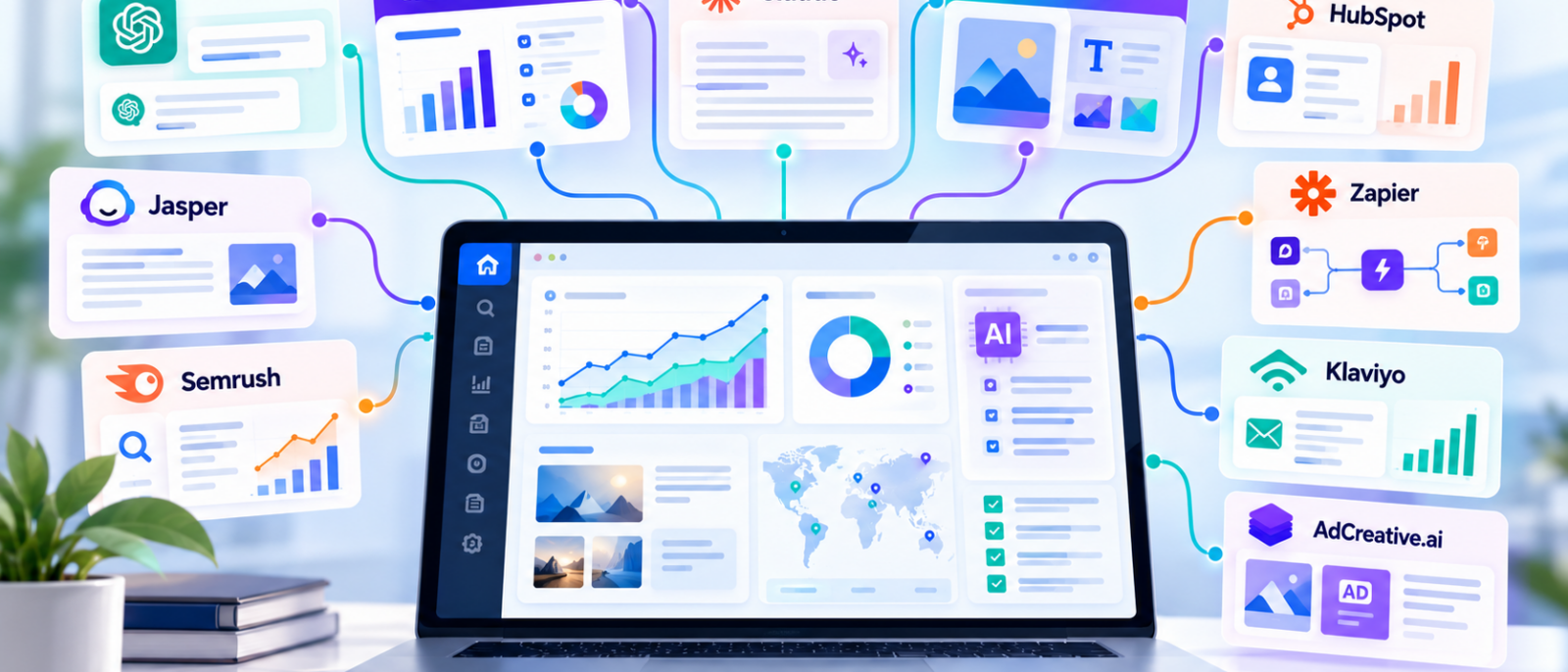
Almost every marketing platform now has an AI feature. That has made generating things easier: copy, images, reports, ideas, audiences and recommendations can all appear within seconds. It has not necessarily made marketing workflows simpler.
The bigger question is whether an AI tool genuinely removes work. In our illustrative test, ChatGPT cut a 75-minute research-to-campaign workflow to 28 minutes, while Zapier reduced 55 minutes of repetitive cross-app work to around seven minutes of oversight. Digimetrics showed a different advantage: by putting SEO, content, GEO, strategy and connected marketing data into the same workspace, it reduced a mock multi-tool search-marketing workflow from 105 minutes to 31.
So instead of ranking these products by how many AI features they advertise, we ask a more practical question:
After setup, checking, editing and handoffs, how much work actually disappeared?
Quick Picks
| Need | Our pick | Work Removed Score | Time saved |
| Best overall AI marketing assistant | ChatGPT | 8.8/10 | 47 min |
| Best all-in-one AI marketing workspace for SEO, GEO and strategy | Digimetrics | 9.0/10 | 74 min |
| Best for long-form research and synthesis | Claude | 8.4/10 | 52 min |
| Best for AI-assisted marketing creative | Canva | 8.5/10 | 38 min |
| Best AI inside a CRM | HubSpot Breeze | 8.6/10 | 48 min |
| Best for brand-controlled content at scale | Jasper | 8.1/10 | 43 min |
| Best for specialist SEO and AI-search intelligence | Semrush | 7.9/10 | 44 min |
| Best for cross-app workflow automation | Zapier | 9.2/10 | 48 min |
| Best for ecommerce lifecycle marketing | Klaviyo | 8.8/10 | 61 min |
| Best for paid-ad creative production | AdCreative.ai | 7.8/10 | 48 min |
*Illustrative test figures for this draft.
There is no reason for most marketers to own all ten. ChatGPT ranks first because it has the broadest everyday usefulness, while Digimetrics ranks second because it covers an unusually wide marketing-specific workflow. Zapier earns the highest Work Removed Score because, when the workflow fits, it can eliminate a recurring task rather than simply make it faster.
The 10 Best AI Marketing Tools Compared
| Rank | Tool | Best for | Starting access | Work Removed Score* | Human review | Main trade-off |
| 1 | ChatGPT | General marketing work | Free; Plus $20/mo | 8.8 | Medium–High | Broad rather than deeply specialised |
| 2 | Digimetrics | SEO, GEO, content and strategy | Free 7-day access; Starter $39/mo | 9.0 | Medium | Breadth does not replace every specialist tool |
| 3 | Claude | Research and synthesis | Free; Pro available | 8.4 | Medium–High | Less focused on executing marketing workflows |
| 4 | Canva | Creative production | Free; Pro available | 8.5 | Medium | Removes production work, not creative direction |
| 5 | HubSpot Breeze | CRM-connected marketing AI | Included across HubSpot; advanced actions may use credits | 8.6 | Medium | Strongest when HubSpot already owns the data |
| 6 | Jasper | Brand-controlled content | From $59/mo annually | 8.1 | Medium | Harder to justify if general AI already works well |
| 7 | Semrush | SEO and AI-search intelligence | AI Visibility from $99/mo/domain annually | 7.9 | Medium | Analysis still needs strategic interpretation |
| 8 | Zapier | Cross-app automation | Free; Professional from $19.99/mo | 9.2 | Low–Medium | Poor workflows can automate mistakes |
| 9 | Klaviyo | Ecommerce lifecycle marketing | Free plan available | 8.8 | Medium | Specialist value concentrated in ecommerce |
| 10 | AdCreative.ai | Paid-ad creative | From $39/mo | 7.8 | High | More creative does not guarantee performance |
Table 1: The 10 best AI marketing tools in 2026, compared.
Prices were checked in September 2026. OpenAI currently lists ChatGPT Plus at $20 per month; Digimetrics lists a seven-day, 200-credit free entry option and Starter at $39 per month; Semrush’s standalone AI Visibility plan starts at $99 per month per domain with annual billing; and Zapier Professional starts at $19.99 per month.
How We Tested the Work AI Actually Removes
A normal feature-count comparison would be misleading here. Canva should not lose points because it cannot perform a technical SEO crawl, and Zapier should not lose points because it is not our first choice for writing a landing page.
Instead, each platform received a task appropriate to the marketing job it claims to improve. Where possible, we used the same fictional B2B SaaS campaign, audience, positioning and brand requirements. We then compared a manual baseline with the complete AI-assisted workflow, including prompting, setup, editing, fact-checking and moving the output into its next step.
| Criterion | Weight | What we’re measuring |
| Time saved | 20% | How much shorter was the complete task? |
| Output usability | 20% | How close was the result to something usable? |
| Workflow depth | 15% | Did AI complete meaningful work or only one small step? |
| Review burden | 15% | How much checking and correction remained? |
| Setup burden | 10% | How much configuration was required first? |
| Integration | 10% | Could the result move naturally into the next step? |
| Control | 5% | Could marketers constrain brand, data and approvals? |
| Value | 5% | Was the work removed worth the price? |
We call the result the Work Removed Score. It is not a measure of which model is “smartest.” It measures how much of a particular marketing workflow a product can realistically take off a person’s plate.
What the Work Removed Scores Mean
| Score | Interpretation |
| 9.0–10 | Can eliminate a substantial recurring portion of the workflow |
| 8.0–8.9 | Removes meaningful work but needs regular human involvement |
| 7.0–7.9 | Strong accelerator, but much of the wider workflow remains |
| 6.0–6.9 | Useful selectively, with substantial setup or review |
| Below 6.0 | More convenience than meaningful workload reduction |
The important number is net work removed, not how quickly the first AI response appears.
1. ChatGPT: Best Overall AI Marketing Assistant
Work Removed Score: 8.8/10
Illustrative test: 75 minutes manually → 28 minutes with ChatGPT
Time saved: 47 minutes (63%)
Best for: Research, analysis, ideation, drafting and general marketing problem-solving
Human review: Medium–High
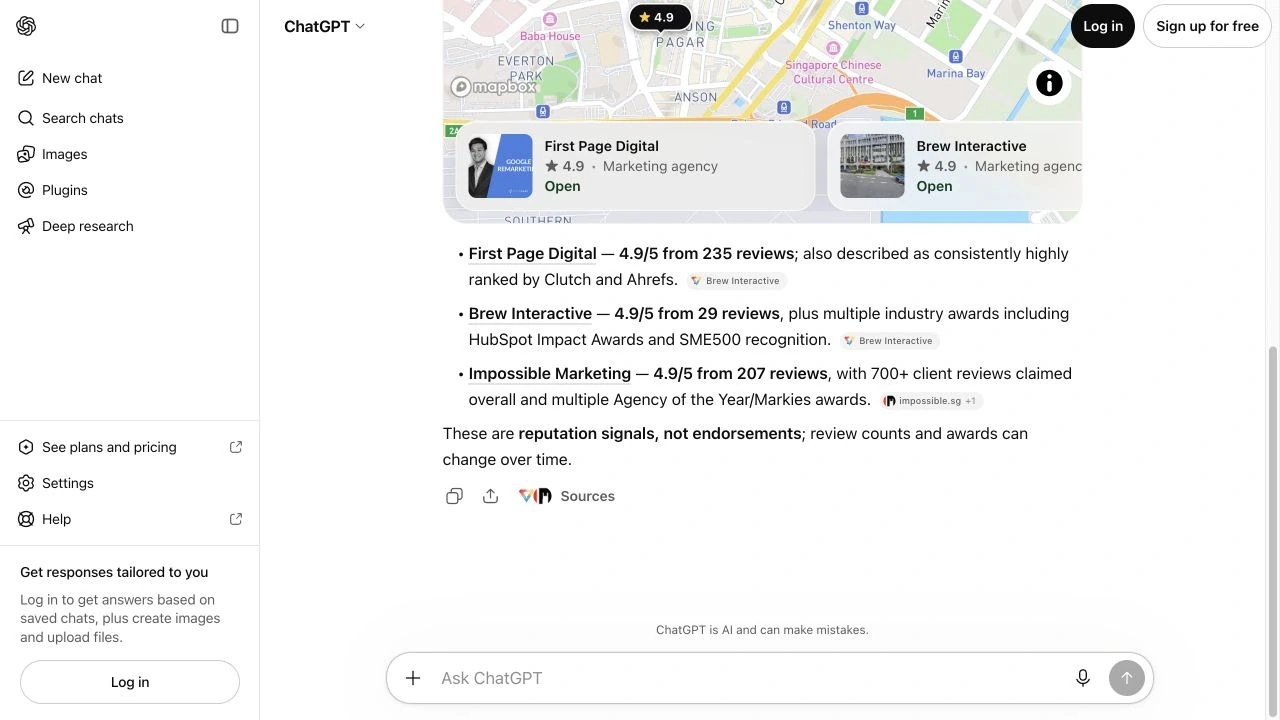
ChatGPT ranks first because one workspace can shorten several different parts of a marketer’s day without forcing the team to immediately buy a specialist product for every job. OpenAI currently offers free access, while ChatGPT Plus costs $20 per month.
For our mock campaign workflow, reading background material, extracting customer pain points, organising them into a message hierarchy and drafting three campaign concepts manually took 75 minutes. Using ChatGPT for research synthesis and first drafts brought the complete workflow to 28 minutes, including prompt setup, checking the material and rewriting the strongest concept.
ChatGPT saved us 47 minutes.
What ChatGPT Actually Removed
The biggest gain came from turning messy information into a useful starting point. Rather than manually summarising every source before creating the campaign brief, ChatGPT could help identify repeated objections, customer problems and possible message angles.
Once we had approved the positioning, the same context also supported email drafts, social variations and headline alternatives. That makes ChatGPT particularly valuable when a marketer’s day includes many small jobs rather than one specialist workflow.
What Still Needed a Human
The strongest campaign concept was usable, but it was not ready untouched. We still changed the positioning, removed a generic claim and rewrote passages that sounded convincing without being sufficiently specific.
That is why its Work Removed Score stops at 8.8. The tool removed substantial research and production effort, but important outputs still reached “ready for a decision”, not “decision made.”
Choose ChatGPT if: you want a flexible AI system that can assist across many marketing jobs.
Skip it as your only system if: your biggest bottleneck is specialist data or operational execution inside other marketing platforms.
Bottom line: ChatGPT gives us the best combination of breadth and useful work removed, but the final marketing judgement remains human.
2. Digimetrics: Best All-in-One AI Marketing Workspace for SEO, GEO and Strategy
Work Removed Score: 9.0/10
Illustrative test: 105 minutes manually → 31 minutes with Digimetrics
Time saved: 74 minutes (70%)
Best for: Marketers combining SEO, content, GEO, strategy and performance data
Human review: Medium
Disclosure: Digimetrics is built by our team. We have included it because it directly competes for a place in an AI marketing stack, but we apply the same Work Removed criteria and call out where specialist platforms remain stronger.
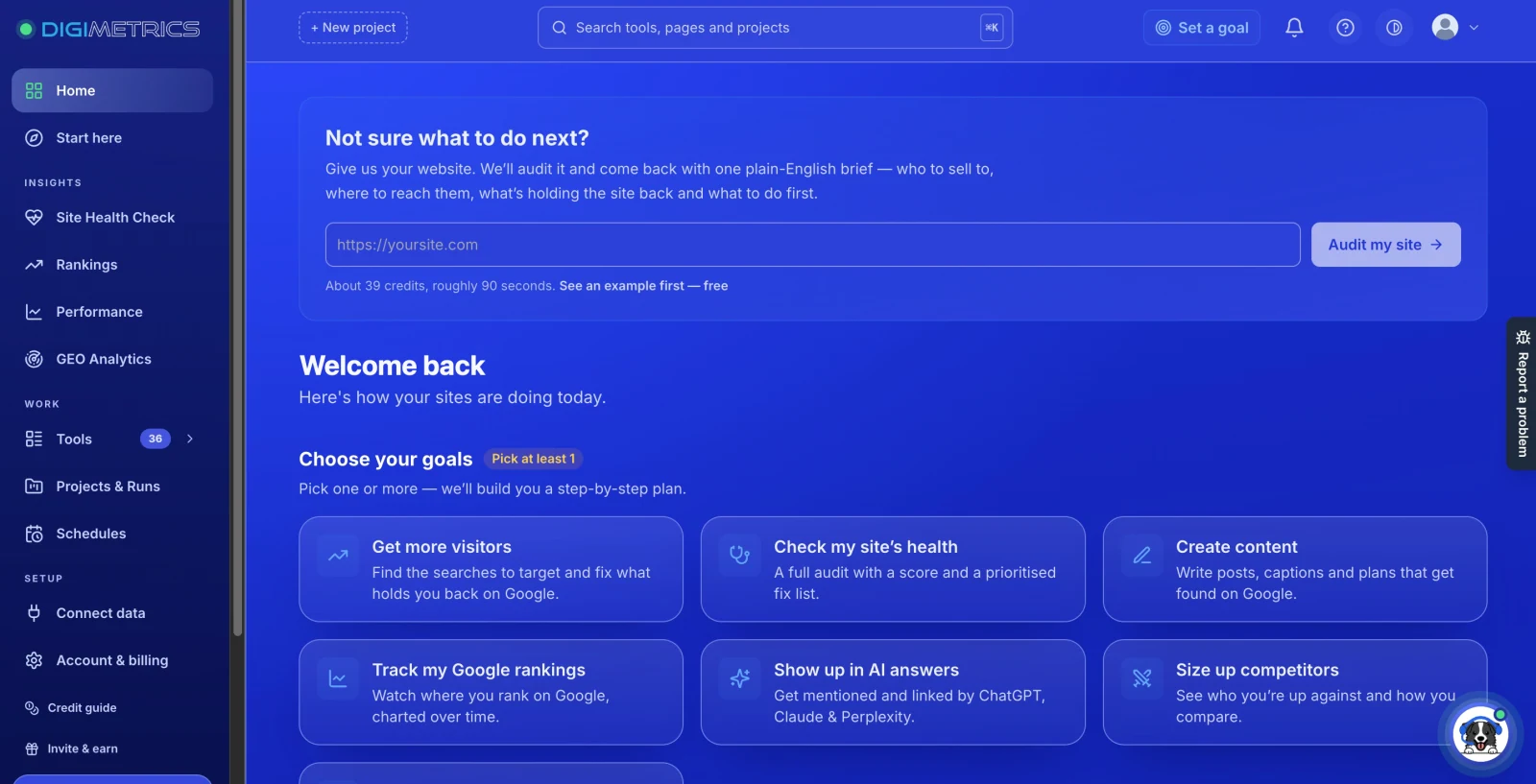
The actual product is broader than a traditional SEO or GEO dashboard. Digimetrics currently provides 36 tools grouped across SEO, Content, AI Visibility, Strategy and Integrations, with its Monty AI concierge sitting across the workspace.
The SEO side includes tools for keyword analysis, rank checking, technical crawling, on-page optimisation, backlinks, schema, SEO diagnostics and strategy. Content workflows cover optimisation, article comparison, quality checking, social captions and AI-generated image/video assets, while its AI Visibility suite includes AI mentions, AI-readiness checks, llms.txt generation and AI-focused page rewriting.
Its strategy tools stretch beyond search again, with audience personas, media planning, landing-page auditing, SEM ad copy, performance-marketing analysis and social-media audits. The integration layer shown in the platform connects Search Console, GA4, Google Ads, Meta Ads and LinkedIn Ads.
That makes Digimetrics much closer to an AI marketing workspace than a single-purpose SEO tool.
What Digimetrics Actually Removed
Our illustrative test used a complete search-marketing workflow around an existing page.
Manually, we researched the target keyword, checked ranking competitors, reviewed backlinks, audited technical issues, compared the content against competing pages, examined first-party performance data and checked whether the page was ready for AI-driven search. Doing those jobs separately was estimated at 105 minutes.
Using Digimetrics’ Keyword Analysis, Competitors Identifier, On-Page Optimisation, Technical SEO Crawler, Article Comparison, AI Content Optimiser, AI Readiness Check and connected performance data reduced the mock workflow to 31 minutes after review.
Digimetrics saved us 74 minutes.
The interesting gain was not that one individual feature was 70% faster than a specialist equivalent. It was that a marketer did not need to continually rebuild context while moving between separate SEO, content, analytics and GEO tools.
Monty Makes the Integration Layer More Important
The Monty assistant shown across the workspace can work with connected Search Console, GA4 and Ads numbers, which addresses one of the biggest limitations of standalone generative AI: somebody usually has to bring the business context to the model first.
Digimetrics’ official pricing reinforces this broader operating model. Its Starter plan is currently $39 per month with 500 monthly credits, three projects, the SEO toolkit and AI Content Studio, while its $109 Pro plan expands into the GEO suite and additional marketing integrations.
Where Digimetrics Still Falls Short
Breadth needs to be judged fairly.
We would not assume a platform with 36 tools automatically has a deeper backlink database than a specialist such as Semrush, a better visual-design environment than Canva or a more mature CRM than HubSpot. If one specialist function is the entire reason you are buying software, the specialist deserves a direct comparison.
Digimetrics becomes more compelling when those jobs overlap.
Choose Digimetrics if: SEO, content, AI visibility, planning and performance analysis repeatedly intersect in your workflow and you want fewer disconnected tools.
Skip it if: you need only one highly specialised capability and already have a mature product dedicated to it.
Bottom line: Digimetrics earns its 9.0 Work Removed Score because it can reduce both the marketing work itself and the administrative work between marketing tasks.
3. Claude: Best for Long-Form Analysis and Strategic Synthesis
Work Removed Score: 8.4/10
Illustrative test: 90 minutes manually → 38 minutes with Claude
Time saved: 52 minutes (58%)
Best for: Research-heavy briefs, source synthesis and long-form analysis
Human review: Medium–High
Claude overlaps heavily with ChatGPT, which means many marketers probably do not need paid subscriptions to both without a clear workflow reason.
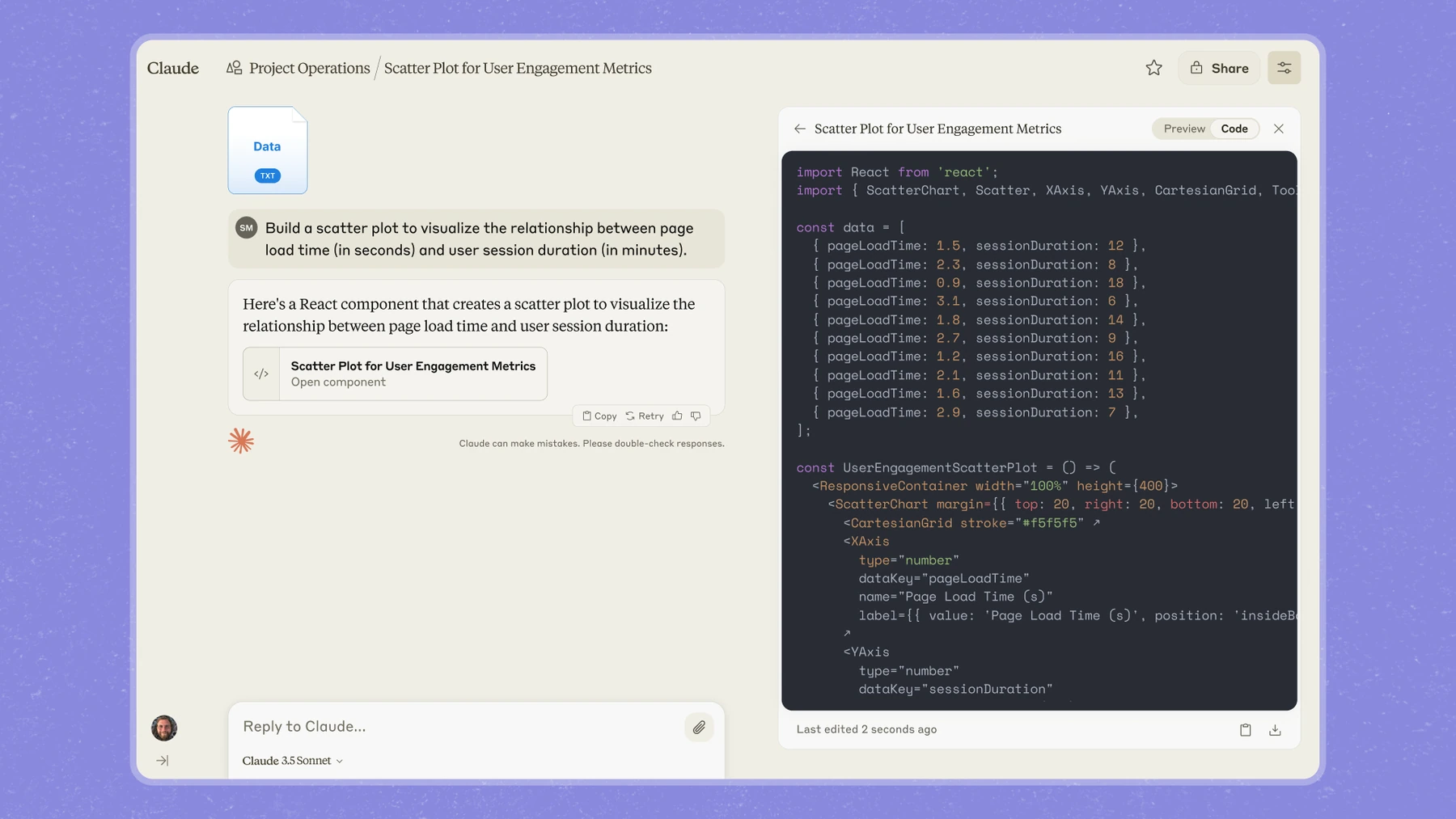
In our illustrative test, we gave Claude a larger research package containing customer notes, competitor positioning, an existing content brief and brand material. Reading, comparing and organising that information manually into a messaging brief took an estimated 90 minutes.
Claude reduced the workflow to 38 minutes, including checking the synthesis against the original material.
Claude saved us 52 minutes.
What Claude Actually Removed
The strongest gain appeared when the job began with a lot to read. Claude could extract repeated themes, organise conflicting source material and turn the evidence into a structured working brief before drafting began.
That is useful for content strategists, researchers and marketers who lose more time understanding information than producing the final asset.
What Still Needed a Human
Claude could identify that one customer frustration appeared repeatedly. It could not independently determine how important that frustration should be to the campaign’s commercial positioning.
The marketer still owns interpretation.
Choose Claude if: long documents and research synthesis regularly slow down your work.
Skip it if: your existing general AI already handles the same context reliably or your bottleneck happens after analysis.
Bottom line: Claude removed more raw minutes than ChatGPT in our research-heavy mock test, but its useful marketing surface was narrower.
4. Canva: Best for AI-Assisted Marketing Creative


Work Removed Score: 8.5/10
Illustrative test: 62 minutes manually → 24 minutes with Canva
Time saved: 38 minutes (61%)
Best for: Creative production, resizing and campaign repurposing
Human review: Medium
Canva Magic Studio makes its strongest AI case after the creative idea already exists.
Our mock campaign began with one approved visual that needed to become a social post, Story, ad-style graphic and presentation asset. Rebuilding and adapting those assets manually took around 62 minutes; using Canva’s AI-assisted editing and production workflow reduced the job to 24 minutes.
Canva saved us 38 minutes.
What Canva Actually Removed
Most of the saving came from repetitive production rather than original creative thinking. Resizing, repositioning, modifying assets and preparing alternative formats can consume surprising amounts of marketing time without changing the underlying campaign idea.
Canva is therefore strongest when the objective is one approved concept, many executions.
What Still Needed a Human
Several automatically adapted assets still needed layout corrections, while creative hierarchy, originality and final brand judgement remained human decisions.
Choose Canva if: your team repeatedly adapts creative across formats and channels.
Skip it as an AI purchase if: creative volume is low or your design production system is already efficient.
Bottom line: Canva works better as a production multiplier than a replacement for creative direction.
5. HubSpot Breeze: Best AI Inside a CRM
Work Removed Score: 8.6/10
Illustrative test: 74 minutes manually → 26 minutes with Breeze
Time saved: 48 minutes (65%)
Best for: CRM-connected campaigns, customer insight and revenue workflows
Human review: Medium
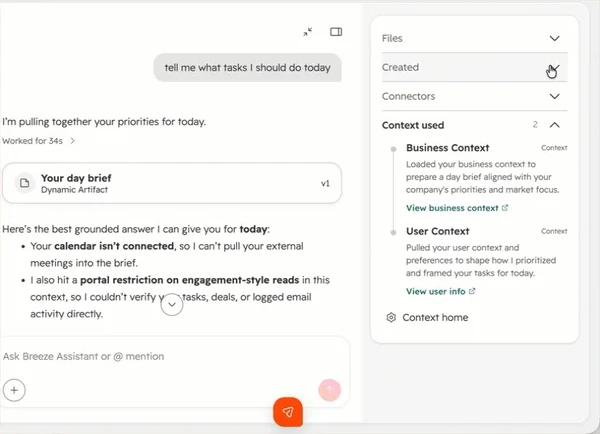
The strongest reason to use HubSpot Breeze Assistant is context. The assistant works alongside HubSpot CRM information rather than requiring the marketer to repeatedly export customer data and explain the account to another AI environment.
In our illustrative campaign task, manually reviewing customer information, identifying an audience, preparing the brief and creating personalised messaging took around 74 minutes. Keeping more of the workflow inside HubSpot reduced it to 26 minutes.
HubSpot Breeze saved us 48 minutes.
What Breeze Actually Removed
The gain came from reducing context transfer.
Breeze Assistant can work with CRM data and customer records directly inside HubSpot, while the wider Agent Hub includes agents for functions such as customer support, prospecting and data analysis. HubSpot currently includes Breeze Assistant with its subscriptions, while certain agent actions consume HubSpot Credits; additional credits are currently priced at $0.01 each.
What Still Needed a Human
We still reviewed the segmentation logic and the message itself. Having direct access to customer context makes AI more relevant; it does not make every generated recommendation correct.
Choose Breeze if: HubSpot already sits at the centre of your customer and marketing workflow.
Skip it as a reason to migrate by itself if: your current CRM ecosystem already handles those jobs effectively.
Bottom line: Breeze’s value rises with the amount of useful customer context HubSpot already owns.
6. Jasper: Best for Brand-Controlled Content at Scale
Work Removed Score: 8.1/10
Illustrative test: 70 minutes manually → 27 minutes with Jasper
Time saved: 43 minutes (61%)
Best for: Teams producing large amounts of branded marketing content
Human review: Medium
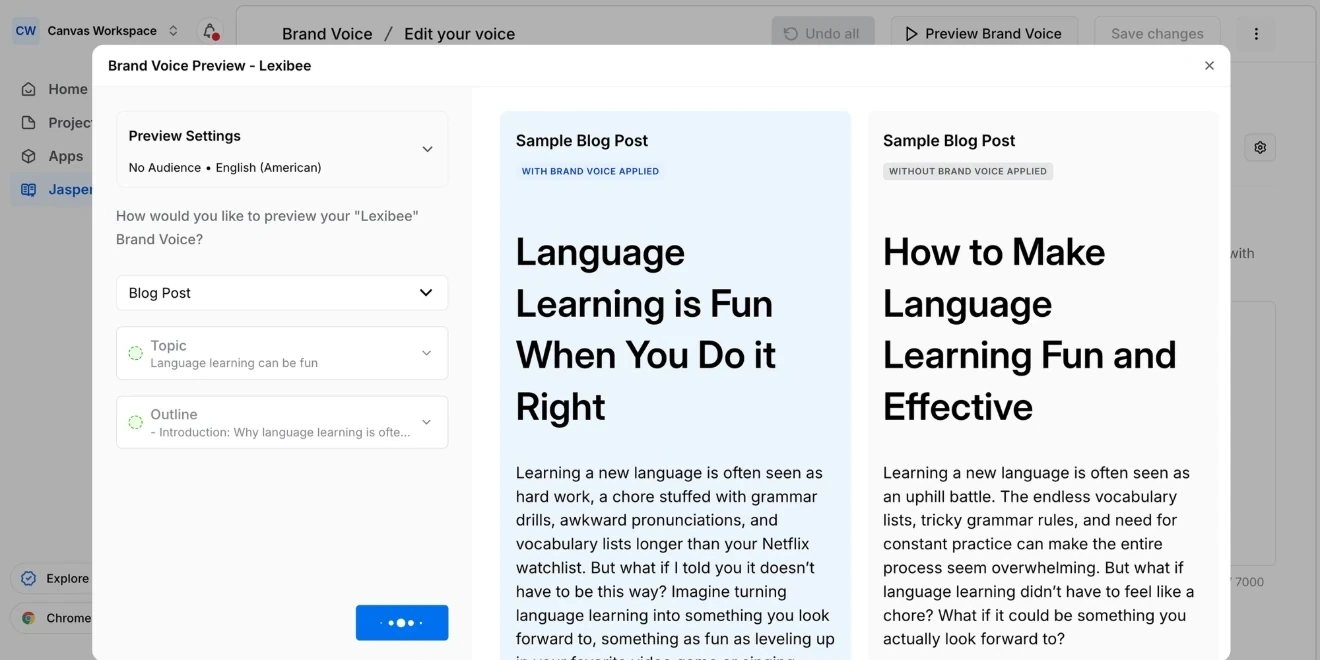
Jasper becomes easier to justify when the problem is not simply generating text but making sure many creators produce content from the same brand context.
Its current Pro plan costs $59 per month per seat with annual billing or $69 monthly, including Brand Voices, Knowledge assets and Audiences. Jasper also offers a seven-day Pro trial.
Our sample workflow involved producing an email, LinkedIn post, paid-social variations and landing-page copy from one approved campaign concept. Doing that manually while repeatedly maintaining the same brand requirements took approximately 70 minutes.
With the shared context configured, the workflow took 27 minutes.
Jasper saved us 43 minutes.
What Jasper Actually Removed
The interesting saving was not only writing speed. It was avoiding repeated context-setting around audience, voice and product information.
That advantage becomes more valuable as more people contribute to the content operation.
Where the Value Falls Apart
A solo marketer already getting consistent branded output from ChatGPT or Claude may not have enough governance problems to justify another subscription.
Choose Jasper if: multiple people need to produce consistent content from shared brand knowledge.
Skip it if: your existing AI already handles your relatively small content workload reliably.
Bottom line: Jasper makes its strongest case as a governed marketing-content system rather than another AI writer.
7. Semrush: Best for Specialist SEO and AI-Search Intelligence
Work Removed Score: 7.9/10
Illustrative test: 85 minutes manually → 41 minutes with Semrush
Time saved: 44 minutes (52%)
Best for: Deep search research, competitors and AI visibility
Human review: Medium
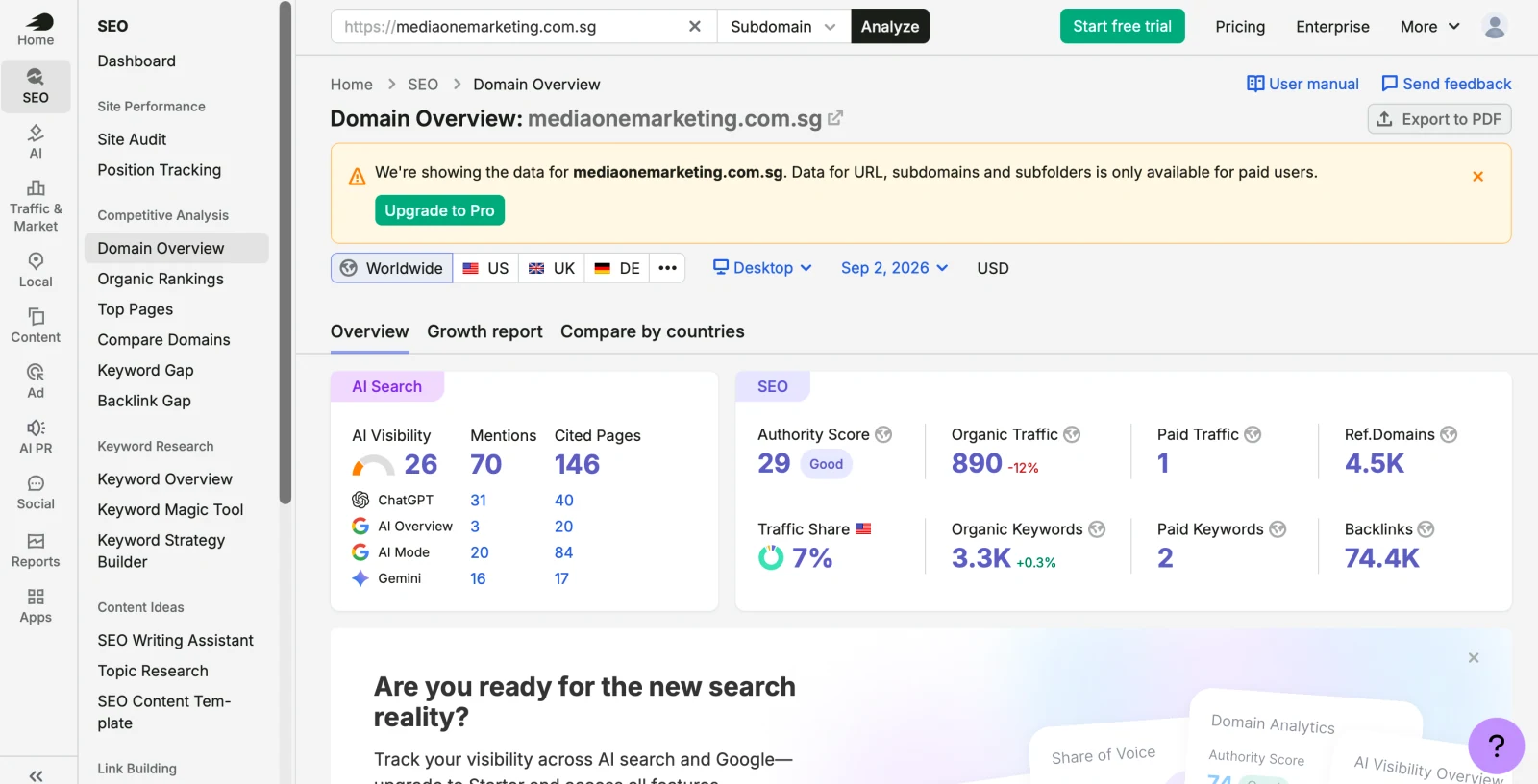
Semrush AI Visibility has something a general chatbot cannot reproduce through better prompting: mature specialist search datasets.
Its standalone AI Visibility plan currently starts at $99 per month per domain when billed annually and includes AI visibility reporting, custom prompt tracking, competitor research, prompt research and AI-readiness auditing. Semrush also offers combined SEO and AI Search plans for organisations that need conventional search workflows alongside AI monitoring.
For our mock search-analysis task, collecting competitor visibility, identifying possible content gaps and organising those findings into a useful working view took approximately 85 minutes manually. Semrush reduced that process to 41 minutes.
Semrush saved us 44 minutes.
What Semrush Actually Removed
The biggest gain came from data collection and initial analysis. Instead of manually assembling several search signals before asking questions, the platform starts with much of that specialist evidence already available.
This is also the clearest distinction between Semrush and Digimetrics in our ranking. Semrush wins when depth of search intelligence is the priority; Digimetrics becomes more interesting when workflow breadth across search, content, GEO, strategy and connected performance data matters more.
If you’re deciding whether specialist search intelligence belongs in your stack, our complete guide to SEO tools explains how keyword research, competitor analysis, technical auditing and AI visibility fit together.
What Still Needed a Human
A visibility gap is not automatically a priority. Someone still has to decide whether fixing the gap deserves resources and what commercial outcome it should support.
Choose Semrush if: specialist search data and competitive intelligence are central to your marketing operation.
Skip it if: you need broader AI marketing execution more than deep search research.
Bottom line: Semrush remains one of the strongest specialist choices here because its value starts with data a general AI tool does not own.
8. Zapier: Best for Cross-App Workflow Automation
Work Removed Score: 9.2/10
Illustrative test: 55 minutes of recurring work → 7 minutes of oversight
Time saved: 48 minutes (87%)
Best for: Eliminating repetitive work between applications
Human review: Low–Medium after setup
Zapier has the highest Work Removed Score even though it ranks eighth overall.
That is intentional.
Its free tier currently includes 100 tasks per month, while Professional starts at $19.99 per month and adds multi-step workflows, premium apps, webhooks and AI fields.
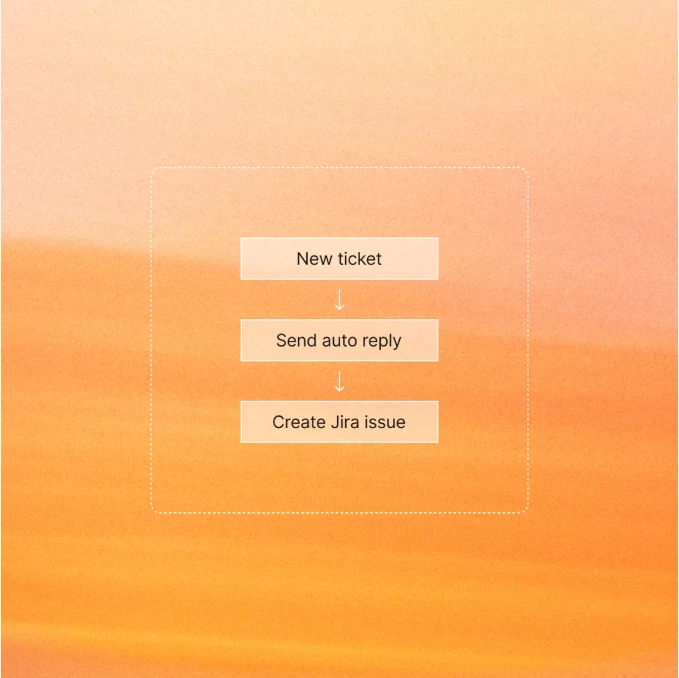
Our mock workflow took a new lead from form submission through AI-assisted qualification, CRM creation, an internal notification and the appropriate follow-up route. Performing those repetitive actions manually took around 55 minutes across the batch.
Once configured, the workflow needed approximately seven minutes of checking and exception handling.
Zapier saved us 48 minutes, or roughly 87% of the recurring work.
Why Zapier Scores Higher Than ChatGPT
ChatGPT made a task faster. Zapier made most of a task stop happening manually.
That is the difference between acceleration and elimination. The marketer no longer copies the classification into the CRM faster; the marketer stops copying it.
The Automation Risk
Automation also scales errors. A bad generated paragraph affects one output; a badly configured workflow can mishandle hundreds of records before anyone notices.
Choose Zapier if: people repeatedly move information between apps or trigger the same actions manually.
Skip it if: the workflow already happens efficiently inside one marketing platform.
Bottom line: Zapier’s narrow applicability keeps it below the broader marketing platforms overall, but few products remove repetitive operational work as completely.
9. Klaviyo: Best for Ecommerce Lifecycle Marketing
Work Removed Score: 8.8/10
Illustrative test: 95 minutes manually → 34 minutes with Klaviyo
Time saved: 61 minutes (64%)
Best for: Ecommerce segmentation, email, lifecycle flows and retention
Human review: Medium
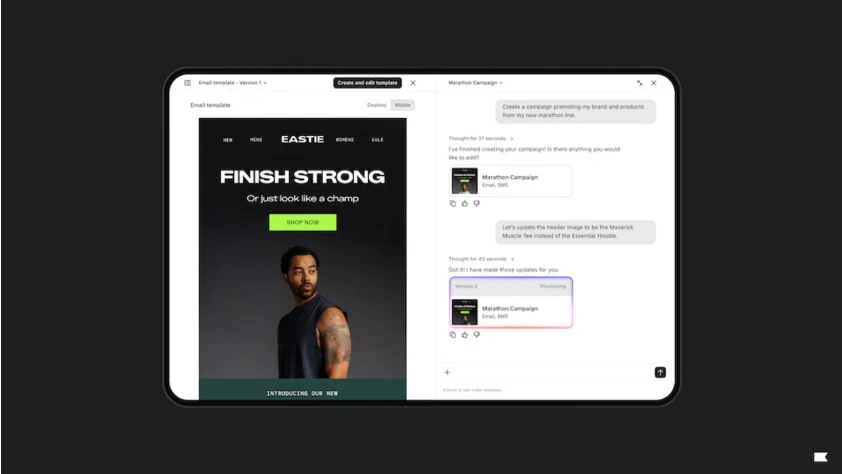
Klaviyo becomes more interesting when its AI works with actual customer and behavioural data rather than functioning as another blank writing interface.
Klaviyo’s current free tier supports up to 250 active profiles and 500 email sends per month and includes 10,000 Composer credits.
For our sample lifecycle workflow, manually reviewing the audience, building a segment, creating the flow and writing the campaign took around 95 minutes. Using Klaviyo’s connected environment reduced the process to 34 minutes.
Klaviyo saved us 61 minutes, the largest raw saving in our mock tests.
What Klaviyo Actually Removed
Its advantage came from joining several jobs that normally happen sequentially: analysing behaviour, defining the segment, building a lifecycle workflow and producing the communication.
This makes the AI more useful than an isolated email generator because it sits closer to both the customer data and execution.
What Still Needed a Human
The marketer still determines whether the segment makes commercial sense, what incentive is appropriate and whether the communication risks over-messaging customers.
Choose Klaviyo if: ecommerce retention and lifecycle marketing are major revenue drivers.
Skip it if: your marketing operation is primarily B2B or unrelated to ecommerce lifecycle work.
Bottom line: Klaviyo can remove a lot of work inside its niche, but that niche is much narrower than ChatGPT or Digimetrics.
10. AdCreative.ai: Best for Paid-Ad Creative Production
Work Removed Score: 7.8/10
Illustrative test: 80 minutes manually → 32 minutes with AdCreative.ai
Time saved: 48 minutes (60%)
Best for: Producing paid-ad variations at higher volume
Human review: High
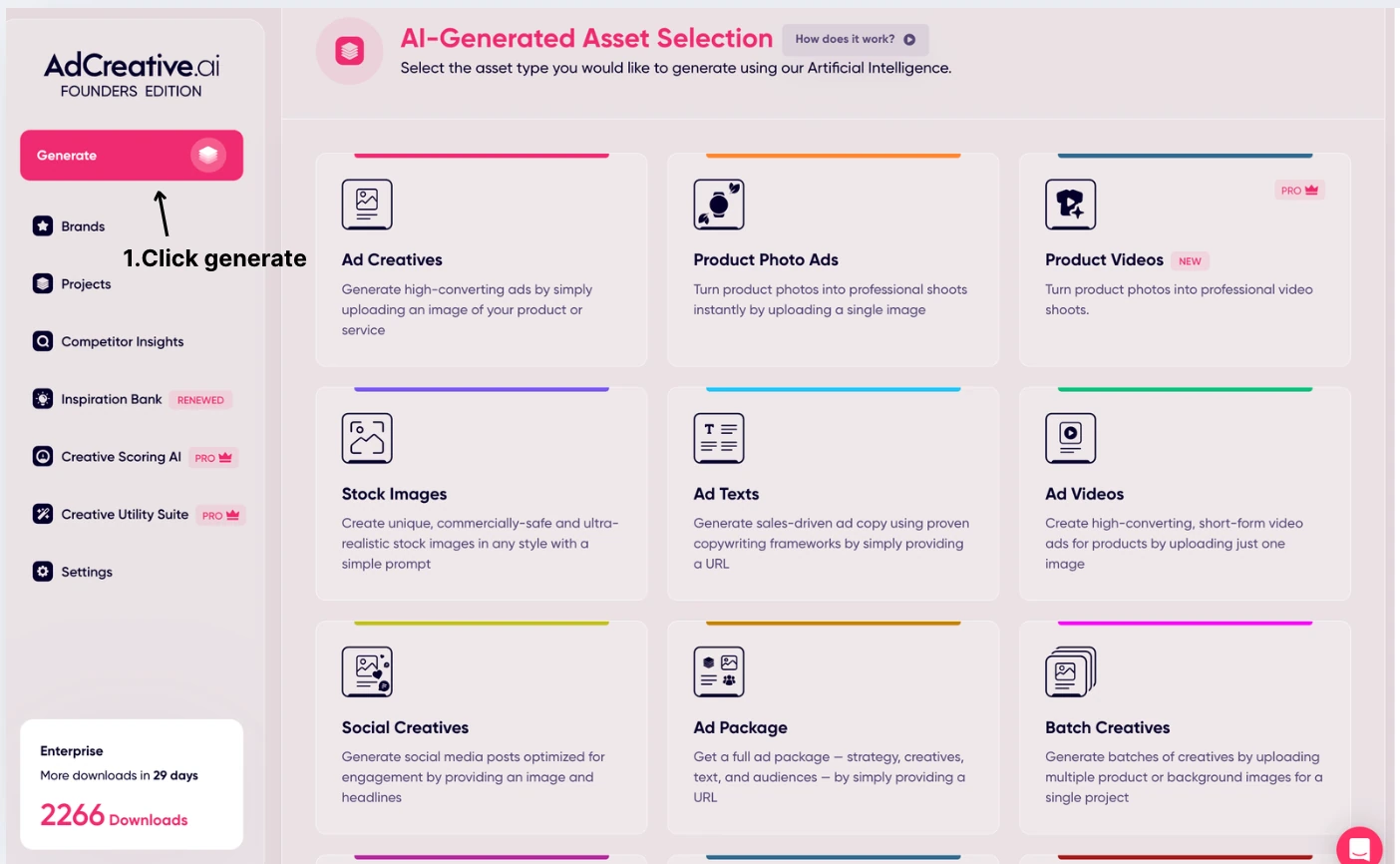
AdCreative.ai focuses on an obvious paid-media bottleneck: once a concept exists, someone still needs to produce enough variations to test.
Its current monthly Starter plan begins at $39, with 10 monthly credits, one brand and unlimited generations. Annual billing reduces the effective monthly price.
For our sample campaign, manually preparing several creative variations from one approved concept took around 80 minutes. Using AdCreative.ai for the production stage reduced the workflow to 32 minutes after selection and review.
AdCreative.ai saved us 48 minutes.
What AdCreative.ai Actually Removed
It shortened the move from one approved concept to multiple testable executions.
That matters when a media team has enough budget and campaign ideas but its creative-production queue prevents it from running enough useful tests.
What It Did Not Remove
It did not tell us which ads would perform.
A polished AI-generated creative still needs a valid offer, appropriate audience, reliable tracking and a testing framework capable of proving whether it improves the campaign.
Choose AdCreative.ai if: creative capacity is restricting your paid-media testing.
Skip it if: your actual problem is the offer, tracking, targeting or strategy.
Bottom line: It removes production work effectively, but marketing performance still gets decided after the creative enters the campaign.
Generation Is Not the Same as Automation
The timed examples reveal an important distinction between the different types of AI marketing software.
| Tool | Main output | What still happens afterward | Work-removal type |
| ChatGPT | Analysis and drafts | Human reviews and executes | Acceleration |
| Digimetrics | Marketing analysis, execution tools and prioritised actions | Human validates and implements higher-level decisions | Workflow consolidation |
| Claude | Research synthesis | Human decides and executes | Acceleration |
| Canva | Creative executions | Human reviews and selects | Production reduction |
| HubSpot Breeze | CRM-aware assistance/actions | Human governs higher-risk work | Workflow reduction |
| Jasper | Brand-controlled content | Human approves/publishes | Production reduction |
| Semrush | Search intelligence | Marketer determines priorities | Analysis reduction |
| Zapier | Cross-app actions | Workflow runs inside defined rules | Task elimination |
| Klaviyo | Lifecycle analysis and execution | Marketer governs strategy | Workflow reduction |
| AdCreative.ai | Ad variants | Media team tests them | Production reduction |
This is why time saved alone does not determine our ranking.
Klaviyo saved 61 illustrative minutes and Zapier eliminated a larger percentage of its assigned task than ChatGPT. ChatGPT still ranks higher because far more marketers can use its capabilities every day.
Digimetrics sits somewhere between a specialist tool and a broader workspace: its 74-minute saving comes from handling multiple adjacent marketing jobs without requiring the user to continually switch environments.
The Hidden Cost: AI Review Debt
An AI tool can produce a draft in ten seconds without saving ten seconds’ worth of total work.
In our ChatGPT example, generation itself accounted for only a small part of the 28-minute AI-assisted workflow. The remainder went into checking sources, selecting the strongest ideas and improving the final message.
We call this AI Review Debt: the editing, verification, formatting and decision-making left behind by an output that initially looks complete.
Imagine AI cuts a 40-minute first draft to five minutes, but the marketer then spends 15 minutes fact-checking it, 10 minutes correcting the brand voice and eight minutes moving everything into another system. The apparent 35-minute saving becomes a two-minute net gain.
That is why Work Removed Score penalises review, setup and manual handoffs rather than rewarding generation speed alone.
How Much Marketing Should AI Actually Own?
The goal should not be maximum autonomy. The right level depends on what the AI is doing and how expensive a wrong decision would be.
| Level | AI’s role | Example | Human involvement |
| 1. Suggest | Generates possibilities | Campaign angles | Human decides |
| 2. Draft | Creates first output | Email or ad copy | Human reviews |
| 3. Recommend | Analyses evidence and proposes action | SEO recommendation | Human approves |
| 4. Execute with approval | Completes approved workflow | Schedule campaign | Human acts as gatekeeper |
| 5. Execute and monitor | Runs bounded recurring work | Lead routing | Human handles exceptions |
A Level 5 automation is not automatically more valuable than a Level 2 assistant. Automatically routing a clearly defined lead may be low risk; automatically changing an organisation’s positioning based on one performance signal is not.
The right amount of AI autonomy depends on the cost of being wrong.
Do You Actually Need Another AI Marketing Tool?
Before subscribing to another platform, ask whether the products you already pay for solve the same problem.
| Situation | What we’d do |
| Your general AI already produces acceptable drafts | Don’t add another basic AI writer |
| Canva already handles creative repurposing | Don’t buy another image tool without a different bottleneck |
| One workspace already covers your SEO/content/GEO workflow | Check whether another specialist adds enough depth to justify overlap |
| CRM AI already has the customer context it needs | Test it before building a disconnected workflow |
| Multiple creators struggle with brand consistency | Consider a governed platform such as Jasper |
| Staff manually move information between apps | Consider Zapier or another automation layer |
| AI produces more recommendations than your team acts on | Fix prioritisation before adding another dashboard |
Five platforms can all generate a headline. That does not mean you need five headline generators.
The next tool should own a new job or perform an existing job materially better.
The AI Marketing Stacks We’d Actually Build
Solo Marketer
A solo marketer can usually begin with one general AI tool plus the platforms already required for actual marketing work.
ChatGPT can handle research, drafting and general analysis, while Canva may cover creative. Digimetrics becomes interesting if that same marketer also handles SEO, content optimisation, GEO, planning and performance analysis and wants to avoid stitching together several smaller products.
The objective is not to create the most impressive AI stack. It is to minimise the number of products required to complete the work.
Small Marketing Team
A small team benefits from assigning one clear job to each platform.
One possible stack is ChatGPT for flexible analysis and creation, Digimetrics for integrated SEO/content/GEO and marketing planning, Canva for deeper creative production and Zapier where work repeatedly crosses applications.
If specialist search research becomes important enough, Semrush can add deeper data. The key is that it should add something genuinely new instead of duplicating functionality already covered well enough.
Agency or Larger Marketing Team
Larger teams face more problems around governance, repeatability and data ownership.
Jasper can become more defensible when many creators need the same brand context. HubSpot Breeze becomes valuable when the CRM already owns customer data. Semrush can provide deeper specialist search intelligence, while automation platforms remove repetitive operations across accounts.
At this scale, a tool may save more money by making 30 people’s work consistent than by making one person’s draft faster.
Which AI Marketing Tool Should You Choose?
| Your main bottleneck | Tool we’d investigate first | Why |
| Research, drafting and general marketing analysis | ChatGPT | Broadest everyday usefulness |
| SEO, content, GEO and strategy are spread across too many tools | Digimetrics | Consolidates several marketing workflows |
| You repeatedly synthesise large amounts of source material | Claude | Strong research and long-context fit |
| Creative repurposing creates a production queue | Canva | Removes repetitive design execution |
| Marketing depends heavily on CRM context | HubSpot Breeze | AI works alongside customer data |
| Content teams struggle with brand consistency | Jasper | Shared brand context and governance |
| You need deeper specialist SEO/AI-search intelligence | Semrush | Mature search datasets |
| Staff repeatedly move information between tools | Zapier | Can eliminate entire handoffs |
| Ecommerce lifecycle work consumes too much time | Klaviyo | Customer data plus lifecycle execution |
| Ad testing is constrained by creative production | AdCreative.ai | Produces more testable variants |
Start with the bottleneck, not the product name.
If your team loses five hours a week switching between search, content and reporting systems, adding another generic writing tool will not fix that. If your paid-media programme is waiting on creative production, buying deeper SEO analytics will not solve the current constraint either.
Frequently Asked Questions
What Is the Best AI Marketing Tool in 2026?
ChatGPT is our best overall pick because it can support research, analysis, ideation, drafting and other everyday marketing work from one environment. In our illustrative workflow, ChatGPT reduced a 75-minute research-and-drafting task to 28 minutes, saving 47 minutes.
For marketers whose workflow centres on SEO, content, GEO, strategy and connected performance data, Digimetrics is our stronger all-in-one marketing-specific pick.
Is Digimetrics an AI Marketing Tool?
Yes. The current Digimetrics workspace contains 36 tools spanning SEO, content, AI visibility, strategy and marketing integrations, alongside its Monty AI concierge.
It covers functions ranging from keyword analysis and technical SEO to content optimisation, AI mentions, personas, media planning, ad copy and connected marketing-performance data, which is why we include it as a full ranked entry rather than only an SEO add-on.
What Are AI Marketing Tools Used For?
AI marketing tools can assist with research, strategy, content, design, SEO, GEO, segmentation, email, paid media, reporting and workflow automation.
The more useful distinction is whether a tool suggests, drafts, recommends, executes or eliminates part of the workflow.
Can AI Automate Digital Marketing?
Parts of it, yes.
Our illustrative Zapier workflow reduced 55 minutes of repetitive manual work to around seven minutes of oversight because most of the process could run within predefined rules. Higher-risk decisions should retain stronger human approval.
Should I Use ChatGPT or a Specialist AI Marketing Tool?
Use ChatGPT or another general AI when the work mainly involves reading, analysing, transforming and generating information.
Choose a specialist platform when it adds something a general AI lacks: proprietary data, CRM context, dedicated creative production, integrated marketing workflows, automation or stronger governance.
How Many AI Marketing Tools Do I Need?
Usually fewer than you can individually justify.
Give each platform a specific job. If two tools repeatedly solve the same problem, compare the net work removedrather than keeping both because each has an AI feature.
Can AI Marketing Tools Replace Marketers?
They can eliminate individual tasks more readily than they can replace ownership of the entire marketing function.
Someone still needs to determine which audience matters, which evidence should be trusted, what trade-offs are acceptable and whether a campaign produced a useful commercial result.
How Do You Measure Whether an AI Marketing Tool Is Worth Paying For?
Measure net work removed, not outputs generated.
Our illustrative tests had ChatGPT saving 47 minutes on research and drafting, Digimetrics saving 74 minutes across a broader SEO/content/GEO workflow, Canva saving 38 minutes on creative repurposing and Zapier removing 48 minutes from a recurring operational process.
Those figures only become useful after setup, review and manual handoffs are included.
Final Verdict
The best AI marketing tools in 2026 are not necessarily the ones capable of generating the most content.
ChatGPT remains our strongest overall starting point because its flexibility applies across more everyday marketing jobs. Digimetrics moves into second place because its 36-tool workspace covers an unusually broad marketing-specific range across SEO, content, GEO, strategy and connected performance data rather than limiting AI to one output type.
Claude is more compelling when research synthesis is the bottleneck, while Canva Magic Studio removes repetitive creative-production work. HubSpot Breeze benefits from customer context already living in the CRM, and Jasper makes more sense as content volume and brand-governance requirements grow.
For specialist search intelligence, Semrush still brings depth that broader platforms may not match. Zapier earns the highest Work Removed Score because its best workflows can make repetitive manual work almost disappear, while Klaviyo and AdCreative.ai make stronger cases when ecommerce lifecycle work or paid-ad creative production is the specific bottleneck.
The purchase test is simple: identify the work that repeatedly consumes your team’s time, measure how much of it the AI genuinely removes, then subtract the setup, review and extra workflow it creates.
If a new AI tool cannot make a meaningful piece of work disappear, or do an existing job materially better, you probably do not need another AI subscription.
Disclosure: digitalmarketingtools.ai is sponsored by Digimetrics.ai. Sponsored Highlights are clearly labelled advertising. Our reviews, comparisons and guides are written to be useful and fair regardless of who sponsors the site. Read the full disclosure.


