
How to Choose the Right SEO Tool for Your Business

If you’re trying to understand how to choose the right SEO tool for business needs, don’t start by comparing feature lists. Start with the SEO problem you actually need the software to solve.
That sounds simple, but choosing an SEO tool gets difficult when almost every platform promises roughly the same things: better keyword research, deeper competitor insights, technical audits, rank tracking, easier reporting and, increasingly, AI-assisted recommendations.
The right SEO tool is not necessarily the platform with the biggest keyword database, the most reports or the longest feature list. It is the one your team can consistently turn into better decisions without paying for capabilities that sit unused.
We prefer a fit-before-features approach: identify your biggest SEO bottleneck first, then compare tools based on their data, workflow fit, coverage, real cost and how well they perform when given the same task.
If you’re still figuring out how keyword tools, crawlers, backlink platforms and rank trackers fit together, our guide to the main types of SEO tools is a better place to start before comparing individual platforms.
Quick Answer: How Do You Choose the Right SEO Tool?
To choose the right SEO tool for your business, evaluate it against six factors:
| Factor | Question to Ask |
| SEO bottleneck | What problem do we actually need the tool to solve? |
| Data usefulness | Does its data help us make better decisions? |
| Workflow fit | Will our team actually use it regularly? |
| Tool coverage | Do we need an all-in-one platform or a specialist tool? |
| Real cost | What will the platform actually cost at our usage level? |
| Proof of value | Does it perform well when tested on our real work? |
The order matters.
Don’t begin with “Which SEO tool is best?”
Begin with:
“What do we need an SEO tool to help us do better?”
That sounds like a small distinction, but it changes the entire buying process.
1. Start With Your Biggest SEO Bottleneck
Before opening another comparison page or activating another free trial, identify what is currently slowing down your SEO workflow.
Different problems require different capabilities.
| Current SEO Problem | Capability to Prioritise |
| You don’t know which topics to target | Keyword research and planning |
| Rankings aren’t improving | Rank tracking and competitor analysis |
| Important pages aren’t being indexed | Technical SEO and site auditing |
| Competitors consistently outrank you | Competitor and backlink analysis |
| Content gets impressions but struggles to rank | Content and SERP optimisation |
| Local visibility is weak | Local SEO and location rank tracking |
| Reporting takes too much time | Reporting and automation |
| You’re juggling too many SEO platforms | All-in-one SEO suite |
This helps avoid a common purchasing mistake: buying software because it can do a lot instead of because it does what you need.
Suppose your immediate problem is technical. Pages aren’t being indexed properly, redirects are breaking and internal links have become messy.
Another sophisticated keyword database won’t fix that.
A crawler might.
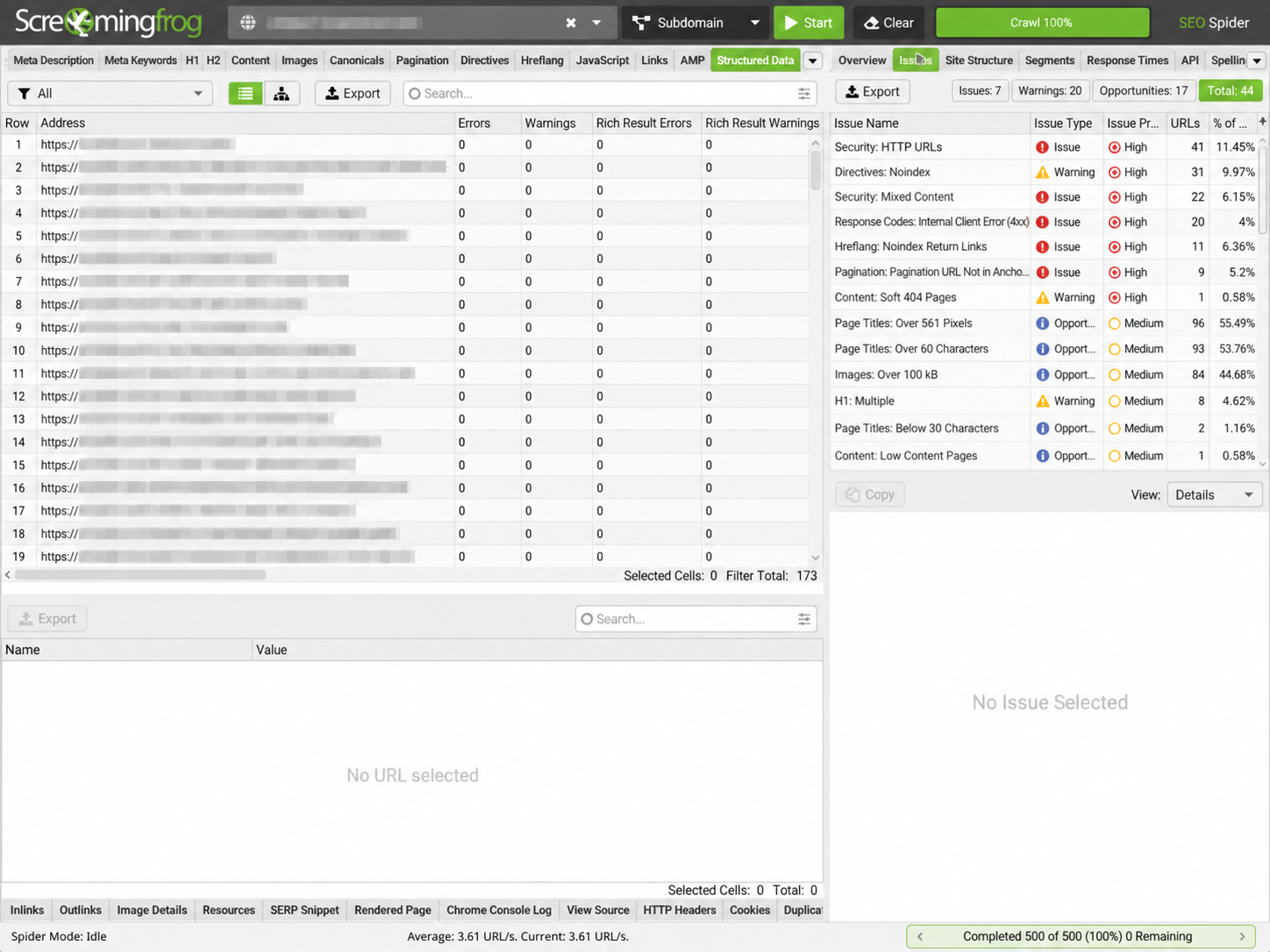
Screaming Frog’s SEO Spider, for example, can crawl a website to investigate technical issues, and its free version currently allows up to 500 URLs per crawl before you need a licence.
If technical auditing is already the bottleneck, our guide on what an SEO audit tool actually checks goes deeper into where crawlers help and where you still need human judgement.
The first question is therefore simple:
What job are we hiring this tool to do?
If you cannot answer that clearly, comparing subscriptions is probably premature.
2. Evaluate the Data, Not Just the Number of Features
Once you know the problem, look at the evidence each platform gives you.
The useful question isn’t:
Which platform has the most data?
It’s:
Can we confidently use this data to make a better decision?
That distinction matters because many familiar SEO metrics are estimates or proprietary calculations.
Ahrefs openly explains that search volume in SEO tools is an estimate rather than an exact count and combines Google Keyword Planner, Google Trends and third-party information in its methodology. You can read Ahrefs’ explanation of search-volume accuracy if you want to see how it approaches those numbers.
Semrush takes a different approach, using third-party and historical clickstream data with computational models. Its search-volume methodology also makes clear that the number is modelled rather than a literal count of every search.
So if Ahrefs says a keyword receives 26,000 searches per month and another platform says 22,200, that doesn’t automatically mean one is broken.
The more useful question is what each number helps you decide.
Compare Third-Party Estimates With First-Party Evidence
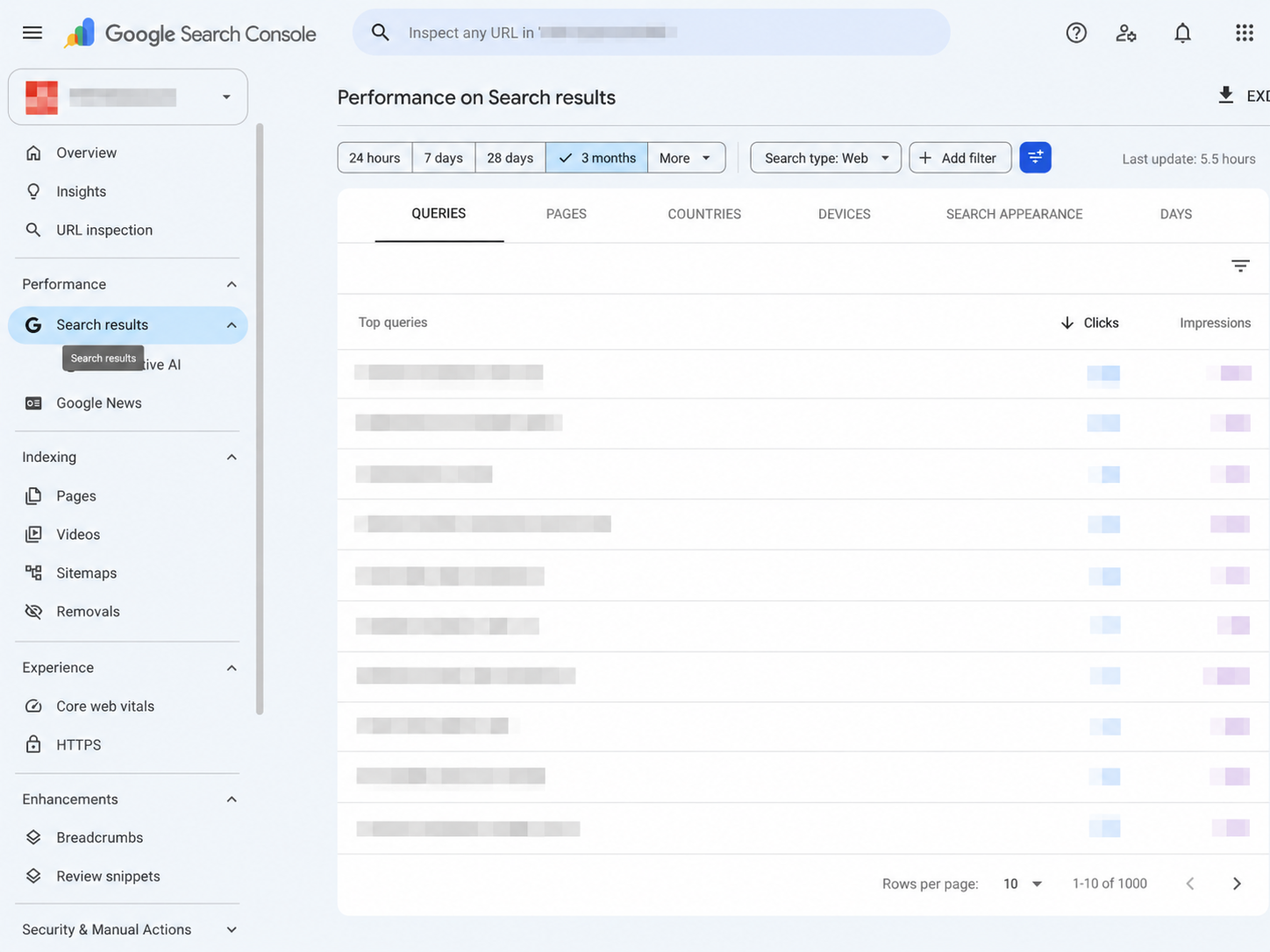
For websites you already manage, Google Search Console’s Performance report gives you direct information about how the site appears in Google Search, including queries, clicks and impressions.
That gives you a useful anchor when evaluating a third-party platform.
If one tool estimates 5,000 searches and another estimates 3,500, ask:
- Do both show meaningful demand?
- Do they point to similar trends?
- What does the live SERP show?
- Does Search Console support the opportunity?
- Does either tool reveal something useful that the other misses?
The same principle applies to competitor traffic estimates, Keyword Difficulty scores and authority metrics.
Treat SEO metrics as decision signals, not unquestionable facts.
If you’re specifically comparing free keyword sources, we also tested what you can realistically get without paying in our free SEO keyword tools comparison.
3. Check Whether Your Team Will Actually Use It
A powerful SEO platform delivers very little value if nobody wants to open it.
That makes workflow fit one of the most overlooked factors when choosing the right SEO tool for a business.
A technical SEO specialist may be comfortable with crawl configurations, raw exports and advanced filters.
A content marketer may mostly need keyword opportunities, competitor pages and content gaps.
A business owner may simply want to know whether visibility is improving and which issues deserve attention first.
Those users don’t necessarily need the same software.
Test the Workflow With an Actual Task
Instead of judging only the dashboard, ask the people who will actually use the tool to complete real work.
For example:
- Find five keyword opportunities.
- Analyse one competing domain.
- Audit one important page.
- Identify the highest-priority SEO problem.
- Export something useful for a report or content brief.
Pay attention to how much friction sits between the question and the answer.
A feature being available isn’t the same as a feature being usable.
Also consider the less exciting things that matter after the demo:
- User seats and permissions
- Saved projects
- Export options
- Scheduled reporting
- API access
- Integrations
- Documentation
- Support
- Automation
If competitor research is the reason you’re shopping in the first place, our breakdown of SEO competitor analysis tools covers what you should actually expect those platforms to reveal.
4. Decide Between an All-in-One SEO Platform and Specialist Tools
Once you understand the problem and workflow, decide how broad the tool needs to be.
If your team regularly moves through:
keyword research → competitor analysis → content → auditing → rank tracking → reporting
an all-in-one platform can reduce handoffs between different systems.
If one area matters much more than the others, a specialist product may offer greater depth.
A technical SEO team might still use a dedicated crawler even when its primary SEO platform includes an audit module.
A link-building team may prefer a deeper backlink database.
A local business may care more about granular location tracking than enterprise reporting.
You also don’t need to choose between one giant platform and ten disconnected tools.
For many businesses, a sensible stack is:
one primary SEO platform + one specialist tool for the area where extra depth is required.
Backlink research is a good example. If that’s an important part of your workflow, our guide on how backlink analysis tools work explains why the underlying links and referring domains often matter more than one headline authority score.
Where Digimetrics Fits
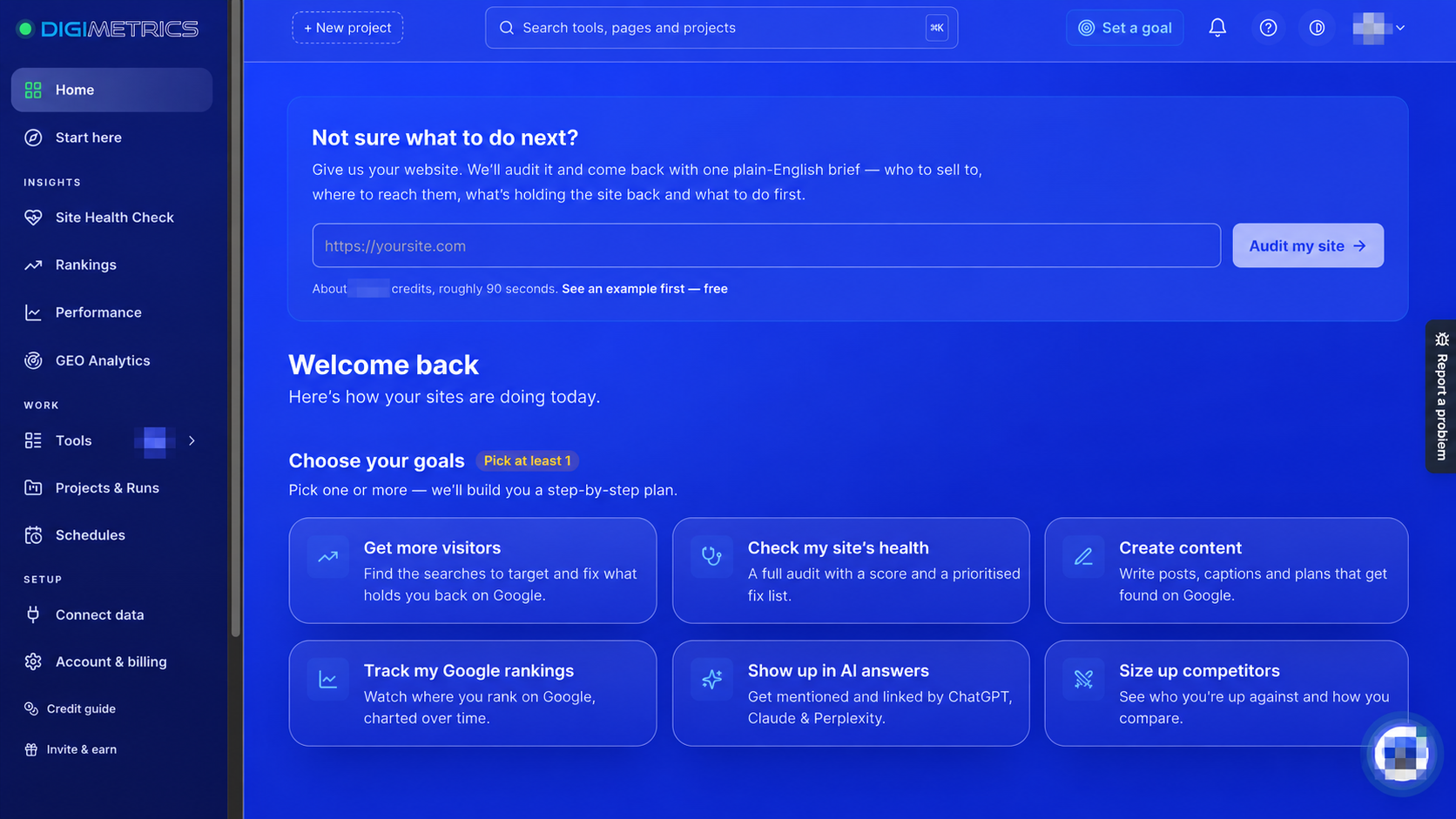
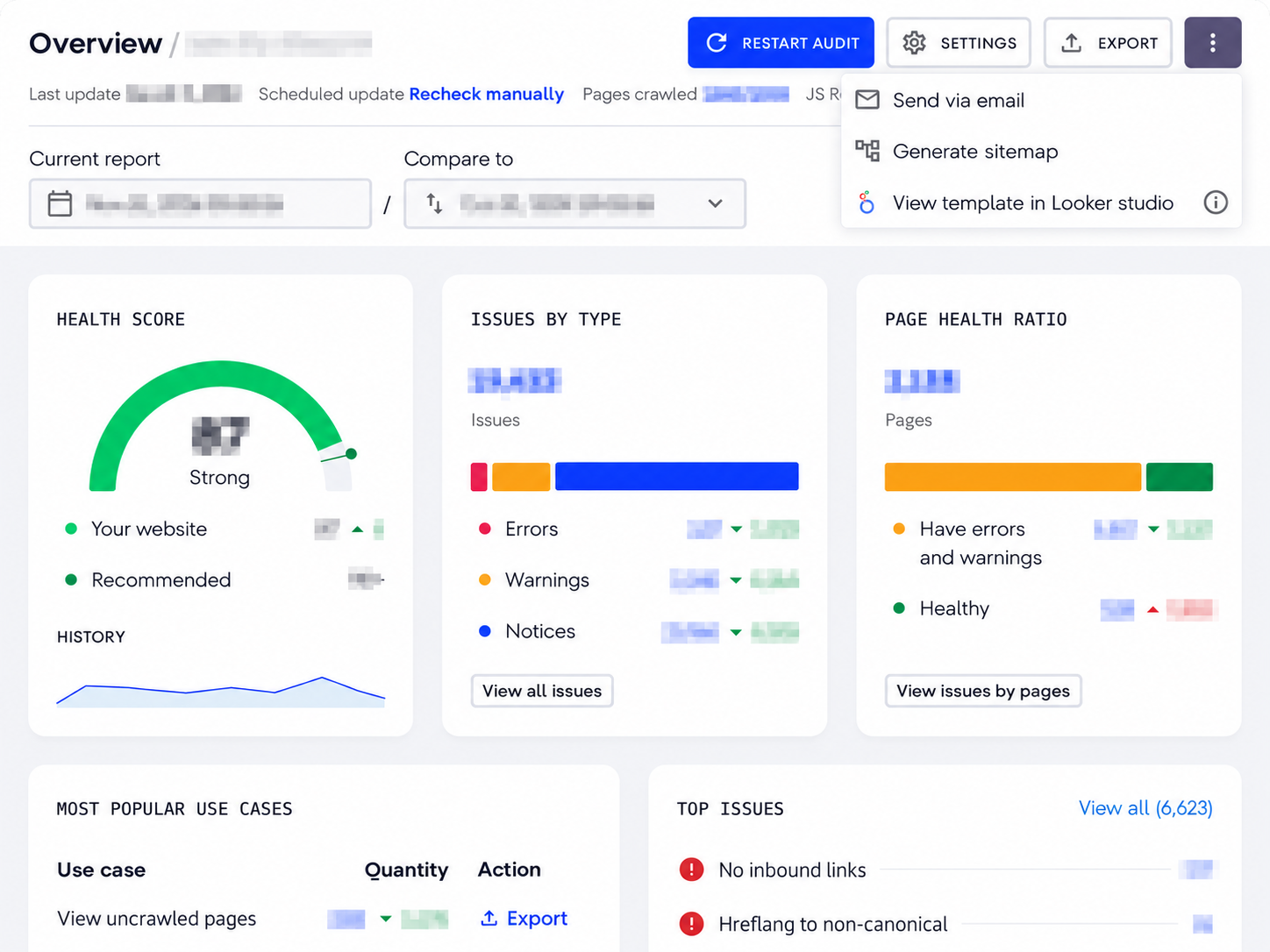
Digimetrics takes the integrated-workspace approach. Its current platform brings keyword research, rank tracking, technical auditing, content optimisation and other SEO/GEO workflows into the same environment.
Disclosure: Digimetrics is developed by the MediaOne team, which also operates DigitalMarketingTools.ai. We included it because its audit and optimisation workflow is directly relevant to this comparison. It was tested using the same inputs and scoring criteria as Semrush, Ahrefs and SE Ranking, without preferential weighting. In our testing, established specialist platforms ranked higher where their databases, reporting capabilities or specialist workflows currently offered greater depth and market maturity.
You can explore the platform in more detail on our Digimetrics profile, but the important question here isn’t whether one platform can technically do everything.
It’s:
Would consolidating these jobs make our actual workflow better?
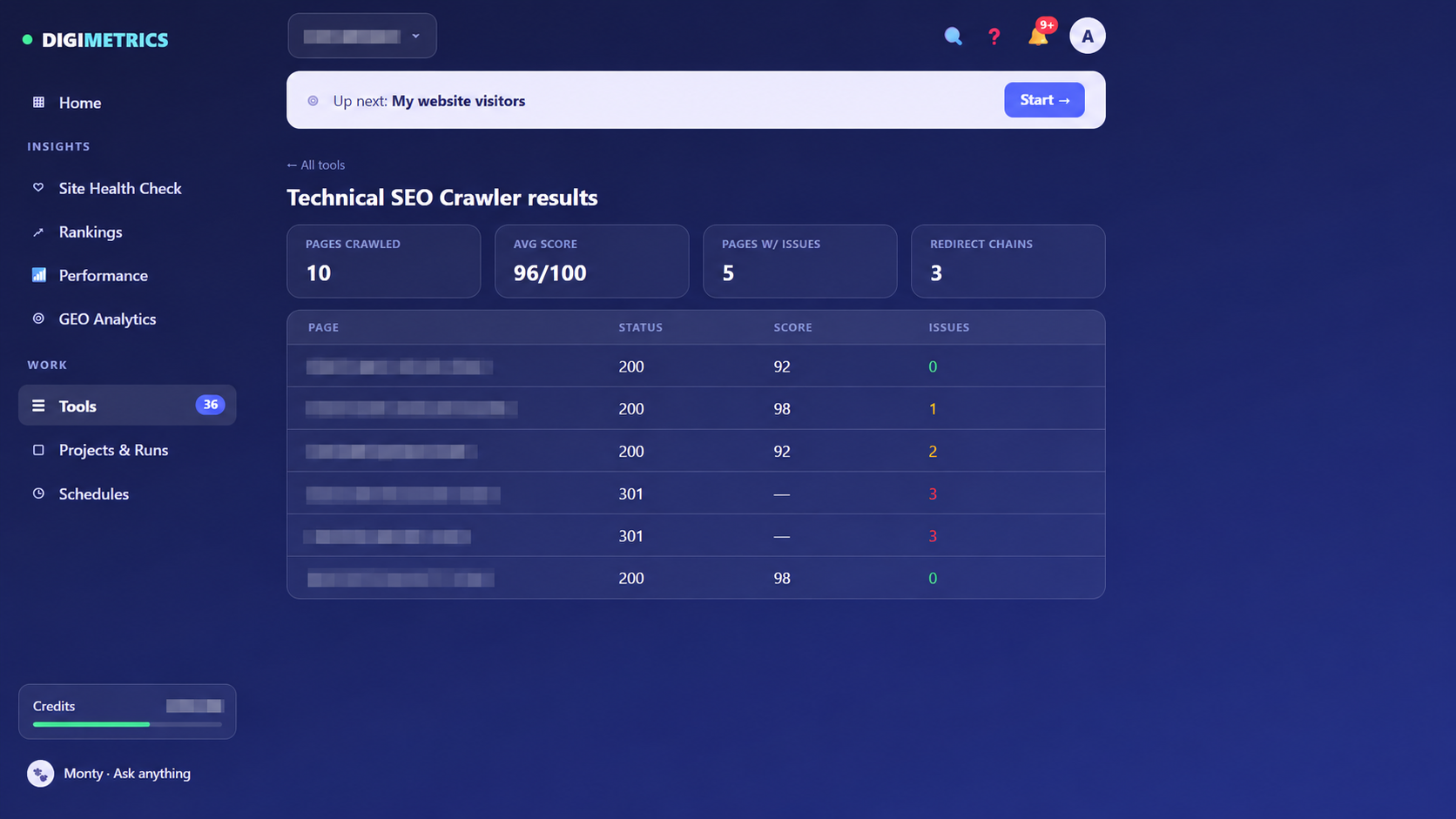
That distinction also matters later in our same-task test. Digimetrics was competitive in several workflows, particularly when turning findings into prioritised next actions, but it did not win any of the five individual tests. Semrush performed better overall for keyword research and reporting, Ahrefs led technical and competitor analysis, and SE Ranking produced the strongest rank-tracking workflow.
That is exactly how we want to treat an affiliated product in these comparisons: include it where relevant, disclose the relationship clearly, then let the same test determine the result.
5. Calculate the Real Cost, Not Just the Subscription Price
Comparing only the monthly number on a pricing page can hide what an SEO stack really costs.
A more useful model is:
Real SEO Tool Cost = Base Subscription + Extra Users + Usage Costs + Add-ons + Additional Tools Still Required + Operational Time
Imagine Tool A costs less than Tool B.
Tool A looks cheaper until your team realises it still needs a separate crawler, reporting product and rank tracker.
Tool B may have the higher subscription but the lower overall stack cost.
The reverse can happen too. An expensive all-in-one platform might include dozens of functions the team never touches, while two focused products handle everything important for less.
Check the Limits That Affect Your Workflow
Before committing, inspect limits around:
- Projects
- Users
- Tracked keywords
- Crawled URLs
- Competitor reports
- Historical data
- AI credits
- Content reports
- Exports
- API access
Those limits can change the value equation quickly.
For example, Screaming Frog’s free crawler currently stops at 500 URLs, while the licensed version removes that crawl limit and unlocks more advanced functionality.
A 100-page local business site and a 100,000-page ecommerce site will therefore judge the same tool very differently.
The same applies to full SEO platforms. Semrush’s current SEO Toolkit tiers differ in websites, tracked keywords, crawl allowances and reporting features, while Ahrefs and SE Ranking vary their own limits by plan.
If you’re buying specifically for a smaller company, our SEO tools for small businesses guide looks at that decision with tighter budgets and smaller teams in mind.
A plan isn’t cheap because its entry price is low.
It’s cheap when your normal workflow fits inside it.
6. We Ran the Same SEO Tasks Through Four Tools
Feature tables tell you what a vendor says its platform can do.
They don’t tell you which platform actually makes your work easier.
So we ran the same SEO workflow through four paid platforms:
- Semrush SEO Guru
- Ahrefs Standard
- SE Ranking Core
- Digimetrics Pro
Our Test Setup
Test date: 3 October 2026
Website: An anonymised global B2B project-management software website
Audience: International English-language buyers
Research market: United States national data
Device: Desktop
Seed keyword: project management software
Target page: Main project-management software landing page
Competitor: An established global project-management platform, anonymised for the test
Tester: One experienced SEO analyst
For rank tracking, we used the same ten keywords:
- project management software
- best project management software
- project management tools
- online project management software
- task management software
- project management app
- project management software for small business
- project management software for teams
- agile project management software
- free project management software
We checked the plan names and current limits again on 6 October 2026 against the official product information for Semrush, Ahrefs, SE Ranking and Digimetrics. Product features and limits can change, so always recheck the current plan before buying.
How We Kept the Test Consistent
The same analyst completed every task.
We kept the website, seed keyword, competitor, location and device the same wherever each platform supported those controls, and used default settings unless changing a setting was necessary to match the test conditions.
We weren’t trying to reward whichever product returned the biggest database or longest warning list.
The question throughout the test was:
Did this information make the next SEO decision clearer?
This is one controlled workflow, not a universal benchmark. Databases update, product features change and another team with different priorities could reasonably score the same tools differently.
Same-Task Test 1: Keyword Research
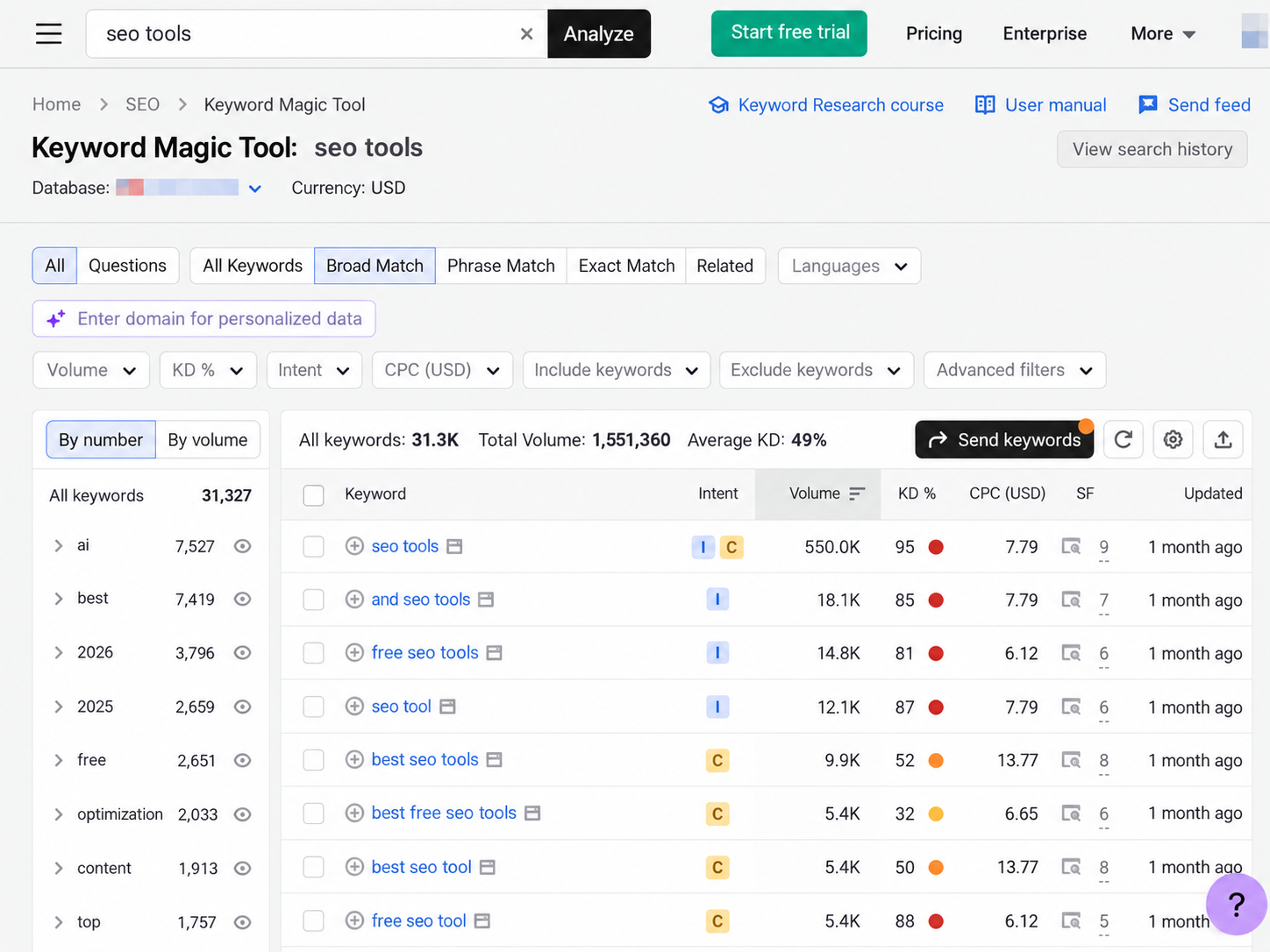
First, we gave every platform the same seed:
project management software
The analyst had to identify one useful opportunity for the existing landing page without changing the initial market or seed.
We compared keyword breadth, search volume, difficulty, intent, useful discoveries and how quickly each tool got us to something actionable.
Keyword Research Results
| Tool | Keywords Returned | Seed Volume | Difficulty | Intent | Most Useful Discovery | Time to Useful Answer | Score |
| Semrush SEO Guru | 12,460 | 22,200 | 78 | Commercial | project management software for small business — 2,900 volume, KD 61, clear use-case cluster | 4m 20s | 4.6/5 |
| Ahrefs Standard | 15,320 | 26,000 | 84 | Commercial | simple project management software — 1,200 volume with traffic-potential and linking-page context | 5m 10s | 4.5/5 |
| SE Ranking Core | 9,840 | 18,100 | 76 | Commercial | project management software for teams — 1,600 volume with a less competitive SERP | 4m 45s | 4.3/5 |
| Digimetrics Pro | 2,140 | 21,000 | 72 | Commercial | project management software for marketing teams — 480 volume, mapped to the existing page with a recommended action | 3m 35s | 4.4/5 |
The first thing that stood out was how differently the four platforms described the same market.
Ahrefs returned the largest keyword set and the highest seed volume. Semrush returned fewer keywords but did a better job of combining intent, clusters and SERP context into something we could use quickly.
Digimetrics had the smallest research footprint, but it moved from the keyword to a page-level recommendation fastest. SE Ranking was straightforward to scan and surfaced a relatively achievable variation, though its tested opportunity set was narrower than Semrush and Ahrefs.
Keyword research winner: Semrush SEO Guru — 4.6/5
For this task, Semrush offered the best balance of breadth, clustering, intent and decision-ready evidence without forcing us to work through the largest raw list.
Same-Task Test 2: SEO Audit
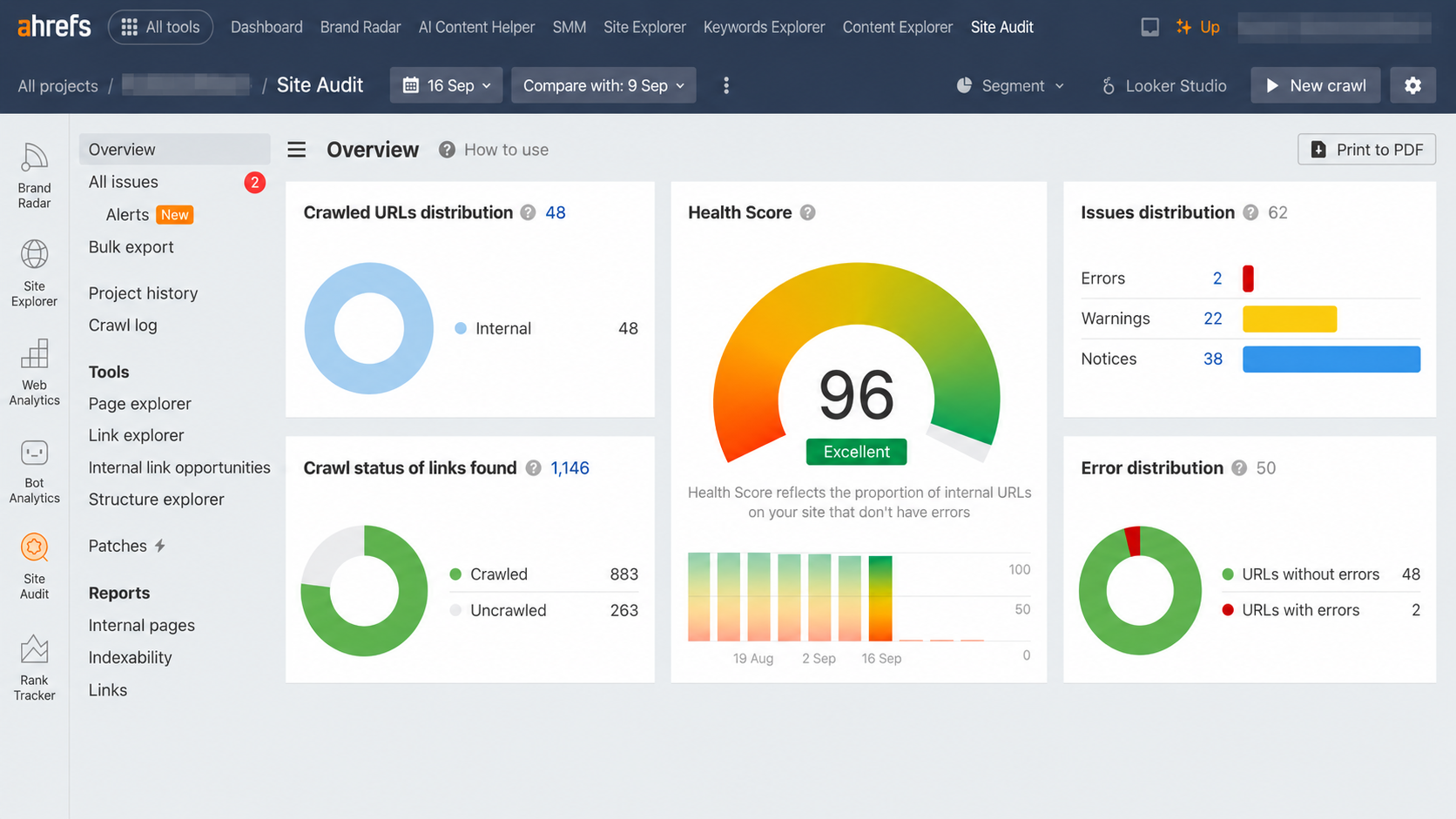
Next, we gave each platform the same crawl scope:
118 canonical HTML pages, seven redirecting URLs and one XML sitemap.
We cared less about the total number of warnings than whether the findings were correct, material and easy to prioritise.
That’s important because crawl totals can differ simply because tools use different default configurations. Screaming Frog makes the same point in its explanation of why different crawlers can return different URL and issue counts.
SEO Audit Results
| Tool | URLs Crawled | Issues Found | Critical | False Positives | Best Finding | Score |
| Semrush SEO Guru | 124 | 176 | 7 | 3 | Canonical loop affecting four location/service pages | 4.5/5 |
| Ahrefs Standard | 121 | 143 | 6 | 2 | Revenue-focused service page was noindexed but still linked in the main navigation | 4.6/5 |
| SE Ranking Core | 123 | 191 | 8 | 5 | Twelve internal links passed through an avoidable redirect chain | 4.2/5 |
| Digimetrics Pro | 118 | 97 | 5 | 2 | Connected the noindexed service page with weak internal support for its target query | 4.4/5 |
This is a good example of why more warnings doesn’t automatically mean a better audit.
SE Ranking reported the most issues, but several were lower-impact notices or repeated template problems.
Ahrefs made the highest-priority indexability problem easiest to isolate and verify. Semrush was close behind and surfaced a canonical problem that deserved immediate attention.
Digimetrics returned the shortest list of the four, but we liked how it connected the technical finding with the page’s target query instead of treating it as an isolated crawler warning.
Technical audit winner: Ahrefs Standard — 4.6/5
Its issue grouping, affected-page drill-down and low false-positive count produced the clearest technical fix list for this site.
Same-Task Test 3: Competitor Analysis
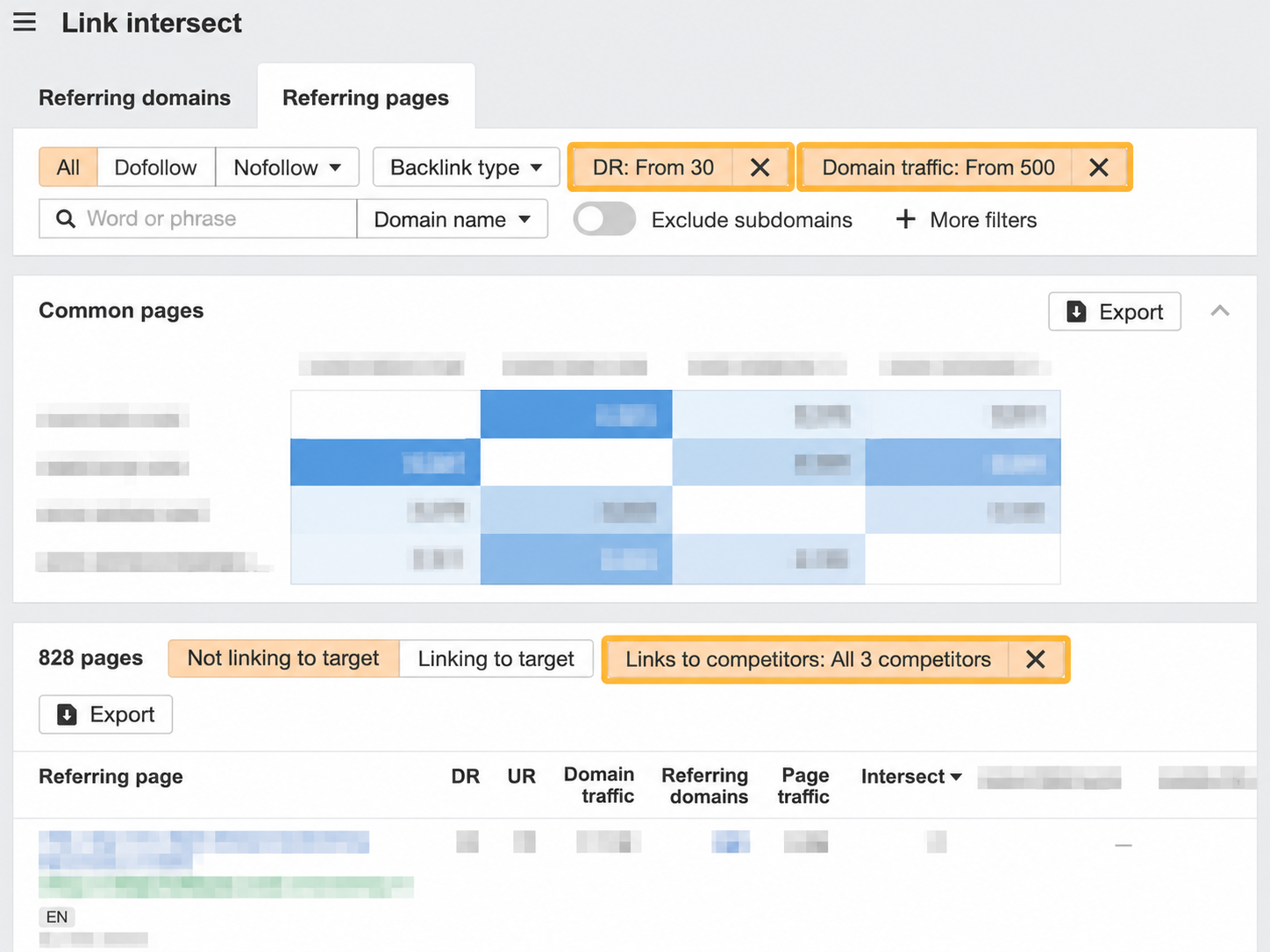
For competitor research, every tool received the same anonymised global software competitor.
The assignment was simple:
Find one useful organic-search opportunity and one plausible backlink opportunity.
We weren’t rewarding whichever platform estimated the most traffic.
Competitor Analysis Results
| Tool | Organic Keywords | Estimated Monthly Traffic | Keyword Gaps | Useful Link Opportunity | Best Insight | Score |
| Semrush SEO Guru | 186,400 | 1.28M | 6,840 | 38 software directories and editorial roundups linking to comparable platforms | Comparison and use-case pages generated an estimated 39% of organic traffic | 4.7/5 |
| Ahrefs Standard | 164,700 | 1.05M | 5,920 | 52 Link Intersect domains linking to at least two competitors but not the test site | Six free templates and research pages attracted 44% of referring domains | 4.8/5 |
| SE Ranking Core | 176,900 | 1.18M | 6,230 | 31 common referring domains across software, productivity and business sites | Visibility growth was concentrated in refreshed comparison and integration pages | 4.3/5 |
| Digimetrics Pro | 142,600 | 920,000 | 3,740 | 14 relevant editorial and software-directory prospects paired with content angles | Existing landing page could absorb 18 gap terms before a new use-case page was needed | 4.4/5 |
Again, the estimated numbers varied considerably.
That reinforced the point from earlier in this guide: third-party traffic and keyword counts are best treated directionally rather than as interchangeable facts.
Semrush provided the clearest market-wide gap view.
Ahrefs gave us the strongest page-level link evidence, and Link Intersect produced the most convincing outreach shortlist because those domains were already linking to multiple competitors.
Digimetrics returned fewer opportunities, but narrowed them into a more manageable set for a smaller team.
SE Ranking answered the essential competitor questions well, although its backlink evidence was less detailed than Ahrefs in this scenario.
Competitor research winner: Ahrefs Standard — 4.8/5
If competitor backlinks are the deciding factor in your own tool search, our backlink analysis guide goes further into what you should validate before trusting the database.
Same-Task Test 4: Rank Tracking

For rank tracking, every platform received the same ten keywords.
Location: United States, national
Device: Desktop
Search engine: Google
We compared setup time, refresh frequency, location control and how easily the tracker helped us interpret movement.
Rank Tracking Results
| Tool | Setup Time | Keywords | Update Frequency | Location Control | Most Useful Feature | Score |
| Semrush SEO Guru | 7m 10s | 10 | Daily | Country, device and additional target controls | Cannibalisation, SERP-feature and visibility reporting | 4.6/5 |
| Ahrefs Standard | 6m 50s | 10 | Weekly by default | Country, city/postcode and device | Share of Voice and SERP history | 4.1/5 |
| SE Ranking Core | 4m 25s | 10 | Daily | Country, city, postcode, search engine and device | Clearest daily movement view with competitor visibility | 4.8/5 |
| Digimetrics Pro | 3m 50s | 10 | Daily scheduled run | National market and desktop | Ranking movement connected to diagnostics and Time to Rank guidance | 4.5/5 |
Here, refresh frequency and setup friction changed the result.
Ahrefs still gave useful Share of Voice and historical context, but its tested default was less suited to a team wanting a daily operating view.
Semrush had broad context around the ranking data but took the longest to configure.
Digimetrics was fastest to set up and tied ranking movement back to recommended actions.
SE Ranking produced the cleanest dedicated rank-tracking experience, with daily updates and granular location controls.
Rank-tracking winner: SE Ranking Core — 4.8/5
This was the clearest example in the test of a specialist workflow beating the platform that had performed best in another category.
Same-Task Test 5: Reporting and Workflow
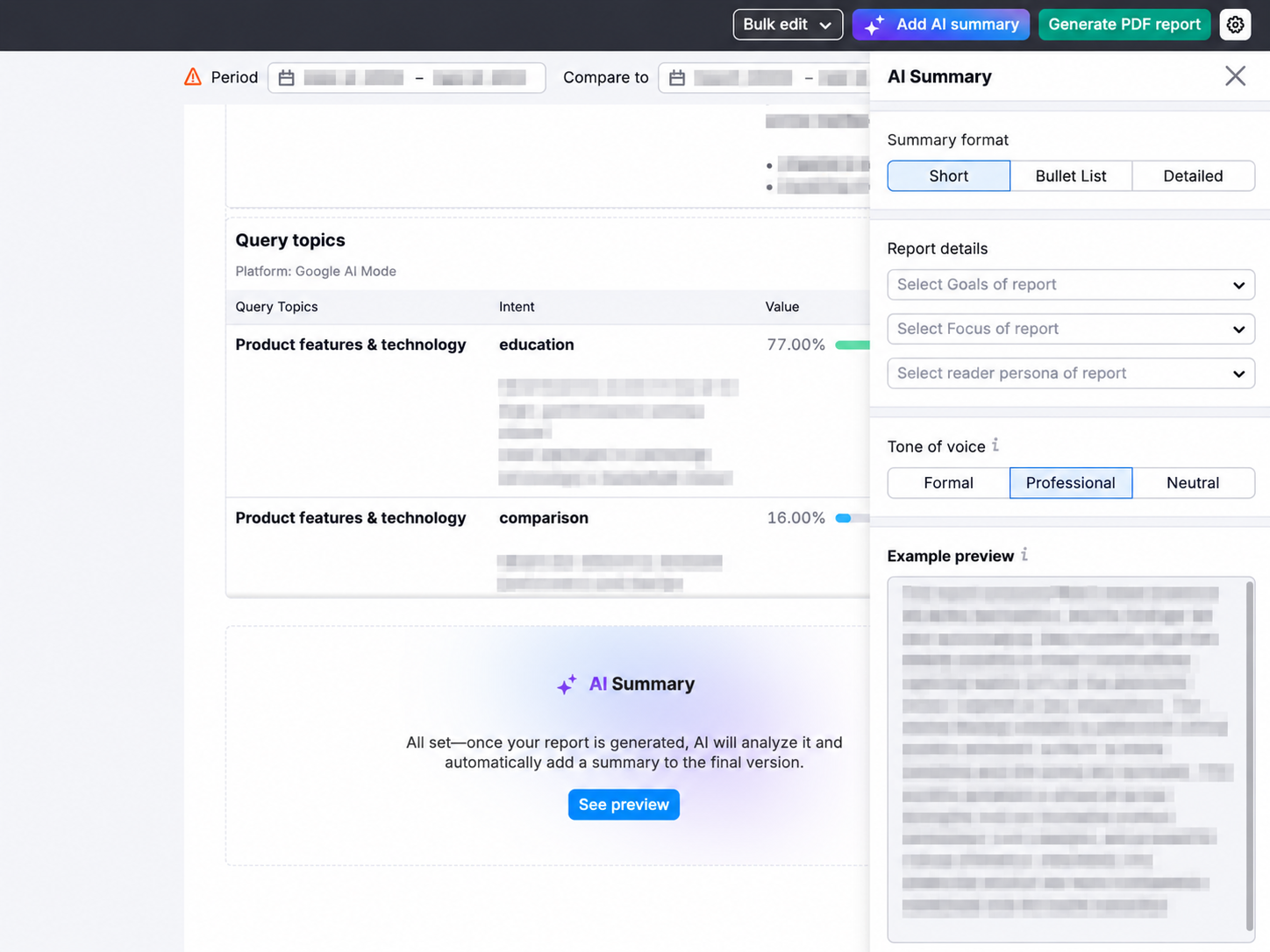
Finally, we asked each platform to help produce the same stakeholder update:
- Current organic visibility
- Important ranking movement
- Primary technical issue
- Best keyword opportunity
- Competitor opportunity
- Recommended next action
This wasn’t just a test of whether a PDF button existed.
We looked at how much work remained before a manager outside the SEO team could actually use the report.
Reporting Results
| Tool | Time to Report | Output Used | Manual Cleanup | Easy for Non-SEO Reader? | Score |
| Semrush SEO Guru | 11m 40s | Scheduled PDF, CSV/XLSX and Looker Studio | Low | Yes | 4.7/5 |
| Ahrefs Standard | 18m 20s | Reports dashboard and CSV exports | Medium | Mostly | 4.1/5 |
| SE Ranking Core | 13m 10s | Report Builder, PDF, XLS/CSV and Looker Studio | Low | Yes | 4.6/5 |
| Digimetrics Pro | 9m 25s | Workspace dashboard, connected-source views and scheduled-run summaries | Medium | Yes, after a short handoff | 4.2/5 |
Semrush produced the most stakeholder-ready combination of widgets, context and reusable output.
SE Ranking was close behind, especially for project and ranking reporting.
Digimetrics created the fastest working summary and made the next action particularly clear, but the tested Pro workflow had fewer handoff options than the dedicated reporting systems.
Ahrefs remained strong for analyst investigation, but converting that evidence into a polished general-management update took the most manual assembly.
Reporting/workflow winner: Semrush SEO Guru — 4.7/5
What the Same-Task Test Actually Shows
Putting all five tasks together gives us this:
| Category | Semrush | Ahrefs | SE Ranking | Digimetrics | Winner |
| Keyword research | 4.6 | 4.5 | 4.3 | 4.4 | Semrush |
| Technical audit | 4.5 | 4.6 | 4.2 | 4.4 | Ahrefs |
| Competitor analysis | 4.7 | 4.8 | 4.3 | 4.4 | Ahrefs |
| Rank tracking | 4.6 | 4.1 | 4.8 | 4.5 | SE Ranking |
| Reporting/workflow | 4.7 | 4.1 | 4.6 | 4.2 | Semrush |
| Average | 4.62 | 4.42 | 4.44 | 4.38 | Semrush |
Semrush produced the highest average task score at 4.62/5.
But that doesn’t automatically make it the right purchase.
Semrush was the strongest balanced research-and-reporting platform in this test, though its broader interface and cost can be more than a smaller team needs.
Ahrefs was strongest for technical investigation and competitor/backlink evidence.
SE Ranking stood out for rank tracking, practical reporting and value.
Digimetrics was particularly good at reducing evidence into a prioritised next action and keeping SEO, GEO and related work connected in one workspace, but it had a smaller research footprint than the mature specialist databases in this test.
The useful finding isn’t that one tool “won.”
It’s that the winner changed depending on the job.
7. Score the Tool Against Your Business, Not Just the Test
Task performance tells us what each platform can do.
The buying decision still depends on what the business needs.
For this scenario, we assumed a distributed three-person B2B software marketing team serving international customers.
Its priorities were:
- Daily rank monitoring
- Repeatable reporting
- Limited analyst time
- Broad enough SEO coverage
- Reasonable cost
We then gave every tool between one and five points across six business-fit factors.
30-Point SEO Tool Fit Score
| Evaluation Factor | Semrush | Ahrefs | SE Ranking | Digimetrics |
| Solves the team’s biggest SEO bottleneck | 5 | 4 | 5 | 4 |
| Provides useful decision-making data | 5 | 5 | 4 | 4 |
| Fits the team’s workflow | 4 | 4 | 5 | 5 |
| Covers enough of the work | 5 | 5 | 5 | 4 |
| Cost makes sense at this usage level | 3 | 3 | 5 | 5 |
| Performed well in the same-task test | 5 | 4 | 5 | 4 |
| SEO Tool Fit Score | 27/30 | 25/30 | 29/30 | 26/30 |
Best Fit for This Business: SE Ranking Core — 29/30
This is where the result gets interesting.
Semrush had the highest raw task average. SE Ranking had the highest business-fit score.
That’s exactly why choosing an SEO tool from a generic “best software” ranking can go wrong.
For this particular three-person team, daily tracking, straightforward reporting and cost carried more weight than having the deepest competitor backlink database.
So our final breakdown was:
Best overall fit for this workflow: SE Ranking Core — 29/30
Best keyword research: Semrush SEO Guru
Best technical SEO: Ahrefs Standard
Best competitor research: Ahrefs Standard
Best rank tracking: SE Ranking Core
Best reporting/workflow: Semrush SEO Guru
Best value for this particular use case: SE Ranking Core
An agency centred on competitor intelligence could reasonably choose Ahrefs instead.
A team that values broad research and polished stakeholder reporting could prefer Semrush.
A team that wants SEO and GEO findings tied closely to prioritised actions in one operating workspace may find Digimetrics more useful.
That’s the point.
There is no universal winner because there is no universal SEO workflow.
Common Mistakes When Choosing an SEO Tool
Buying Based on Feature Count
If your workflow depends on six capabilities, another 60 menu items don’t automatically create value.
Ask how many features remove problems you currently have.
Choosing Whatever Another SEO Professional Uses
Recommendations are useful only when you understand the context behind them.
An enterprise SEO team managing millions of URLs has different requirements from a local company maintaining 50 pages.
Treating Proprietary Metrics as Universal Scores
Keyword Difficulty, authority scores, traffic estimates and site-health scores are vendor-specific models.
They’re often useful comparative signals.
They aren’t universal measurements.
Paying for Several Tools That Perform the Same Job
SEO stacks tend to grow one subscription at a time.
Every few months, ask what unique decision each product helps the team make.
If three subscriptions provide roughly the same keyword research and only one gets used, the stack probably needs simplifying.
Never Re-evaluating the Tool
The right platform today may not remain the right platform as your website, team or strategy changes.
Re-evaluate when the workflow changes rather than automatically renewing every subscription.
The Right SEO Tool Should Make Decisions Easier
Choosing the right SEO tool for your business isn’t about finding the platform with the longest feature list.
It’s about finding software that makes your important SEO decisions faster, clearer and easier to execute.
Start with your bottleneck.
Evaluate the evidence.
Check whether the team can realistically use the platform.
Calculate its real cost at your usage level.
Then put the serious candidates through the same tasks using the same inputs.
Our own test showed why that matters.
Semrush scored highest across the raw tasks, Ahrefs won technical and competitor research, SE Ranking dominated rank tracking and ultimately became the best fit for the test business, while Digimetrics was competitive when the value came from turning findings into prioritised actions.
A feature table wouldn’t have shown that.
The best SEO tool isn’t necessarily the most powerful one. It’s the one your business can consistently turn into action.
Frequently Asked Questions
How Do I Know Which SEO Tool Is Right for My Business?
Start by identifying the SEO problem currently costing you the most time or opportunity.
Then shortlist products built to solve that problem and test them with the same website, keywords and competitors. The best fit should produce useful information without adding unnecessary complexity.
What Should I Test Before Paying for an SEO Tool?
At minimum, run the same keyword-research task, site audit, competitor analysis and reporting exercise through every serious candidate.
If rank tracking matters, configure the same keywords, location and device settings too.
Keeping the inputs constant makes the differences between the tools much easier to judge.
Should I Choose an All-in-One SEO Tool?
An all-in-one platform can make sense when several SEO functions are part of your regular workflow and moving between separate systems creates unnecessary work.
Specialist software may be better when one discipline needs much greater depth.
For many businesses, one primary SEO platform plus one specialist tool is enough.
Are Free SEO Tools Enough for a Business?
They can be.
Google Search Console already gives you useful first-party search-performance information, and several specialist platforms offer limited free functionality.
Paid software becomes easier to justify when you need larger datasets, competitor intelligence, historical information, automation, reporting or fewer manual handoffs.
Why Do SEO Tools Show Different Keyword Volumes?
Because they use different databases and modelling methods.
Ahrefs describes its search volume as an estimate based on multiple data sources, while Semrush uses third-party and clickstream data with computational models.
Our own same-task test showed the difference clearly: the same seed keyword ranged from 18,100 to 26,000 estimated monthly searches depending on the platform.
That’s why we care more about whether the data supports a useful decision than whether two SEO tools display identical numbers.
What Is the Most Important Factor When Choosing an SEO Tool?
Whether it solves a recurring problem your business actually has.
Excellent backlink intelligence doesn’t automatically help a team whose main problem is technical crawling. An advanced crawler may be unnecessary if the real bottleneck is content planning.
Start with the job, then evaluate the software.
How Many SEO Tools Does a Business Need?
There is no ideal number.
Use the smallest stack that gives your team enough evidence to research, diagnose, act and measure effectively.
Another subscription should add a useful capability or remove a real bottleneck rather than duplicate data you’re already paying for.
Disclosure: digitalmarketingtools.ai is sponsored by Digimetrics.ai. Sponsored Highlights are clearly labelled advertising. Our reviews, comparisons and guides are written to be useful and fair regardless of who sponsors the site. Read the full disclosure.


