
Best All-In-One SEO Tools in 2026: Which Ones Actually Replace Your SEO Stack?
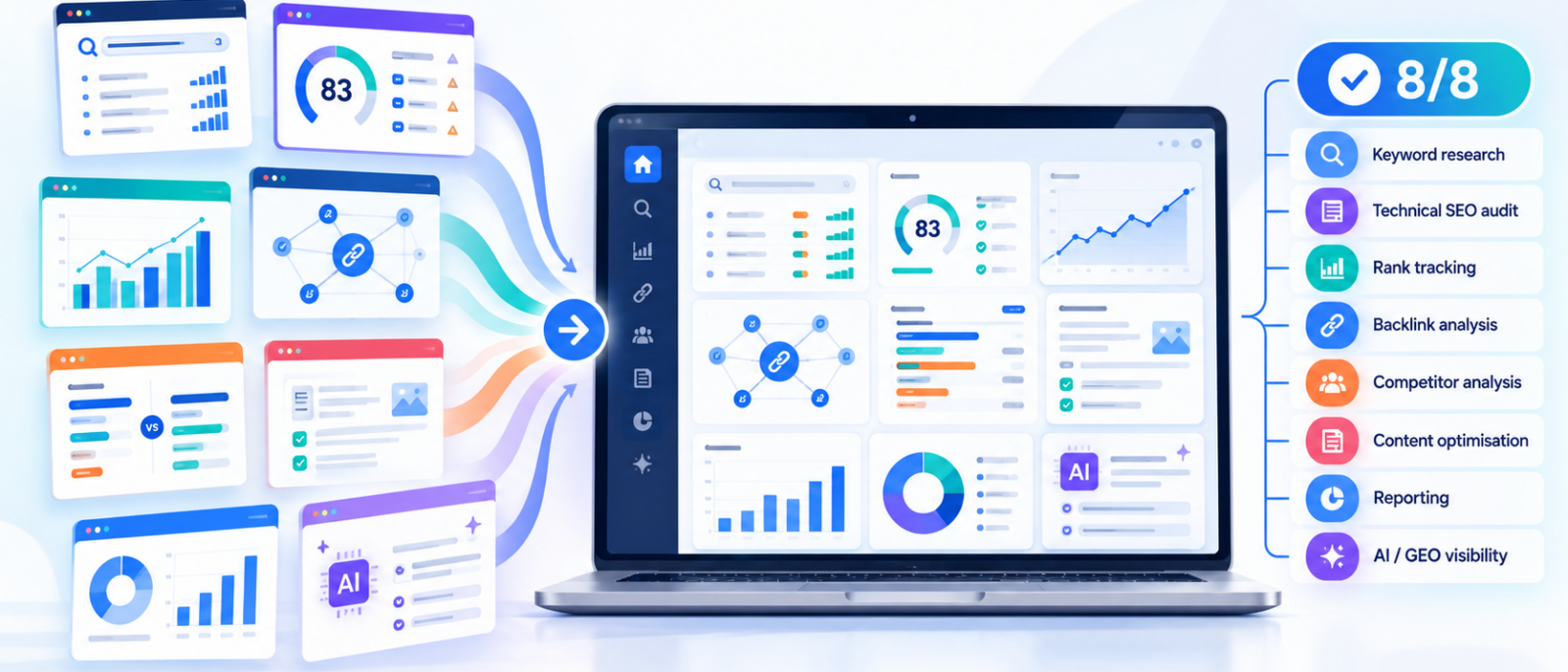
If you’re looking for the best all in one SEO tool in 2026, comparing feature lists doesn’t tell you nearly enough anymore.
Keyword research, site audits, competitor analysis and rank tracking are standard across most major platforms. Backlink research, content optimisation and AI-search visibility are increasingly being added too.
That makes the harder question much more useful:
How much of an actual SEO workflow can you complete before you have to leave the platform, open another tool or pay for another subscription?
That’s what we tested.
Instead of awarding points because a feature exists, we ran the same website, target page, seed keyword, competitor and eight SEO jobs through Semrush, SE Ranking, Ahrefs, Digimetrics and Ubersuggest.
Every time the workflow realistically needed another commercial SEO product, we recorded the handoff.
The result is our Stack Replacement Rate: the percentage of routine SEO jobs each platform handled well enough that we wouldn’t immediately reach for another paid SEO tool.
If you’re still deciding what keyword tools, crawlers, backlink databases and rank trackers should actually contribute to an SEO workflow, our SEO tools guide breaks the stack down by the decisions each category should help you make.
Quick Answer: What Is the Best All-In-One SEO Tool in 2026?
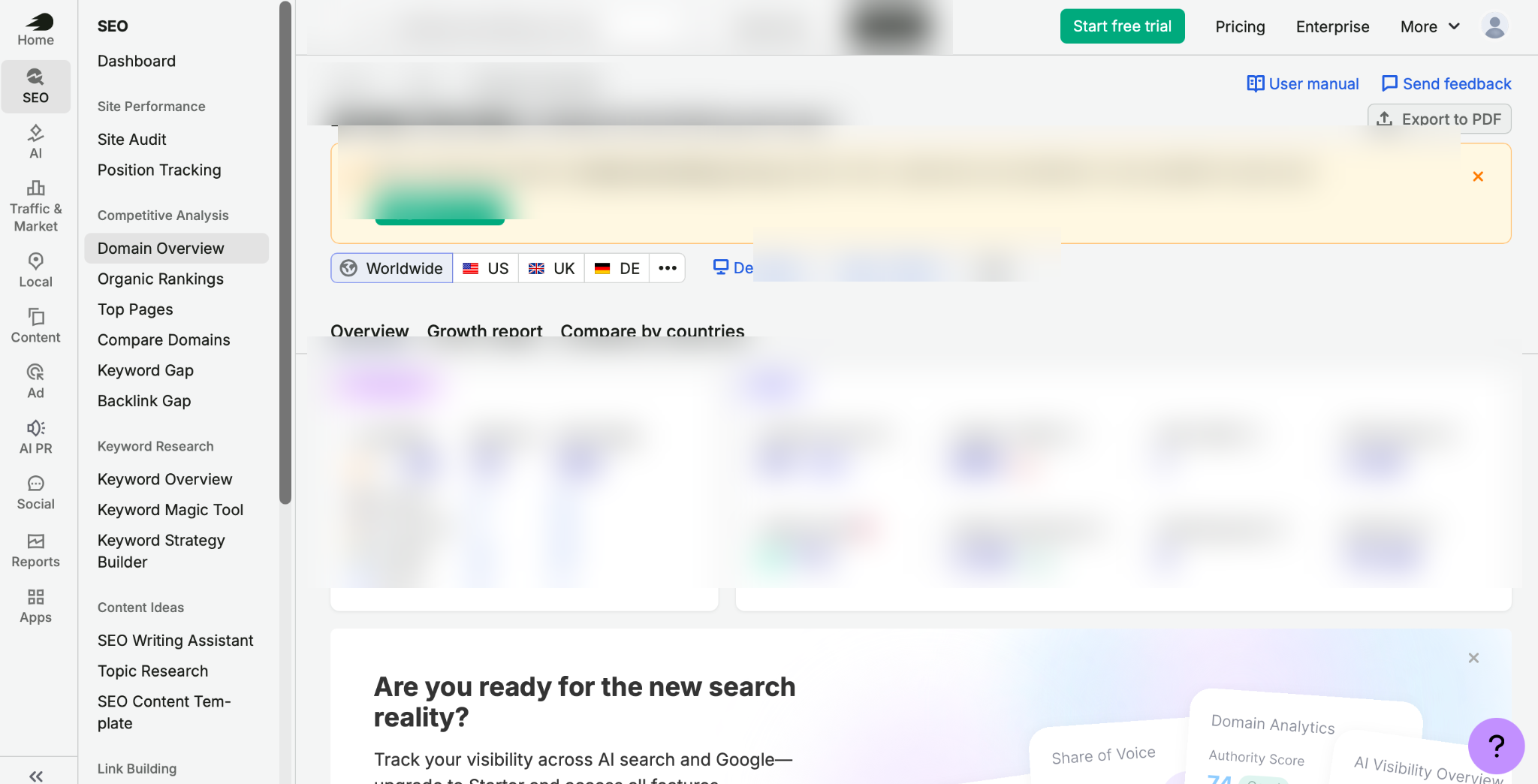
Semrush One Pro+ is the best all-in-one SEO tool in our test.
It was the only platform that completed all eight of eight routine workflows satisfactorily, giving it a 100% Stack Replacement Rate with zero commercial-tool handoffs during the standardised test.
That doesn’t mean Semrush won every individual task.
Ahrefs was stronger for specialist backlink and competitor research. Digimetrics produced the clearest guided SEO-and-GEO workflow. SE Ranking came close to Semrush’s coverage while making a particularly strong case for smaller teams.
The best all-in-one SEO platform therefore isn’t necessarily the deepest keyword database, crawler, backlink index and rank tracker simultaneously.
It needs to cover enough of those jobs well enough that the convenience of consolidation is worth the specialist depth you give up.
Best All-In-One SEO Tools at a Glance
| Tool | Best For | Jobs Replaced | Stack Replacement Rate | Handoffs | Overall |
| Semrush One Pro+ | Best overall stack replacement | 8/8 | 100% | 0 | 4.7/5 |
| SE Ranking Core | Small teams and value | 7/8 | 87.5% | 1 | 4.3/5 |
| Ahrefs Standard | Research and backlink depth | 6/8 | 75% | 2 | 4.3/5 |
| Digimetrics Expert | Integrated SEO and GEO actions | 7/8 | 87.5% | 1 | 4.1/5 |
| Ubersuggest Business | Budget-conscious consolidation | 6/8 | 75% | 2 | 3.7/5 |
First: “All-In-One SEO” Can Mean Two Different Things
There’s one search-intent issue worth clearing up.
All in One SEO, or AIOSEO, is also the name of a WordPress SEO plugin. That’s different from the category we’re comparing here.
AIOSEO focuses on WordPress-level optimisation such as metadata, schema, XML sitemaps, redirects and related on-site functionality. If that’s the product you’re looking for, the official All in One SEO website covers the plugin itself.
This comparison is about broader all-in-one SEO platforms that attempt to combine keyword research, competitor intelligence, backlinks, technical auditing, content optimisation, rank tracking, reporting and increasingly AI/GEO visibility.
What Should an All-In-One SEO Tool Actually Replace?
A platform doesn’t need to be best-in-class at every SEO discipline.
But the phrase all-in-one becomes much less useful when several important parts of the workflow still require separate paid products.
We therefore tested eight jobs.
| SEO Workflow | What the Platform Had to Do |
| Keyword research | Find and evaluate realistic search opportunities |
| Competitor research | Identify useful keyword and content gaps |
| Backlink research | Find defensible competitor link opportunities |
| Technical SEO | Crawl the site and prioritise meaningful problems |
| Content optimisation | Improve an existing target page |
| Rank tracking | Monitor the same defined keyword set |
| Reporting | Produce a stakeholder-ready SEO update |
| AI/GEO visibility | Analyse visibility in AI-driven search |
This roughly follows the wider workflow we use throughout our SEO tools guide:
research → validate → optimise → audit → build authority → track → measure → expand into AI visibility
The more of that chain a platform handles without creating a meaningful quality gap, the stronger its case for replacing separate subscriptions.
How the DMT One-Platform SEO Test Works
Every product received the same website, target page, keyword, competitor, market, tracked keywords and workflow objectives.
Connecting first-party data such as Google Search Console or GA4 was allowed when the integration worked within the tested platform. That’s a normal part of an integrated workflow rather than evidence that the platform failed.
Opening another commercial SEO product because the tested platform couldn’t adequately complete the job counted as a Workflow Handoff.
Test Setup
| Test Variable | Setting |
| Test date | 5 October 2026 |
| Website | An anonymised global B2B project-management software website |
| Crawlable URLs | 1,240 |
| Target page | Main project-management software landing page |
| Seed keyword | project management software |
| Competitor | Established global project-management platform |
| Audience | International English-language buyers |
| Standardised market | United States national |
| Device | Desktop |
| Tester | Experienced in-house SEO generalist |
We tracked ten related keywords covering the main product term plus variations around best software, teams, small businesses, agile workflows, task management and free software.
The plans tested were Semrush One Pro+, SE Ranking Core, Ahrefs Standard, Digimetrics Expert and Ubersuggest Business.
Features and limits change, so we also checked the vendors’ public plan information around the test date. For example, SE Ranking currently describes Core as an SEO + GEO plan with 10 projects, 2,000 keywords and 100 AI prompts tracked daily, alongside keyword, competitor and backlink research plus auditing integrations.
Our Stack Replacement Rate
The main metric is intentionally simple:
Stack Replacement Rate = SEO jobs completed satisfactorily inside the platform ÷ total jobs tested × 100
If a platform handles seven of eight jobs well enough that we’d realistically continue using the native workflow:
7 ÷ 8 × 100 = 87.5%
The important word is satisfactorily.
Having a backlink report does not automatically mean we’d cancel Ahrefs.
Having a crawler doesn’t automatically mean we’d stop using Screaming Frog.
And having an AI writing feature doesn’t automatically mean the platform replaces a proper evidence-led content optimisation process.
We evaluated whether we’d actually keep using the native workflow, not whether a matching menu item existed.
We Also Count Workflow Handoffs
Coverage is only one side of consolidation.
The other is friction.
A Workflow Handoff happens when another commercial tool becomes necessary to complete the job properly, whether that’s for deeper backlink prospecting, recurring content optimisation or broader AI-search analysis.
That gives us two complementary measurements:
Stack Replacement Rate: How much of the stack can the platform genuinely replace?
Workflow Handoffs: How frequently does the supposedly unified workflow break?
Coverage Doesn’t Equal Depth
We also scored coverage separately from output quality.
For coverage, 0 means the workflow isn’t meaningfully available, 1 means it requires a partial workaround, and 2means there is a complete native workflow.
We then scored the actual depth of each job from 1–5.
The Overall Score is the mean of the eight workflow-depth scores. Only workflows judged complete count toward the Stack Replacement Rate.
That lets us distinguish between:
“The feature exists.”
and:
“We’d actually use it instead of another tool.”
1. Semrush One Pro+ — Best Overall Stack Replacement
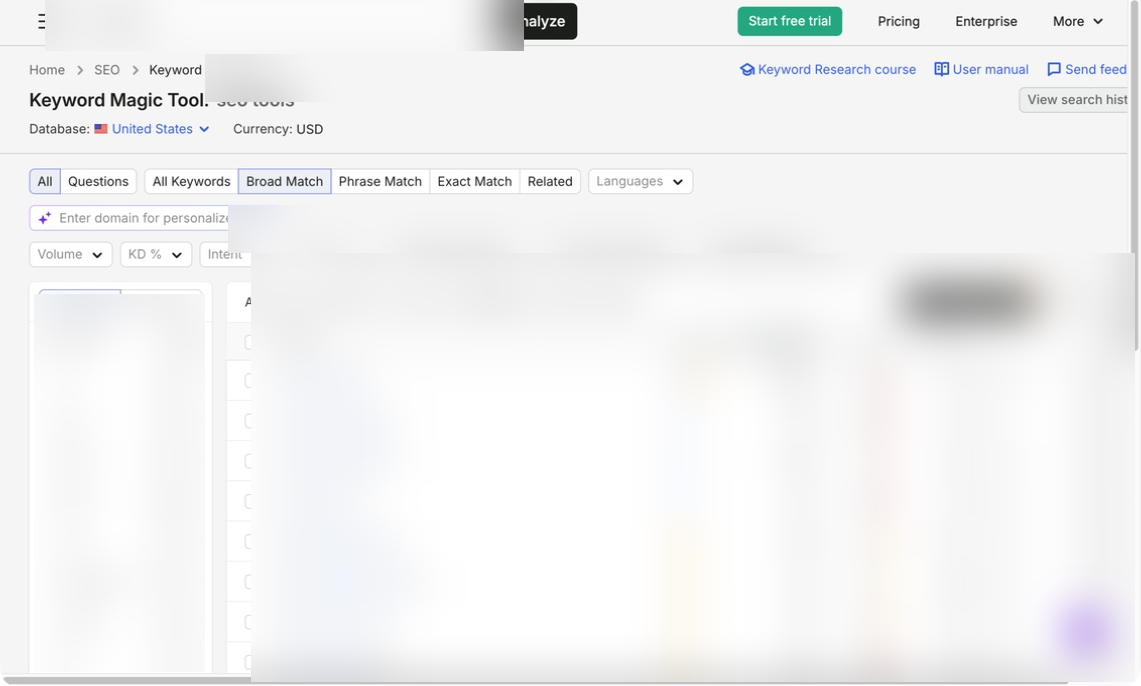
Semrush was the clearest all-in-one winner from this test.
Its advantage wasn’t that it scored 5/5 across every category. It didn’t.
The advantage was that none of the eight routine jobs forced the workflow into another commercial SEO product.
Its current Semrush One platform brings conventional SEO and AI-search visibility into the same product family, which is particularly relevant here because GEO was one of our eight tested workflows.
Semrush One-Platform Test
| Workflow | Completed Natively? | Depth | Tested Result |
| Keyword research | Yes | 4.9/5 | Strongest combined keyword, intent, SERP and clustering workflow |
| Competitor research | Yes | 4.8/5 | Found 6,840 relevant gaps and isolated high-value comparison pages |
| Backlink research | Yes | 4.6/5 | Built a defensible shortlist from shared domains and backlink gaps |
| Technical audit | Yes | 4.6/5 | Prioritised indexability, canonical and redirect-chain problems |
| Content optimisation | Yes | 4.4/5 | Improved the target page without leaving the suite |
| Rank tracking | Yes | 4.7/5 | Tracked all ten terms daily with device and SERP context |
| Reporting | Yes | 4.8/5 | Strongest stakeholder-ready reporting workflow |
| AI/GEO | Yes | 4.8/5 | Compared mentions, citations, prompts and competing brands |
Where Semrush Replaced Other Tools
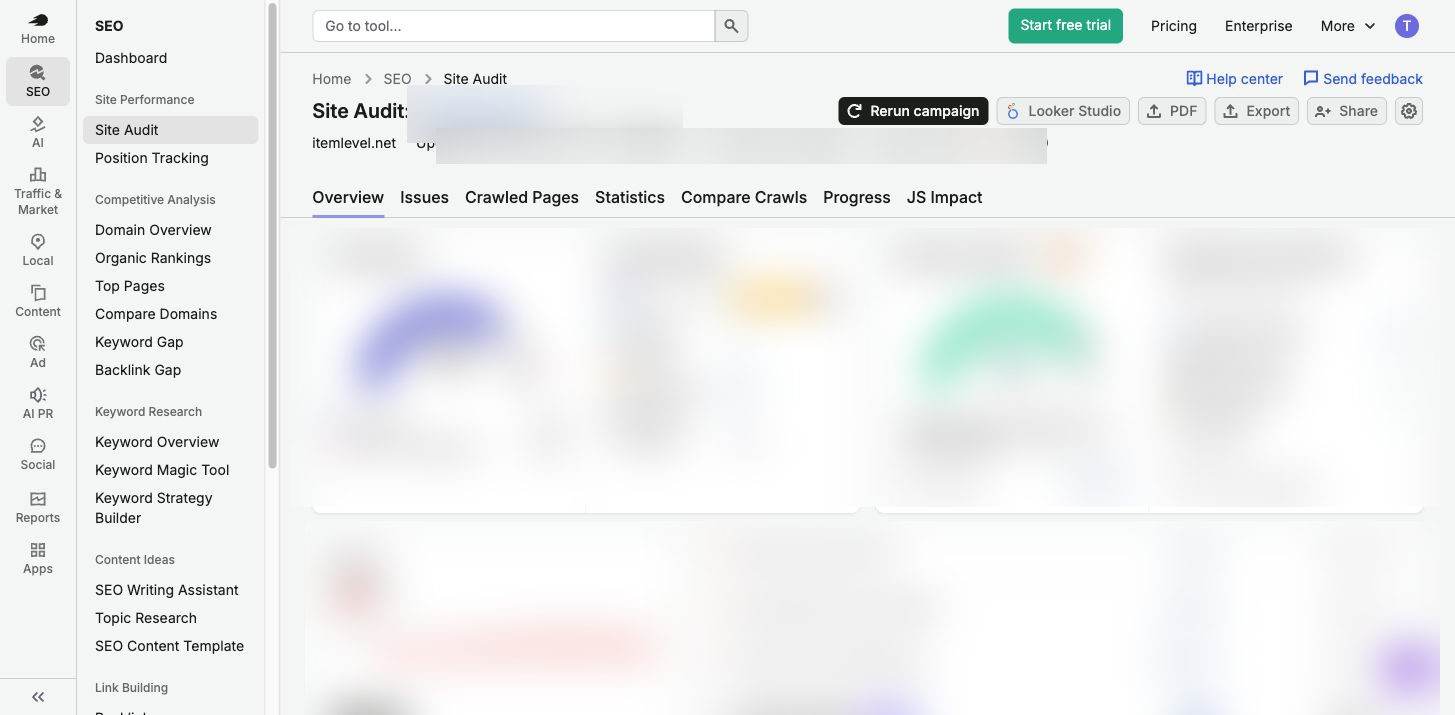
Semrush covered routine keyword research, competitor research, backlinks, technical auditing, content optimisation, rank tracking, reporting and AI visibility.
Its biggest advantage was continuity.
The analyst could move from discovering an opportunity to investigating the competitor, improving the page, monitoring the outcome and reporting it without rebuilding the same project somewhere else.
That matters because workflow consolidation itself saves time. An all-in-one product doesn’t have to produce the single deepest dataset in every category if the native output is already strong enough for the work being done.
Where We’d Still Keep Something Else
A 100% Stack Replacement Rate does not mean we’d literally use nothing else.
We would still keep Google Search Console because Google’s Performance report gives us first-party information about the site’s actual queries, pages, clicks and impressions in Google Search. That’s a source of evidence rather than a competing all-in-one suite.
We’d also keep Screaming Frog available for difficult technical investigations. Its SEO Spider configuration supports JavaScript rendering and custom extraction using XPath, CSSPath and regex, among other advanced crawl controls that can become important on more technically complex sites.
Those specialist cases sat outside the routine eight-job workflow and didn’t create a handoff during this test.
Semrush Stack Replacement Rate
Jobs completed satisfactorily: 8/8
Stack Replacement Rate: 100%
Workflow Handoffs: 0
Who Semrush Fits
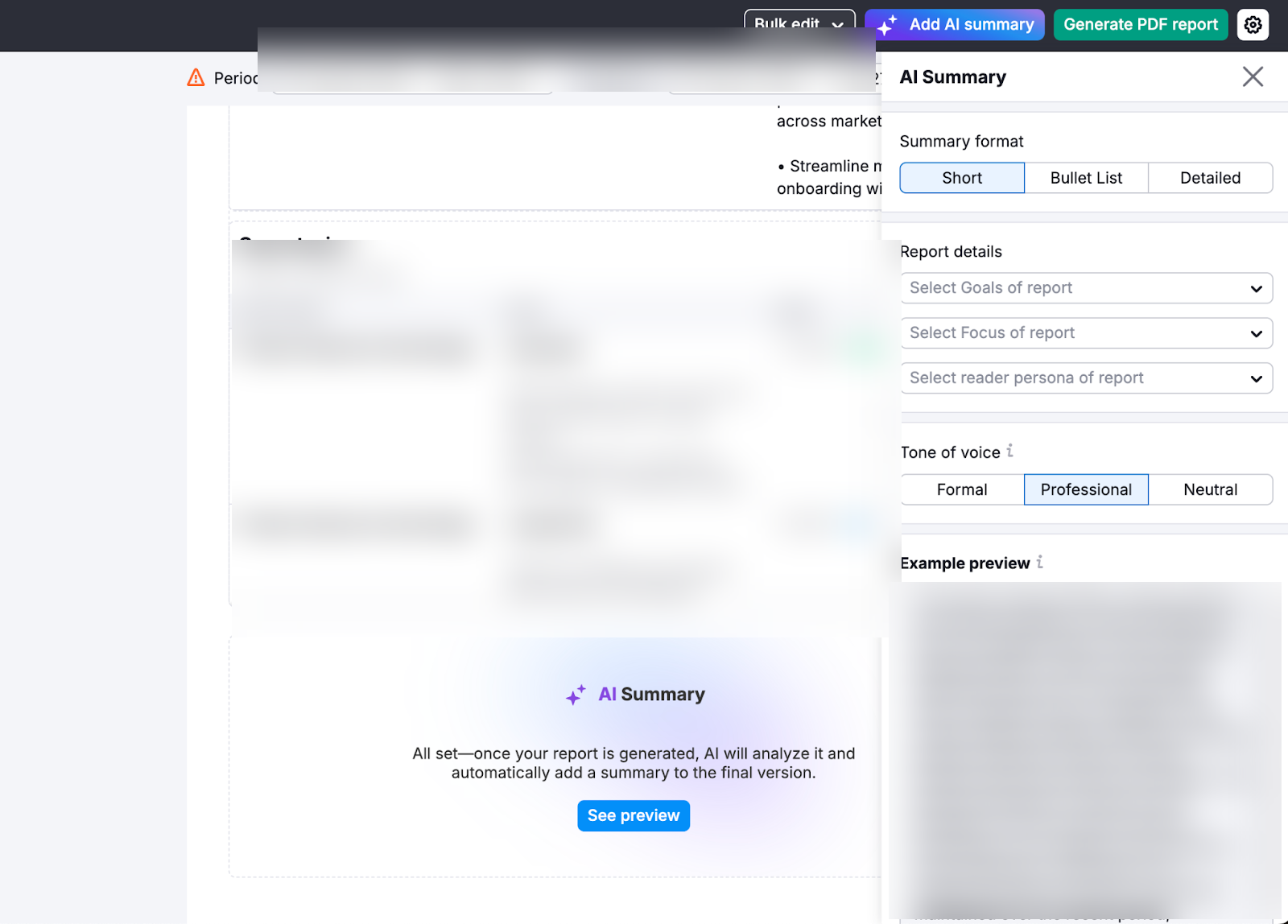
Semrush One Pro+ makes the strongest case for teams that repeatedly move between research, competitors, technical SEO, content, tracking, reporting and AI visibility.
The more of those workflows you use every week, the easier the larger platform becomes to justify.
Who Should Skip It
If your team performs only two or three SEO jobs, the consolidation advantage shrinks.
A smaller site that mainly needs Search Console, basic keyword research and an occasional audit may be paying for considerably more breadth than it will actually use.
Semrush Verdict
Semrush One Pro+ is our best all-in-one SEO tool in 2026.
Ahrefs still beat it for specialist backlink research, but Semrush was the only tested platform that completed all eight routine jobs without creating another commercial-tool dependency.
2. SE Ranking Core — Best All-In-One SEO Tool for Small Teams

SE Ranking came closest to Semrush’s complete-stack result.
Its appeal is different, though.
Rather than maximising depth in every category, it delivered broad coverage with relatively few workflow gaps. Its current Core plan combines daily rank tracking, keyword and competitor research, backlinks, website auditing, integrations and GEO functionality in the same subscription.
That makes it particularly interesting for smaller teams that need several SEO capabilities but don’t necessarily need the deepest specialist database for every one.
SE Ranking One-Platform Test
| Workflow | Completed Natively? | Depth | Tested Result |
| Keyword research | Yes | 4.4/5 | Useful intent-led opportunities with adequate history |
| Competitor research | Yes | 4.3/5 | Surfaced priority gaps and competitor pages gaining visibility |
| Backlink research | Partial | 3.4/5 | Found useful common domains, but deeper validation was needed |
| Technical audit | Yes | 4.3/5 | Found all three verified high-priority issues |
| Content optimisation | Yes | 4.1/5 | Supported the target-page brief and revision |
| Rank tracking | Yes | 4.8/5 | Best daily movement and competitor-visibility workflow |
| Reporting | Yes | 4.5/5 | Reusable reporting with little manual cleanup |
| AI/GEO | Yes | 4.4/5 | Covered prompts and competing brands across supported AI search |
Where SE Ranking Replaced Other Tools
For the tested website, SE Ranking could replace a dedicated rank tracker, routine crawler, keyword platform, content-brief workflow, standard reporting tool and entry-level AI-visibility monitor.
The strongest individual result was rank tracking at 4.8/5.
More importantly, those workflows stayed tied to the same project rather than becoming disconnected datasets that had to be manually reconciled.
Where We Still Wanted Another Tool
Backlink prospecting caused the single meaningful handoff.
SE Ranking could identify useful referring domains and link evidence, but once we wanted to prepare a serious outreach shortlist, Ahrefs provided better referring-page and Link Intersect depth.
That distinction matters because monitoring backlinks and prospecting for new ones are not the same job.
If link acquisition is an important part of your workflow, our guide to backlink analysis tools explains why the actual referring pages and database coverage matter more than simply comparing headline authority metrics.
SE Ranking Stack Replacement Rate
Jobs completed satisfactorily: 7/8
Stack Replacement Rate: 87.5%
Workflow Handoffs: 1
Who SE Ranking Fits
SE Ranking is a strong fit for small and midsize teams that want daily rankings, recurring audits, research and reporting in one environment without paying primarily for maximum database depth.
Who Should Skip It
If continuous link prospecting, forensic technical SEO or the largest possible competitive datasets are central to your work, specialist tools are likely to remain part of the stack.
SE Ranking Verdict
SE Ranking Core is our best all-in-one option for small professional teams.
It didn’t win every individual workflow, but it replaced seven of eight routine jobs while creating only one meaningful gap.
3. Ahrefs Standard — Best for Research Depth
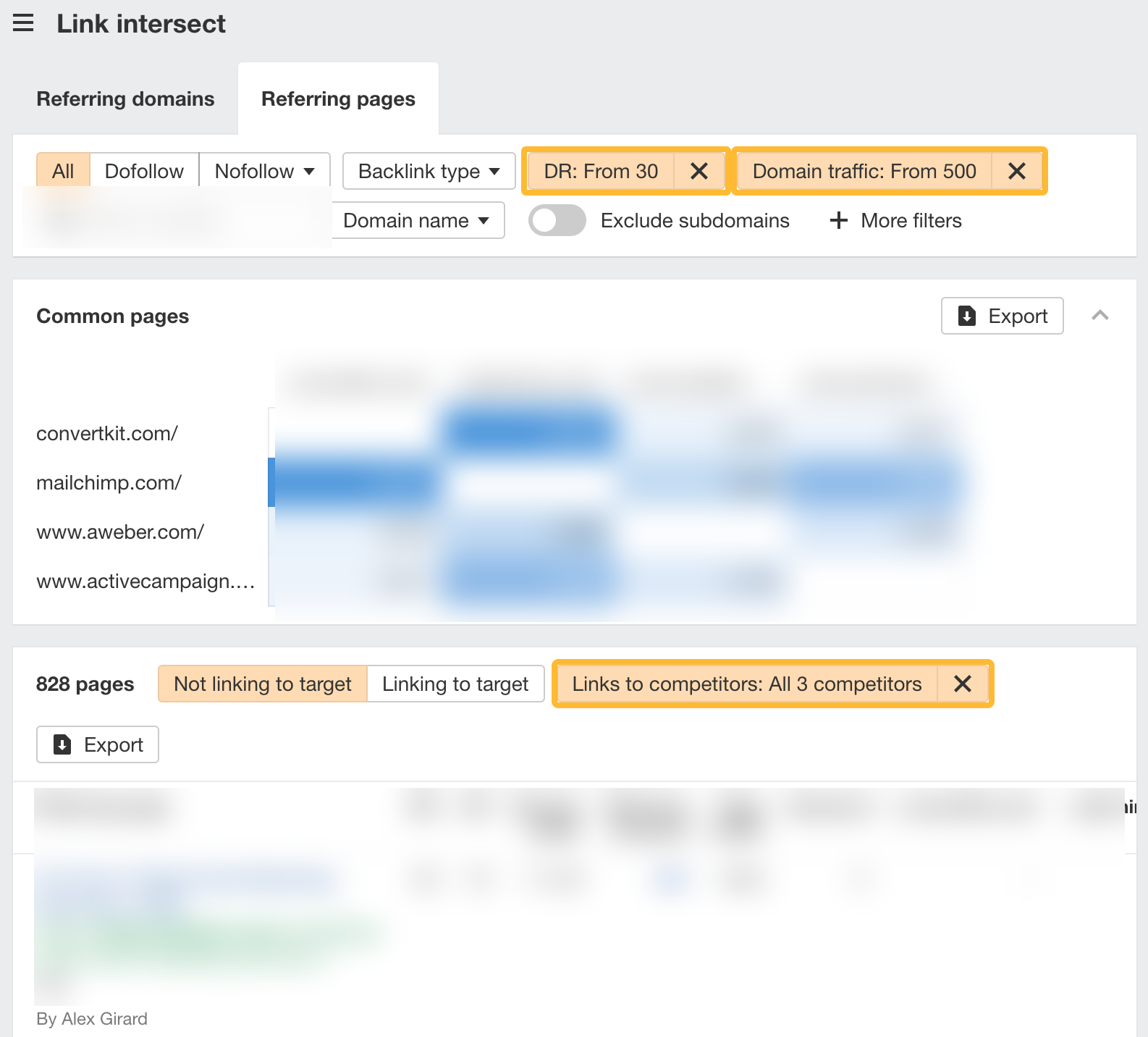
Ahrefs produced some of the strongest specialist results in the comparison.
It scored 4.9/5 for competitor research and a perfect 5.0/5 for backlink research.
That makes its result interesting because a platform can be exceptional at several important jobs without replacing the largest share of the entire operating stack.
Ahrefs currently positions its Standard plan toward professional SEO work, with deeper historical and research capabilities than its entry plans.
Ahrefs One-Platform Test
| Workflow | Completed Natively? | Depth | Tested Result |
| Keyword research | Yes | 4.8/5 | Strong traffic-potential, intent, clustering and SERP evidence |
| Competitor research | Yes | 4.9/5 | Best page-level view of competitor organic growth |
| Backlink research | Yes | 5.0/5 | Strongest Link Intersect and referring-page prospect set |
| Technical audit | Yes | 4.6/5 | Excellent issue grouping and affected-URL investigation |
| Content optimisation | Partial | 3.7/5 | Useful, but insufficient for recurring team production |
| Rank tracking | Yes | 4.0/5 | Useful Share of Voice and history, but weaker daily replacement case |
| Reporting | Yes | 3.8/5 | Worked, although more assembly was required |
| AI/GEO | Partial | 3.4/5 | Useful prompt tracking, but broader discovery needed more capacity |
Where Ahrefs Replaced Other Tools
For keyword, competitor and backlink research, we would not pay for another database simply to repeat the same analysis.
Ahrefs also handled the routine technical audit, rank monitoring and basic reporting without forcing an additional subscription.
This is why the lower Stack Replacement Rate shouldn’t be read as weak overall performance. Its strongest workflows were among the best in the test.
Where We Still Wanted Another Tool
Two recurring workflows weakened the all-in-one case.
The first was content optimisation. The available workflow was useful, but the tested plan did not make us comfortable replacing a repeatable team content-optimisation process with it.
The second was broader AI/GEO visibility.
Those were not rare edge cases. Both can become weekly or monthly jobs, which is why Ahrefs finished with six complete workflows rather than eight.
Ahrefs Stack Replacement Rate
Jobs completed satisfactorily: 6/8
Stack Replacement Rate: 75%
Workflow Handoffs: 2
Who Ahrefs Fits
Ahrefs makes the most sense when competitor, keyword and backlink research are disproportionately important to the team’s SEO work.
If links are one of the main buying considerations, our backlink analysis guide also explains why database depth and referring-page evidence matter more than a single Domain Rating-style score.
Who Should Skip It
If your main objective is collapsing content optimisation, frequent rank operations and broad AI visibility into one standard workflow, other products consolidate more of the stack.
Ahrefs Verdict
Ahrefs Standard is the best product in this comparison for research depth, not complete stack replacement.
Its specialist datasets were outstanding. They simply didn’t cover as much of the end-to-end operating workflow as Semrush.
4. Digimetrics Expert — Best Guided SEO + GEO Workflow
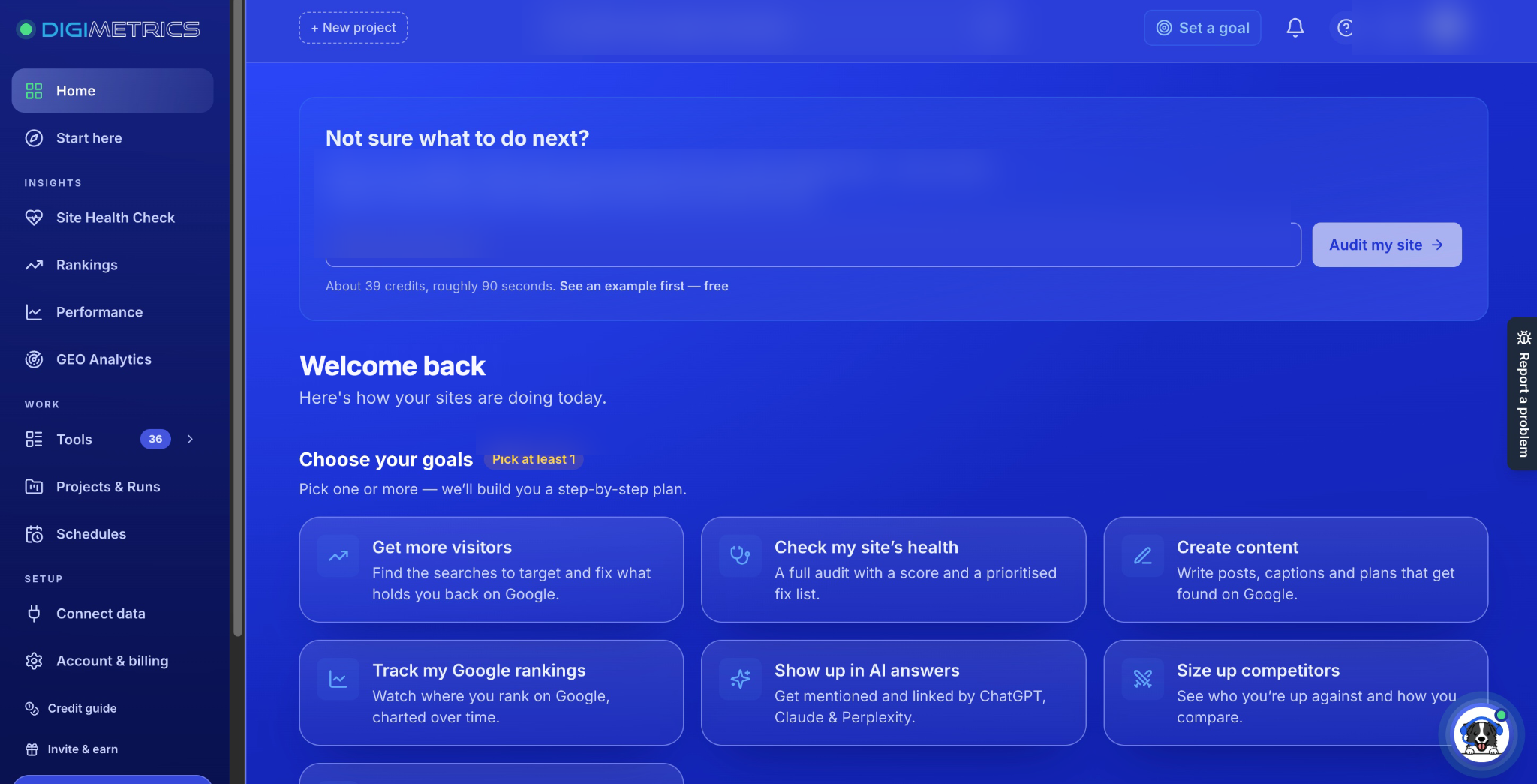
Digimetrics approaches consolidation from a different direction.
Rather than primarily competing on the largest individual keyword or backlink database, it connects SEO, content, rankings, technical analysis and GEO findings around shared project context and recommended actions.
The wider Digimetrics platform includes workflows around keyword analysis, ranking, technical SEO, content optimisation and AI visibility, while our Digimetrics tool profile provides the broader DMT overview of where it fits in the tool ecosystem.
Disclosure: Digimetrics is developed by the MediaOne team, which also operates DigitalMarketingTools.ai. We included it because its integrated SEO, GEO, content and optimisation workflow is directly relevant to an all-in-one comparison. It was tested using the same tasks and scoring criteria as every other product, without preferential weighting. Where established specialist platforms provided greater data depth, workflow maturity or capability, they ranked higher.
Digimetrics One-Platform Test
| Workflow | Completed Natively? | Depth | Tested Result |
| Keyword research | Yes | 4.0/5 | Smaller idea set, but mapped findings directly to actions |
| Competitor research | Yes | 3.8/5 | Usable gap plan with less historical depth |
| Backlink research | Partial | 2.8/5 | Useful context, but prospect discovery needed another database |
| Technical audit | Yes | 4.2/5 | Converted crawl findings into a prioritised action list |
| Content optimisation | Yes | 4.4/5 | Connected page, intent, coverage gaps and revision guidance |
| Rank tracking | Yes | 4.3/5 | Kept movement and follow-up actions inside the same project |
| Reporting | Yes | 4.2/5 | Client-ready reporting with clear next actions |
| AI/GEO | Yes | 4.8/5 | Best combined SEO, AI-mention and GEO action workflow |
Where Digimetrics Replaced Other Tools
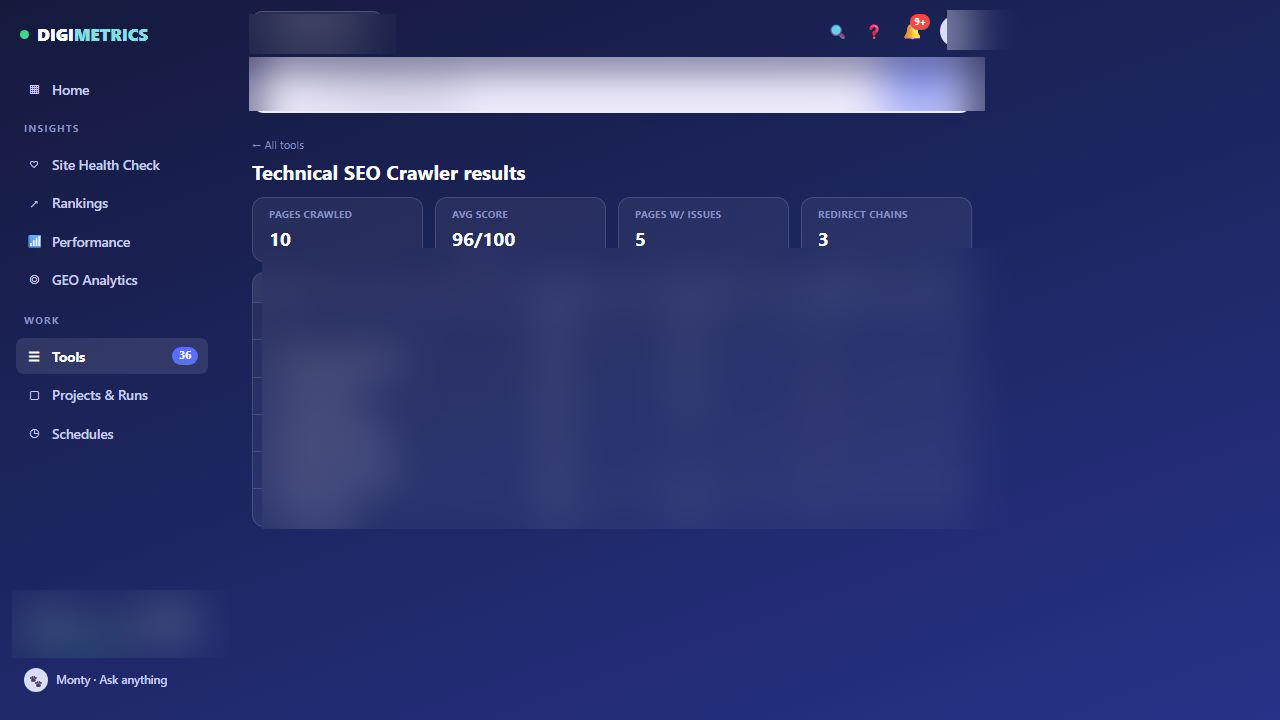
Its strongest advantage was shared context.
Keyword research, auditing, content optimisation, rankings and GEO didn’t continually require us to recreate the same website, page, keyword and competitor setup.
Digimetrics was strongest when the question moved from:
“What does the data show?”
to:
“What should we do next?”
That resulted in a particularly strong 4.8/5 AI/GEO score.
Where We Still Wanted Another Tool
Backlink prospecting was the clear gap.
Digimetrics could provide useful link context, but once the job became serious prospect discovery, Ahrefs produced a materially deeper set of referring pages and opportunities. Semrush also provided stronger broad competitive link analysis.
We’d similarly keep a specialist crawler available for complex JavaScript, custom extraction or very large technical investigations, although the native audit was sufficient for the tested site.
Digimetrics Stack Replacement Rate
Jobs completed satisfactorily: 7/8
Stack Replacement Rate: 87.5%
Workflow Handoffs: 1
Who Digimetrics Fits
Digimetrics makes the strongest case for teams that want SEO, content and AI-search evidence translated into connected next actions and don’t run a high-volume link-building operation.
Who Should Skip It
If backlink prospecting, huge historical datasets or highly customised crawling are the primary requirements, more mature specialist products remain stronger.
Digimetrics Verdict
Digimetrics matched SE Ranking’s 87.5% Stack Replacement Rate and produced the clearest guided SEO-and-GEO workflow in our test.
It still ranked below the more mature suites in several research areas, particularly backlink depth, which is why the ownership relationship did not translate into preferential placement.
5. Ubersuggest Business — Best Budget All-In-One SEO Tool
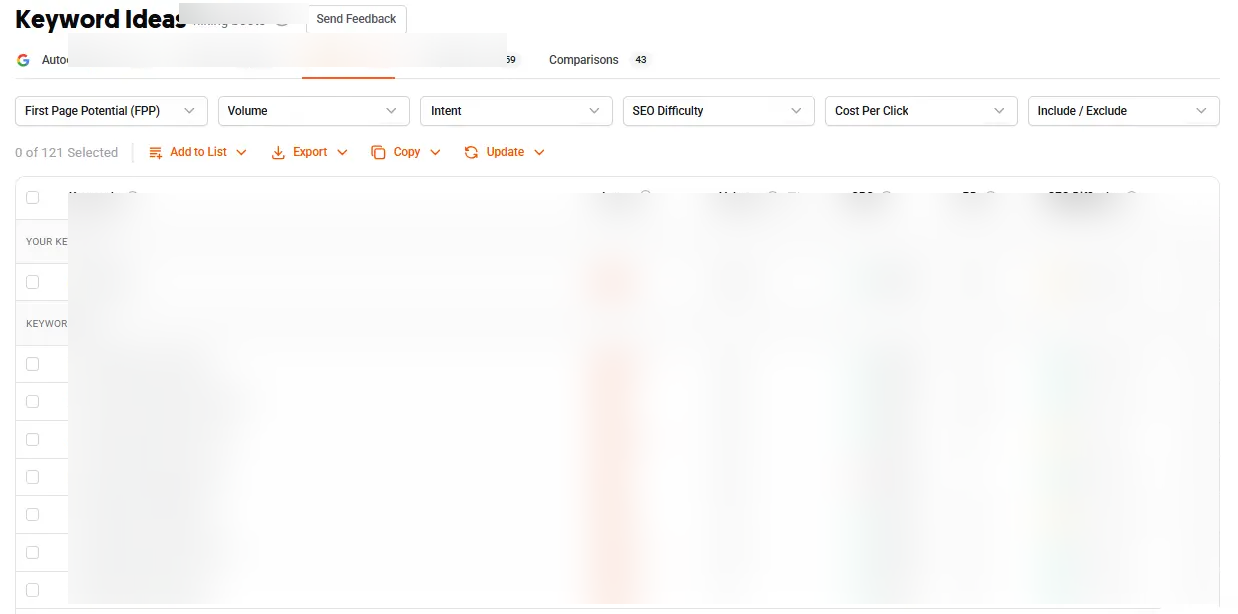
Ubersuggest tests a different version of the all-in-one proposition:
How much of the essential SEO stack can a lower-cost platform replace before the missing depth outweighs the savings?
Its current Business plan is listed at $49/month on monthly billing and includes seven projects, 5,000 page scans per project, 150 tracked keywords per project, competitor monitoring and AI-search functionality.
That makes the breadth of its result particularly relevant for freelancers, smaller businesses and lean marketing teams.
Ubersuggest One-Platform Test
| Workflow | Completed Natively? | Depth | Tested Result |
| Keyword research | Yes | 4.2/5 | Accessible keyword and SERP opportunities |
| Competitor research | Yes | 3.9/5 | Useful page and keyword overlaps |
| Backlink research | Partial | 3.0/5 | Useful links, insufficient depth for serious prospecting |
| Technical audit | Yes | 3.8/5 | Found the priorities with lighter diagnostic controls |
| Content optimisation | Partial | 3.3/5 | AI assistance helped, but evidence depth was insufficient |
| Rank tracking | Yes | 4.0/5 | Covered the ten-keyword monitoring requirement |
| Reporting | Yes | 3.8/5 | PDF and CSV output handled the routine update |
| AI/GEO | Yes | 3.9/5 | Added useful ChatGPT and Gemini visibility context |
Where Ubersuggest Replaced Other Tools
For a smaller site, Ubersuggest could realistically replace a basic keyword tool, competitor checker, routine audit, rank tracker, standard reporting workflow and introductory AI visibility monitor.
That’s substantial coverage for its price bracket.
If a small business doesn’t yet need this much consolidation, our SEO tools for small businesses guide goes deeper into deciding when broader paid software becomes worthwhile and when a smaller stack is enough.
Where We Still Wanted Another Tool
Backlink prospecting wasn’t strong enough for ongoing outreach.
Content optimisation was the other gap. AI drafting and recommendations helped, but once the task became evidence-led SERP analysis and recurring production, we’d want a more specialised workflow.
Ubersuggest Stack Replacement Rate
Jobs completed satisfactorily: 6/8
Stack Replacement Rate: 75%
Workflow Handoffs: 2
Who Ubersuggest Fits
Ubersuggest makes sense for freelancers, solo marketers and smaller businesses that want broad essential coverage and can accept less depth in specialist workflows.
Who Should Skip It
Teams doing large-scale competitor research, serious link acquisition, advanced technical SEO or structured content optimisation every week are likely to outgrow it.
Ubersuggest Verdict
Ubersuggest Business is our best budget all-in-one SEO tool.
It doesn’t match Semrush or Ahrefs for specialist research depth, but it replaced a meaningful portion of the everyday stack at a much lower monthly price.
Which SEO Workflows Can Each Platform Actually Replace?
The final workflow matrix makes the trade-offs clearer than a standard feature checklist.
| Workflow | Semrush | SE Ranking | Ahrefs | Digimetrics | Ubersuggest |
| Keyword research | ✅ | ✅ | ✅ | ✅ | ✅ |
| Competitor analysis | ✅ | ✅ | ✅ | ✅ | ✅ |
| Backlink research | ✅ | ⚠️ | ✅ | ⚠️ | ⚠️ |
| Technical audit | ✅ | ✅ | ✅ | ✅ | ✅ |
| Content optimisation | ✅ | ✅ | ⚠️ | ✅ | ⚠️ |
| Rank tracking | ✅ | ✅ | ✅ | ✅ | ✅ |
| Reporting | ✅ | ✅ | ✅ | ✅ | ✅ |
| AI/GEO visibility | ✅ | ✅ | ⚠️ | ✅ | ✅ |
✅ = strong enough to replace a separate tool
⚠️ = available, but we’d still consider specialist software
The difference matters.
Almost every platform can advertise backlink analysis.
The useful question is whether we’d actually run the backlink workflow there instead of opening something else.
What We’d Still Keep Outside Each “All-In-One” Tool
| Platform | What We’d Still Keep | Why |
| Semrush | GSC + Screaming Frog for specialist cases | First-party Google data and complex technical investigations |
| SE Ranking | Ahrefs for active link acquisition | Deeper prospect and referring-page validation |
| Ahrefs | Content optimiser + broader GEO workflow | Those were weaker recurring replacement cases |
| Digimetrics | Ahrefs or Semrush for prospecting | Native link context didn’t replace a mature prospecting database |
| Ubersuggest | Backlink platform + content optimiser | Both workflows lacked enough depth for continuous specialist use |
This is where all-in-one becomes operationally meaningful.
If a product still requires a crawler, backlink database, content optimiser and GEO platform for jobs your team performs every week, its long feature list hasn’t actually consolidated very much.
All-In-One Doesn’t Mean Best at Everything
Semrush’s 100% Stack Replacement Rate does not mean it produced the highest score for every workflow.
It didn’t.
Ahrefs scored 5.0/5 for backlinks.
SE Ranking scored 4.8/5 for rank tracking.
Digimetrics scored 4.8/5 for AI/GEO.
The goal of an all-in-one platform isn’t necessarily to replace every specialist with something objectively better.
It’s to replace enough specialist products without lowering the quality of the work enough that you regret consolidating.
A specialist platform being 10% better at one job may absolutely justify another subscription when your team performs that job every day.
The same advantage matters far less if you open the specialist twice per year.
That’s why we measure both depth and replacement.
When an All-In-One SEO Tool Isn’t Enough
Large or Technically Complex Websites
A general site-audit module can handle recurring checks without being the best option for every technical investigation.
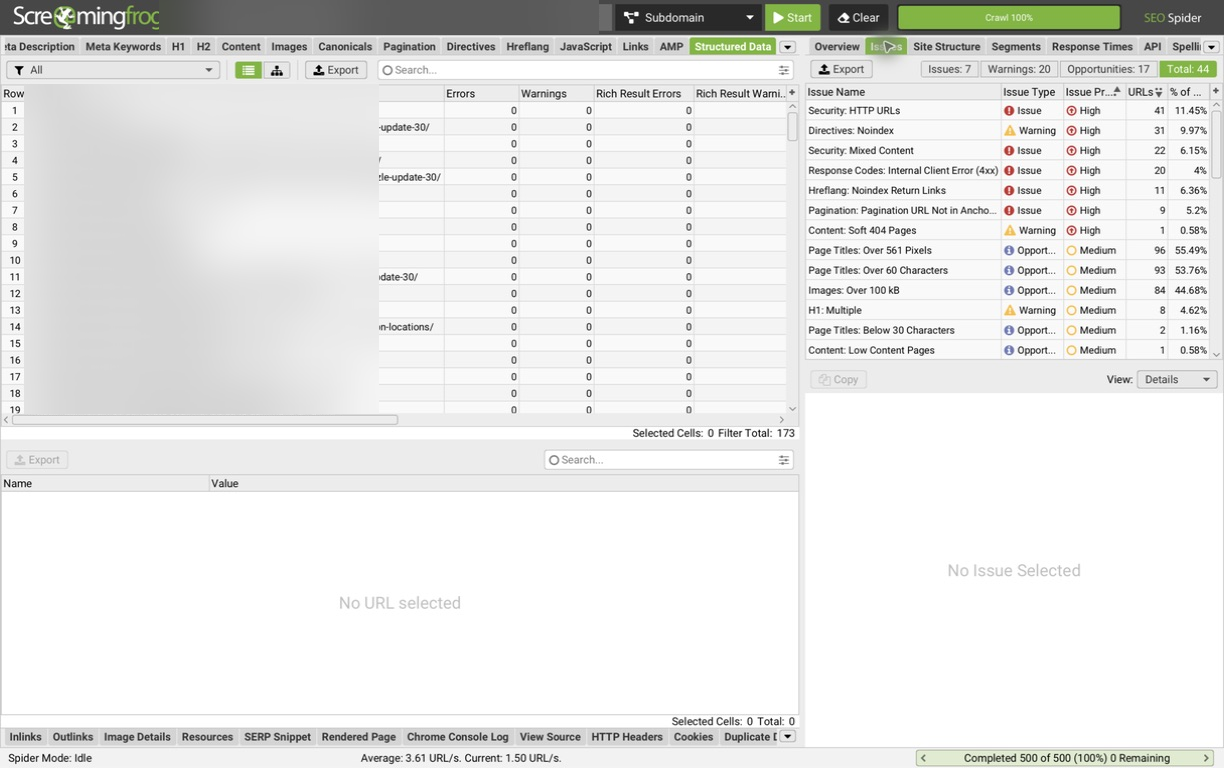
Large sites, JavaScript-heavy applications and unusual crawling problems can require specialist controls. Screaming Frog, for example, supports JavaScript rendering and detailed custom extraction through its SEO Spider configuration.
If technical auditing is the main problem you’re trying to solve, our guide to what SEO audit tools actually check goes deeper into the difference between detecting hundreds of warnings and identifying the issues that actually deserve attention.
Serious Link-Building Operations
A team occasionally checking competitor links has very different requirements from an agency continuously prospecting, qualifying and monitoring thousands of domains.
Our test made that especially obvious because Ahrefs achieved the only 5.0/5 backlink research score.
For link-heavy workflows, the specialist advantage can justify keeping a separate database even when the primary platform technically includes backlinks.
Advanced Content Optimisation
An AI rewrite or keyword recommendation is not necessarily a complete content-optimisation system.
Teams producing large amounts of search content may still need deeper SERP analysis, content briefing, topic coverage and editorial workflows.
Enterprise Reporting
Native reports were enough for our standard test.
Larger organisations can still require data warehouses, custom BI dashboards, attribution models and multi-property reporting that sit outside an SEO platform.
Highly Specialised Local SEO
Local businesses and agencies can also need features such as listing management, review monitoring and grid-based local rank tracking that broader suites only partially cover.
All-In-One SEO Suite vs Specialist Stack
There isn’t one correct model.
An all-in-one platform can reduce subscriptions, duplicated setup, exports, integrations and context switching.
A specialist stack trades that convenience for greater depth in selected areas.
The useful question is therefore not:
“Is one suite better than several tools?”
It’s:
“Which parts of our workflow benefit enough from specialist depth to justify another product?”
Our broader SEO tools guide reaches a similar conclusion: the useful stack starts with the decisions the team needs to make, rather than the number of products it can afford.
Don’t Replace Google Search Console
Even Semrush’s 100% result doesn’t mean we’d stop using Google Search Console.
SEO platforms estimate keyword demand, difficulty, competitor traffic and other market signals.
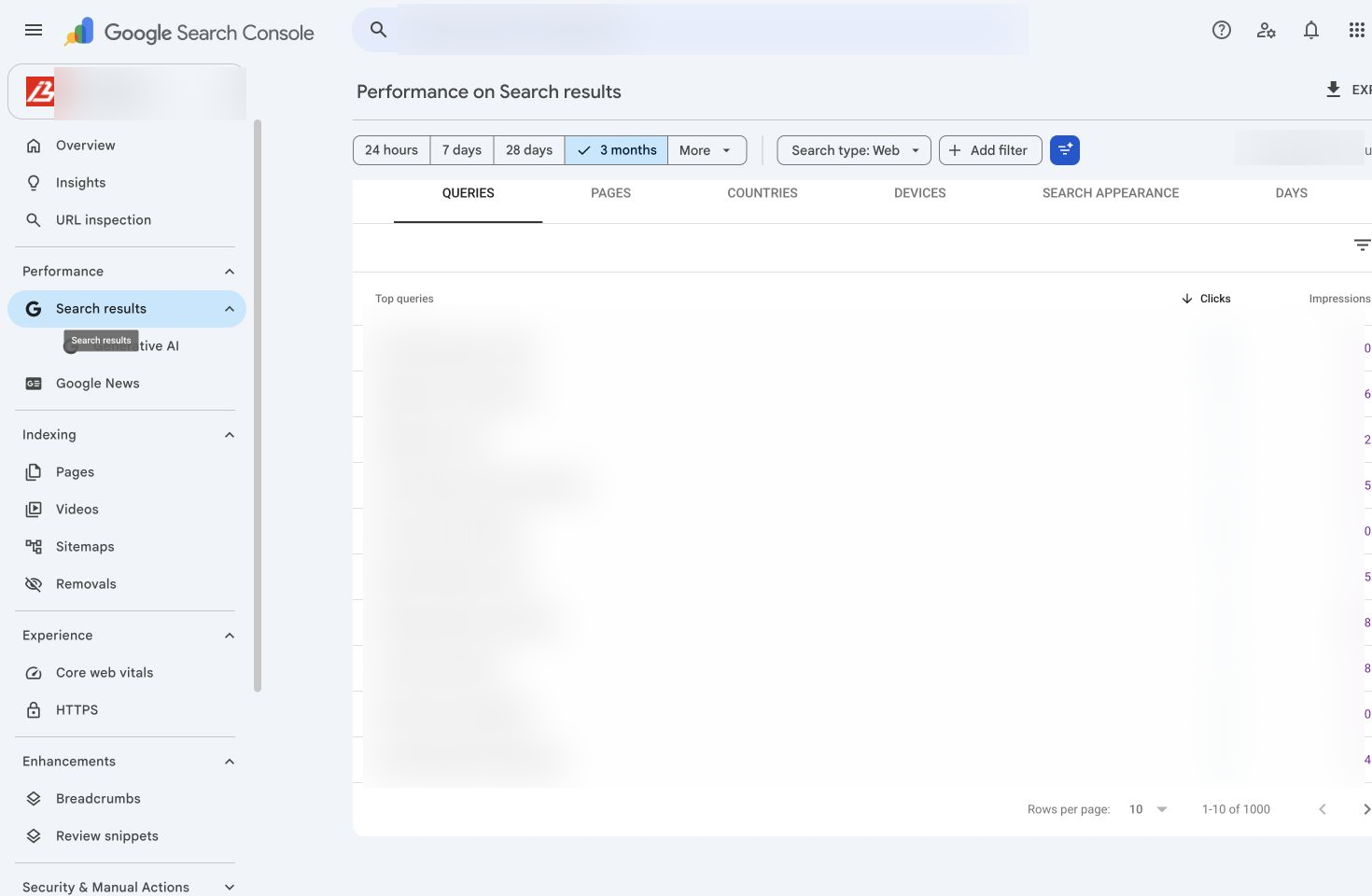
Search Console’s Performance report provides first-party evidence about how your own property actually performs in Google Search, including queries, clicks and impressions.
That’s a different type of evidence.
An all-in-one platform can integrate Search Console and make its data easier to work with, but that doesn’t turn a third-party estimate into Google’s first-party measurement.
We therefore don’t count using GSC as a failure of the all-in-one model.
The problem would be needing several additional paid products just to complete ordinary SEO work.
Is an All-In-One SEO Tool Actually Cheaper?
Not necessarily.
The subscription price is only the visible part of the cost.
A more useful calculation is:
Real SEO Stack Cost = Main Platform + Specialist Tools Still Required + Users + Add-ons + Integration and Reporting Time
Imagine one suite costs $200 per month but replaces keyword research, auditing, rankings, reporting and competitor analysis.
Another costs $80 but still requires 150–200 worth of additional software to complete the same recurring workflow.
The first platform looks expensive on its pricing page.
The second may cost more in practice.
The reverse is also true.
Paying for a large all-in-one platform when the business uses only keyword research and a monthly audit isn’t consolidation. It’s unused software.
An all-in-one tool creates value only when you’re consolidating workflows you actually perform.
How to Choose the Right All-In-One SEO Tool
Start with what your team does repeatedly.
A team whose typical week looks like:
keyword research → content optimisation → rankings → reporting
has different requirements from a team focused on:
technical SEO → backlink prospecting → competitor investigation
The first may happily trade some backlink depth for better workflow continuity.
The second probably shouldn’t.
For smaller companies, our SEO tools for small businesses guide approaches the decision specifically around tighter budgets, smaller teams and avoiding features that won’t actually be used.
You also don’t necessarily need a paid all-in-one platform immediately. If keyword discovery is the current bottleneck, our free SEO keyword tools comparison shows how much of that job can be completed before another subscription becomes necessary.
The principle is simple:
Choose around recurring work, not hypothetical future features.
Final Verdict: The Best All-In-One SEO Tool Should Replace Work, Not Just Add Features
The phrase all in one SEO tool has become easy to claim.
Having eight modules in the sidebar doesn’t mean you’ve replaced eight products.
Our final decision comes down to three questions:
How many recurring SEO jobs can we finish inside the platform?
Is the output strong enough that we’d genuinely stop reaching for a specialist?
How often does the workflow still break into another paid product?
Based on our test:
| Award | Winner |
| Best all-in-one SEO tool overall | Semrush One Pro+ |
| Highest Stack Replacement Rate | Semrush — 100% |
| Fewest commercial-tool handoffs | Semrush — 0 |
| Best for small teams | SE Ranking Core |
| Best for research depth | Ahrefs Standard |
| Best SEO + GEO workflow | Digimetrics Expert |
| Best budget all-in-one SEO tool | Ubersuggest Business |
Semrush wins because it replaced the largest share of the routine stack without creating a meaningful workflow gap during our standardised test.
But that doesn’t make it the automatic choice for everyone.
A link-heavy SEO operation may still get more value from Ahrefs. A smaller team may prefer SE Ranking’s balance. A team trying to connect SEO, content and AI-search actions may prefer Digimetrics. A smaller business may find Ubersuggest covers enough of the workflow for substantially less.
The best all-in-one SEO tool in 2026 isn’t the platform with the longest feature list.
It’s the one that lets your team complete the largest useful share of its actual SEO work without giving up enough specialist depth that you immediately have to buy the other tools again.
Frequently Asked Questions
What Is the Best All-In-One SEO Tool in 2026?
Semrush One Pro+ is our overall recommendation.
It completed all eight routine workflows satisfactorily in our standardised test, giving it a 100% Stack Replacement Rate with zero commercial-tool handoffs.
That doesn’t mean it was strongest in every individual discipline. Ahrefs still performed better for specialist backlink research, while SE Ranking and Digimetrics presented stronger alternatives for some team requirements.
What Is an All-In-One SEO Tool?
An all-in-one SEO tool combines several parts of the search workflow inside one platform.
A serious suite should cover a substantial portion of keyword research, competitor analysis, technical SEO, rankings and reporting. More complete products now also include backlinks, content optimisation and AI/GEO visibility.
Is All in One SEO the Same as an All-In-One SEO Tool?
No.
All in One SEO (AIOSEO) is a WordPress SEO plugin.
The broader term all-in-one SEO tool describes platforms that combine several research, optimisation, auditing and measurement workflows.
Can One SEO Tool Replace Everything?
Usually not in every situation.
Semrush replaced all eight routine workflows in our specific test, but we’d still use Search Console for first-party Google data and keep specialist crawling software available for technically difficult investigations.
A serious link-building team may similarly retain Ahrefs even if another platform already includes backlink analysis.
Is Semrush an All-In-One SEO Tool?
Yes.
Its current Semrush One offering connects conventional SEO and AI-search visibility, while the wider Semrush ecosystem covers keyword research, competitors, technical auditing, backlinks, content and rankings.
In our test, Semrush One Pro+ was the only platform that completed all eight routine workflows satisfactorily without another commercial SEO product.
Is Ahrefs an All-In-One SEO Tool?
Yes, although its strongest case is still research depth.
Ahrefs covers keyword research, competitors, backlinks, technical auditing, rankings and reporting, and its current plan structure spans entry-level through professional and enterprise use.
It achieved a 75% Stack Replacement Rate in our test because content optimisation and broader AI/GEO work were weaker replacement cases than its research modules.
Is an All-In-One SEO Tool Better Than Using Multiple Tools?
Not automatically.
One suite reduces subscriptions, repeated setup and context switching. Specialist tools can provide greater depth for individual jobs.
The all-in-one model makes sense when the convenience and cost savings of consolidation outweigh the specialist capability you lose.
Do I Still Need Google Search Console With an All-In-One SEO Tool?
Yes.
Google’s Search Console Performance report provides first-party information about queries, pages, clicks and impressions associated with your own site’s Google Search visibility.
Commercial platforms can enrich and organise that evidence, but their estimates don’t replace first-party Google data.
How Do I Know Whether an All-In-One SEO Platform Is Worth Paying For?
Map the jobs your team performs every week and month, then test whether the platform can complete those jobs at a quality you’d actually accept.
If one subscription eliminates several tools, repeated exports and duplicated setup without weakening the workflows that matter, consolidation is working.
If you still need three specialist subscriptions afterward, compare the cost of the whole stack, not the price displayed on the all-in-one platform’s pricing page.
Disclosure: digitalmarketingtools.ai is sponsored by Digimetrics.ai. Sponsored Highlights are clearly labelled advertising. Our reviews, comparisons and guides are written to be useful and fair regardless of who sponsors the site. Read the full disclosure.


