
Free Backlink Checker Test 2026: We Checked 240 Results to See Which Tools Are Actually Useful

Most free backlink checker comparisons ask the same question: which tool finds the most backlinks? That sounds useful until you actually try to build links from the results. A checker might tell you that a competitor has 250,000 backlinks, then show only a small sample before asking for a subscription. Another database might report fewer total backlinks but expose enough referring domains, anchor text and link context to uncover several realistic outreach prospects.
For someone specifically looking for a free backlink checker, the second tool may be more useful. So instead of ranking tools primarily by database size or the backlink total on their overview screen, we tested what a free user can actually do with the results before hitting the paywall.
We checked eight tools: Ahrefs Free Backlink Checker, Semrush Backlink Checker, Moz Link Explorer, Ubersuggest Backlink Checker, Backlinko Backlink Checker, SEO Review Tools Backlink Checker, Crawly Backlink Checker and RankParse Backlink Checker.
Across those tools, we manually reviewed 240 backlink results. Of those, 201 referring pages were still live, 183 still contained the reported backlink, 110 were topically relevant and only 45 qualified as usable link prospects. That means just 18.8% of the backlinks we checked became opportunities we’d seriously consider pursuing.
Ahrefs produced the highest Free Prospect Yield at 26.7%, followed by Semrush and Backlinko at 23.3%. Crawly exposed useful free functionality and an independent backlink index, but had the lowest prospect yield in our sample at 10%.
The experiment points to a more useful question than “who has the biggest backlink database?” What matters to a free user is how much actionable competitor intelligence actually reaches you before you have to pay.
Free Backlink Checker Test Results
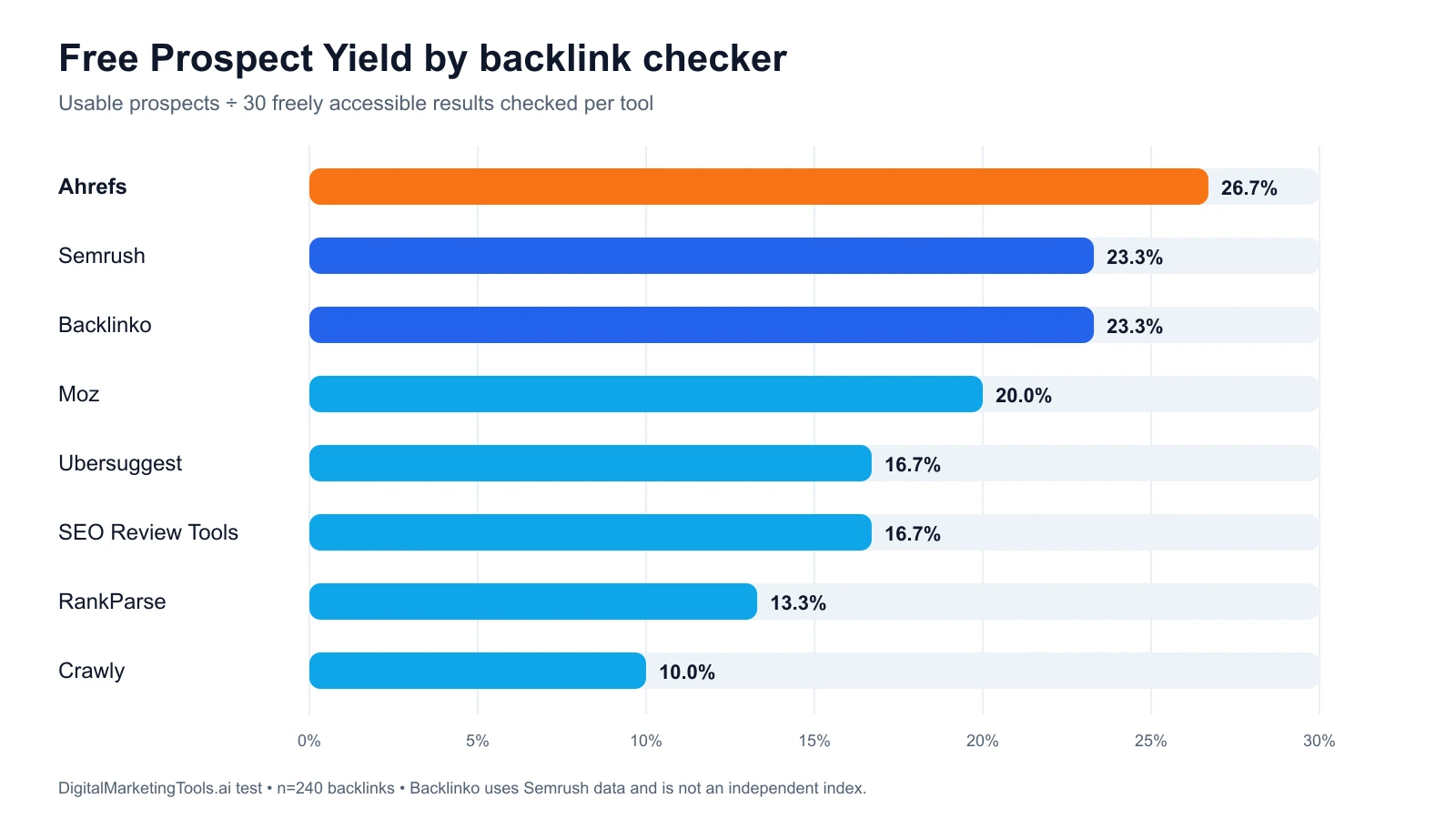
Here are the results from our 240 manually checked backlinks.
| Tool | Results checked | Still live | Link confirmed | Relevant | Usable prospects | Free Prospect Yield |
| Ahrefs | 30 | 28 | 27 | 17 | 8 | 26.7% |
| Semrush | 30 | 27 | 25 | 16 | 7 | 23.3% |
| Backlinko | 30 | 27 | 25 | 16 | 7 | 23.3% |
| Moz | 30 | 25 | 23 | 14 | 6 | 20.0% |
| Ubersuggest | 30 | 24 | 21 | 12 | 5 | 16.7% |
| SEO Review Tools | 30 | 24 | 22 | 13 | 5 | 16.7% |
| RankParse | 30 | 24 | 21 | 12 | 4 | 13.3% |
| Crawly | 30 | 22 | 19 | 10 | 3 | 10.0% |
This is not a ranking of which company has the best backlink database overall. We deliberately tested the experience available to a free user. Paid Ahrefs or Semrush gives you dramatically more filtering, rows, historical information and competitive analysis than their public free checkers.
Our question was much narrower: if you have $0 and need competitor backlink prospects today, what does each tool actually give you?
Backlink checking is only one part of a wider SEO workflow. Our complete guide to SEO tools explains how backlink analysis fits alongside keyword research, competitor intelligence, technical audits and rank tracking.
Our Quick Picks
| What you need | Our pick |
| Best overall free backlink checker from our test | Ahrefs |
| Best free competitor backlink context | Semrush |
| Best for DA and Spam Score context | Moz Link Explorer |
| Best beginner-friendly overview | Ubersuggest |
| Best simplified Semrush-powered alternative | Backlinko |
| Best utility-style checker with a larger sample | SEO Review Tools |
| Best no-login independent alternative | Crawly |
| Best transparent no-login limits | RankParse |
The more interesting finding is that the tools with the most generous-looking free access did not automatically produce the most useful prospects. RankParse, for example, can expose up to 100 referring domains and 100 backlink samples per check, yet only four of our 30 tested results qualified as usable prospects. Ahrefs gave us a smaller public window into a much larger commercial index, but eight of its 30 sampled results survived the full prospect test.
More rows can help, but better rows can save more time.
How We Tested the Free Backlink Checkers
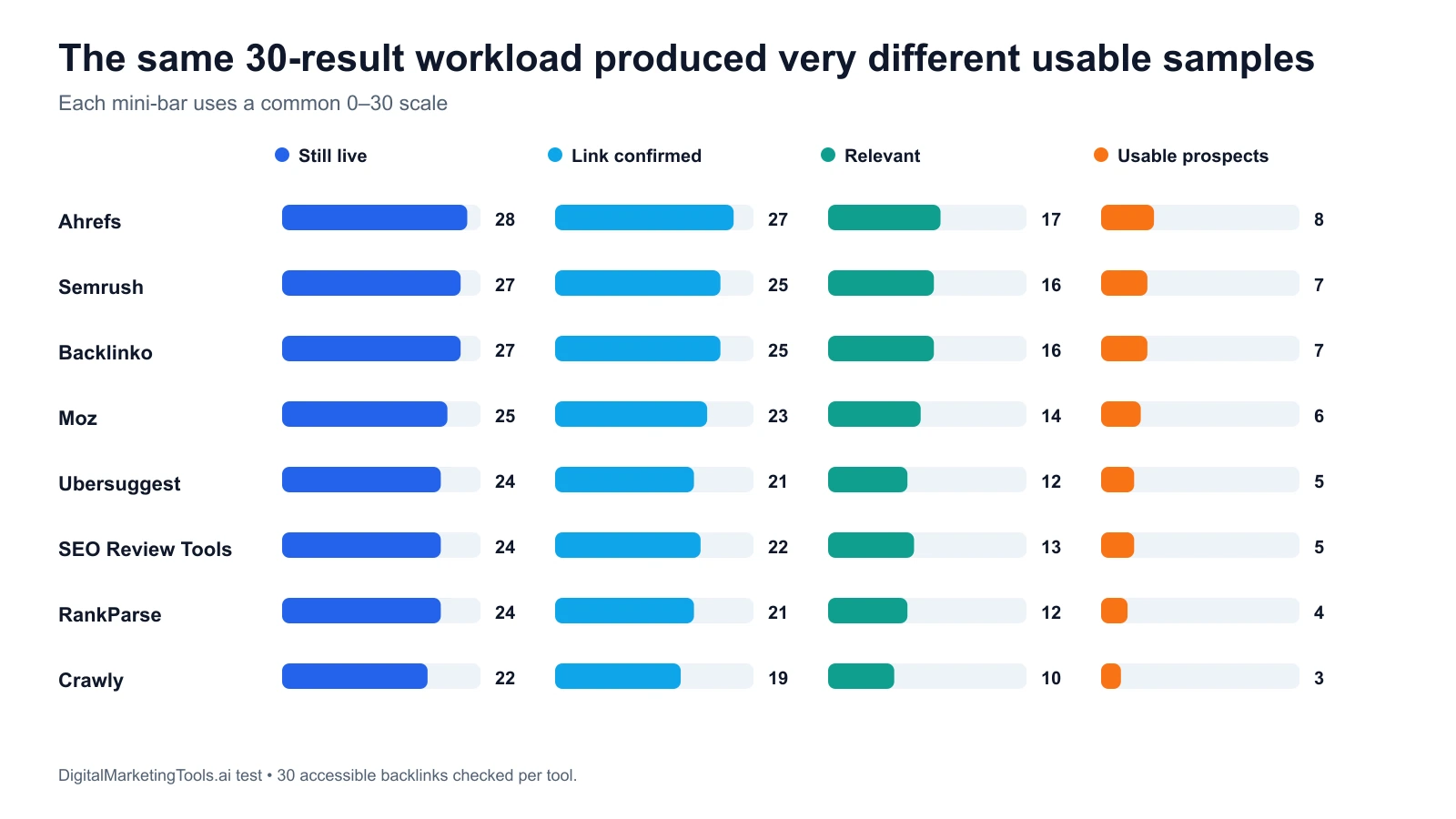
We did not test one enormous authority website and declare whichever checker reported the highest backlink number the winner. That would mostly measure database coverage rather than what a free user can realistically do with the information.
Instead, we used three different website profiles.
| Test profile | Why we included it |
| Small competitor | Tests usefulness when the overall backlink profile is manageable |
| Established medium-sized site | Gives enough referring-domain diversity for coverage differences to appear |
| Large authority/publisher | Tests what happens when the real backlink profile is far larger than any free allowance |
For each tool, we reviewed the first 10 freely accessible backlink results for each of the three profiles, giving us 30 manually checked results per checker. Across eight tools, that created a 240-result sample.
If a result appeared in the tool, we did not automatically count it as useful. Every sampled backlink went through the same manual checks.
| Check | What we looked for |
| Still live | Does the referring page load normally? |
| Link confirmed | Does the page still contain a working backlink to the tested domain? |
| Correct target | Does it actually point to the competitor or page reported by the tool? |
| Topically relevant | Does the referring site have a reasonable topical or audience connection? |
| Link context | Can we understand why the backlink exists? |
| Replicable | Could another legitimate business in the same niche realistically pursue something comparable? |
| Usable prospect | Would we seriously consider adding the source to a link-building prospect list? |
We excluded sources such as irrelevant scrapers, autogenerated junk directories, inaccessible pages and links that no longer existed. This separates backlink discovery from link prospecting, because a checker can be good at finding links while still making you filter through a lot of noise before getting anything useful.
Free Prospect Yield: The Metric We Used
Database size alone did not answer the question we were testing, so we created a simple metric for this comparison:
Free Prospect Yield = Usable link prospects ÷ Free results manually checked × 100
For Ahrefs, that becomes 8 usable prospects ÷ 30 checked results × 100 = 26.7%. Crawly produced 3 usable prospects ÷ 30 checked results × 100 = 10%.
This does not mean Ahrefs has “2.67 times better backlink data.” Free Prospect Yield is not an established SEO industry metric, and we are not presenting it as one. It measures one specific thing: what percentage of the backlink results we could access for free became prospects we’d realistically investigate further?
That gives us a better comparison when one interface exposes a small sample from a huge commercial database and another gives users many more rows from a smaller index.
What We Learned From Checking 240 Backlinks
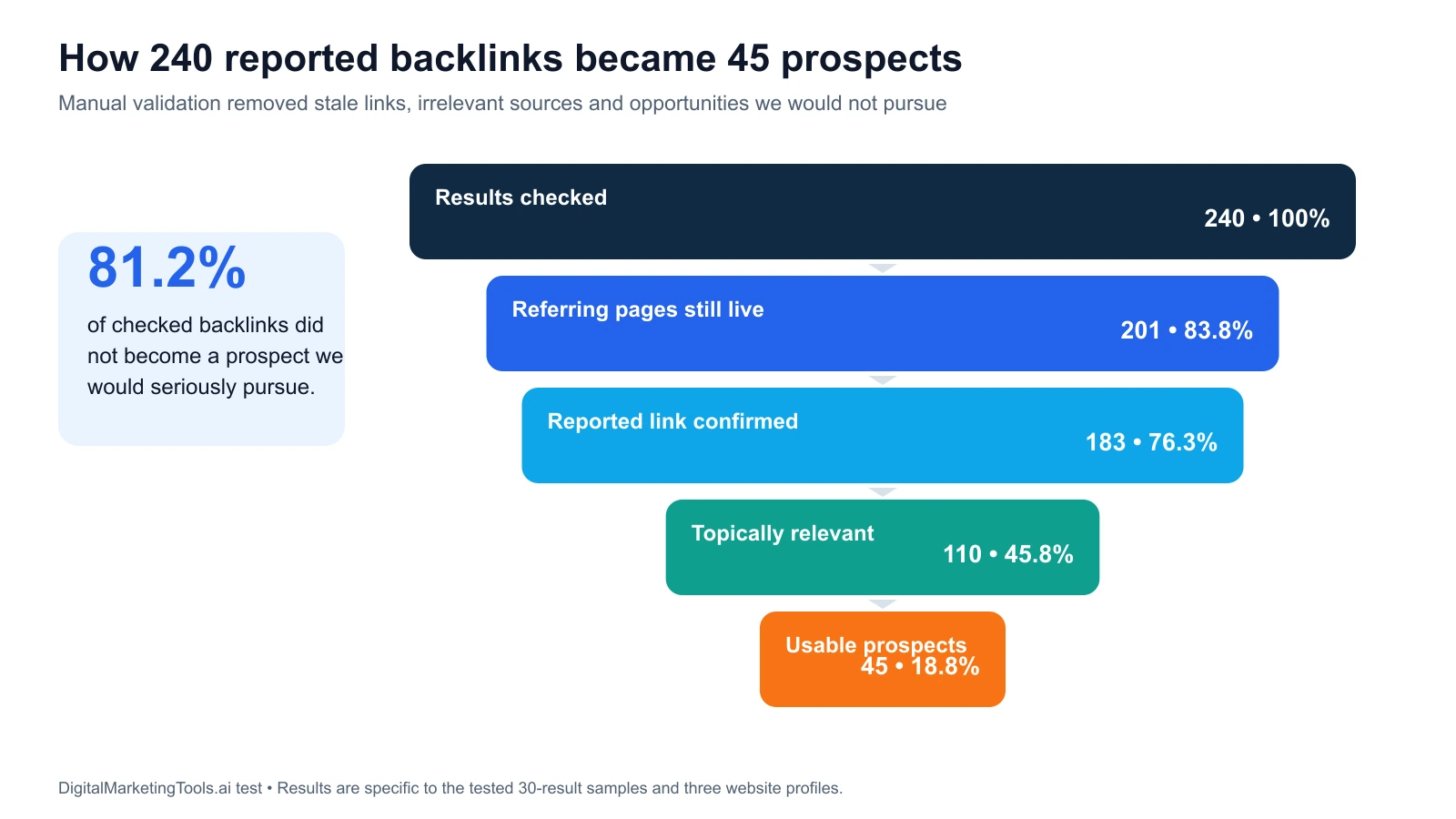
The biggest finding was not which tool finished first. It was how quickly the numbers shrank once we moved from “backlink reported” to “link-building opportunity.”
We started with 240 backlink results. Of those, 201 still had live referring pages, 183 still contained the reported link, 110 were relevant enough to investigate and just 45 became usable prospects. Across the entire test, 81.2% of the backlinks did not become a prospect we’d seriously pursue.
That matters because backlink tools can make quantity look like productivity. It isn’t. Opening, qualifying and rejecting irrelevant backlink results still consumes time.
A Live Backlink Still Isn’t Necessarily Useful
Our confirmed-link rate was much higher than our prospect rate. 183 of 240 backlinks, or 76.3%, were still confirmed, while only 45 of 240, or 18.8%, became useful prospects.
That gap is important. A scraper can genuinely link to a competitor. A random profile page can contain the correct backlink. An old sitewide footer or low-quality directory can also be accurately recorded by the checker. The tool isn’t necessarily wrong, but the marketer may still have no good reason to pursue a comparable link.
That is why accuracy and usefulness need to be measured separately.
1. Ahrefs Free Backlink Checker: Best Overall in Our Test
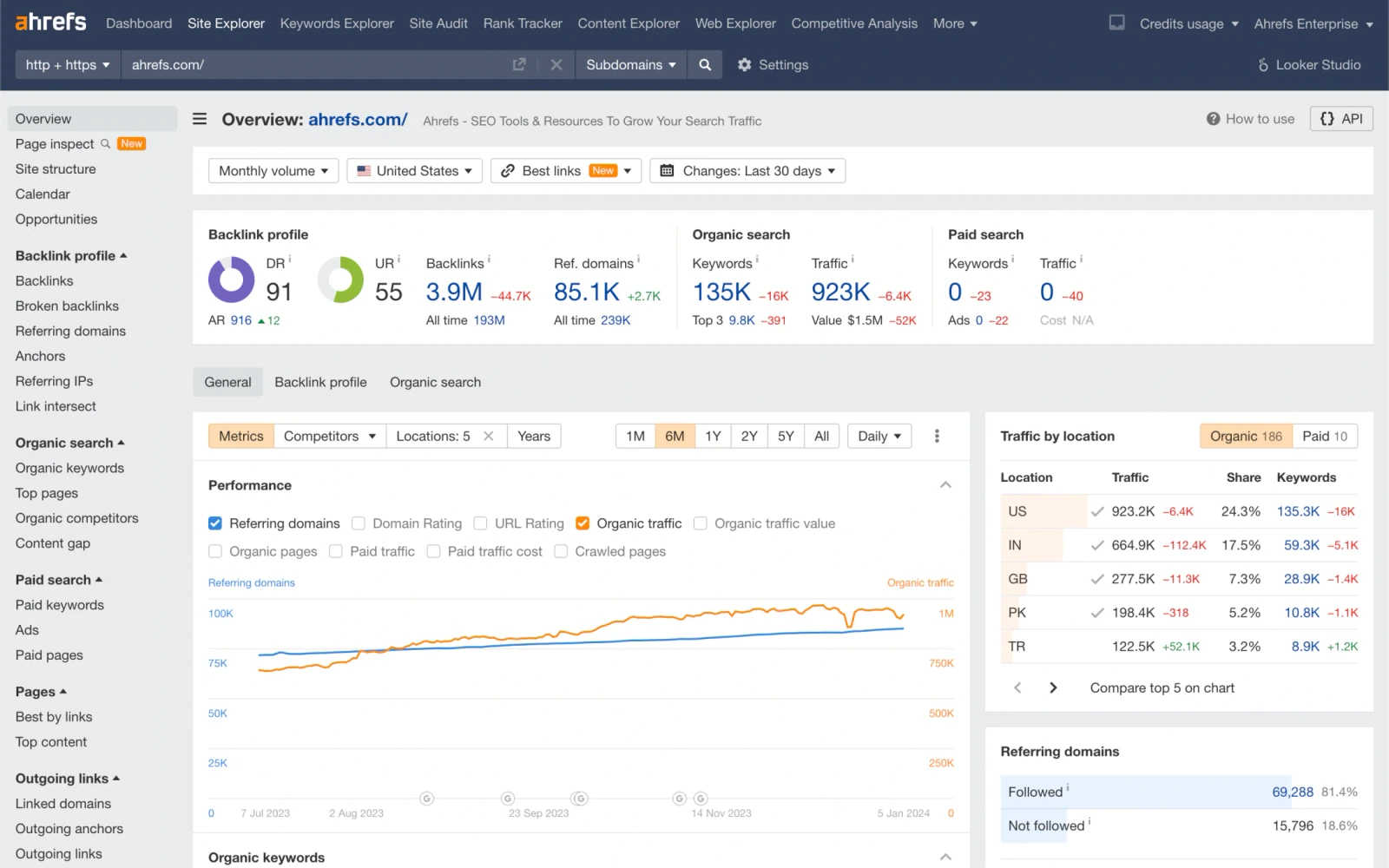
Results checked: 30 | Confirmed links: 27 | Relevant sources: 17 | Usable prospects: 8 | Free Prospect Yield: 26.7%
The Ahrefs Backlink Checker produced the strongest result in our test. Of the 30 backlinks we manually checked, 28 referring pages were still live and 27 still contained the reported backlink. Seventeen were relevant enough to investigate, and eight became genuine prospects, giving Ahrefs the highest Free Prospect Yield at 26.7%.
Ahrefs’ strength was not that every result was useful. More than 70% of the sampled backlinks still failed our final prospect test. The difference was that the free sample gave us the largest number of viable opportunities from the same 30-result workload.
Ahrefs says its backlink infrastructure continually discovers and refreshes links, while its free Ahrefs account gives verified website owners access to substantially more backlink data for their own properties. That mature index likely helps explain why our public sample held up relatively well during manual validation.
The trade-off is access. The free checker gives you a narrow window into Ahrefs rather than the full research environment available to paying users. Serious competitor research eventually benefits from larger result sets, advanced filters, Link Intersect and the wider Site Explorer workflow.
Best for: getting a small but relatively productive sample from a mature backlink index.
Main limitation: the public checker exposes only a fraction of the underlying data.
Our verdict: if we had to choose one free backlink checker from this test for quickly finding a handful of competitor prospects, we’d start with Ahrefs.
2. Semrush Backlink Checker: Best for Wider Competitor Context
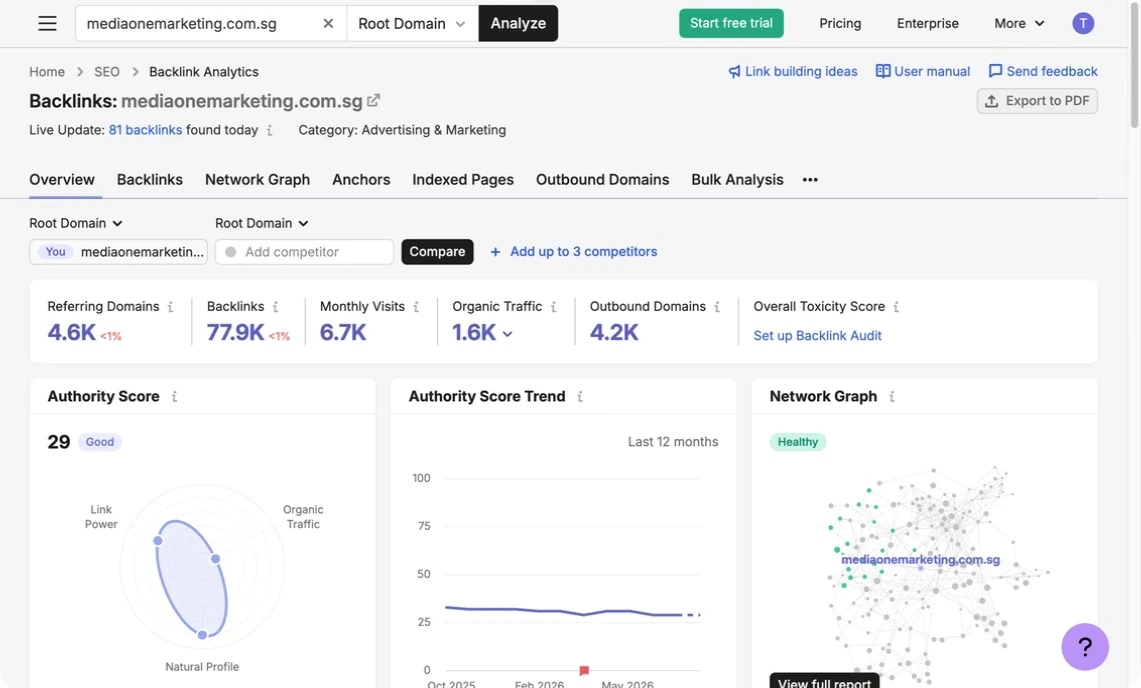
Results checked: 30 | Confirmed links: 25 | Relevant sources: 16 | Usable prospects: 7 | Free Prospect Yield: 23.3%
The Semrush Backlink Checker finished just behind Ahrefs. Twenty-seven of the 30 referring pages still loaded, 25 still contained their reported link and seven sources became usable prospects, producing a 23.3% Free Prospect Yield.
The free checker also provides useful context around those links, including referring-domain information, Authority Score, anchor text and link attributes. Where Semrush becomes more valuable is when backlink research expands beyond a single URL. A referring domain may deserve more attention if it links to several competitors, ranks for relevant keywords or repeatedly cites a specific type of content.
That surrounding competitor intelligence is where the wider Semrush ecosystem starts to matter. For someone staying strictly inside the free checker, however, we still found enough viable opportunities to make it one of our two strongest starting points.
Best for: marketers who want a free backlink snapshot that can later expand into wider competitor research.
Main limitation: serious filtering and competitive workflows quickly move beyond the free checker.
Our verdict: Semrush narrowly lost to Ahrefs on prospect yield but remains one of the first two tools we’d open.
3. Backlinko Backlink Checker: Same Yield as Semrush, but There Is a Catch
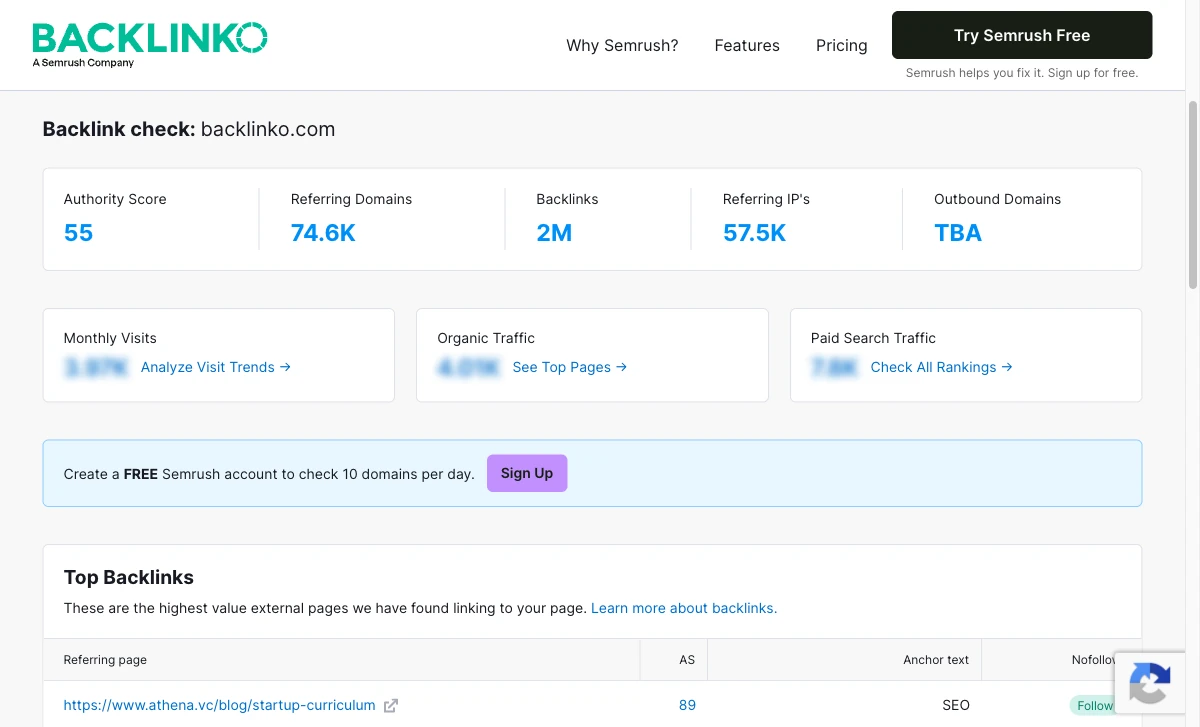
Results checked: 30 | Confirmed links: 25 | Relevant sources: 16 | Usable prospects: 7 | Free Prospect Yield: 23.3%
The Backlinko Backlink Checker produced exactly the same prospect numbers as Semrush in our sample. That is less surprising once you look at the data source because Backlinko states directly that its checker is powered by Semrush’s backlink database.
That means we should not interpret Semrush and Backlinko finding the same backlink as independent confirmation from two separate crawlers. The underlying database may be shared, but the free interface is still a different product experience. Each surface can expose different rows, provide different context or introduce restrictions at different points.
For that reason, Backlinko is still worth evaluating as a free interface. What we would not do is combine its results with Semrush and assume we have doubled our independent backlink coverage.
Best for: simple competitor backlink checking through a lighter Semrush-powered interface.
Main limitation: it does not give you an independent backlink index.
Our verdict: useful on its own, but after exhausting Semrush we’d normally move to a different data source rather than treating Backlinko as another crawler.
4. Moz Link Explorer: Best for DA and Spam Context
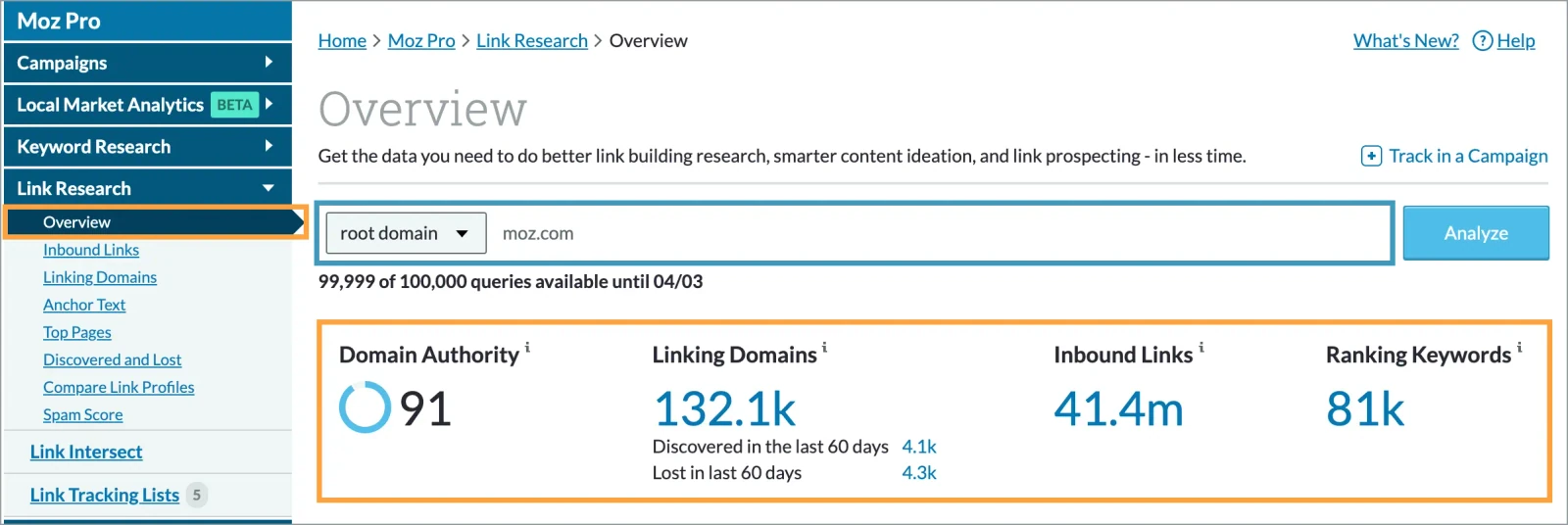
Results checked: 30 | Confirmed links: 23 | Relevant sources: 14 | Usable prospects: 6 | Free Prospect Yield: 20.0%
Moz Link Explorer landed in the middle of our test with a respectable 20% Free Prospect Yield. Twenty-five of the 30 referring pages were still live, 23 still contained the reported backlink and six became usable prospects.
Its bigger advantage is the context surrounding those results. Domain Authority, Page Authority and Spam Score give marketers familiar comparative signals for narrowing a backlink list. Those metrics should not be mistaken for Google ranking scores, but they can still help determine which referring domains deserve manual investigation first.
The main restriction is free query volume. That may be perfectly acceptable when you are checking one or two competitors, but it becomes more noticeable when backlink research turns into a recurring agency workflow.
Best for: marketers already comfortable using DA, PA and Spam Score when qualifying referring domains.
Main limitation: limited free query volume makes repeated competitor research harder.
Our verdict: good prospect quality and useful domain context, but less convenient for high-volume free research.
5. Ubersuggest: Best Beginner-Friendly Backlink Overview
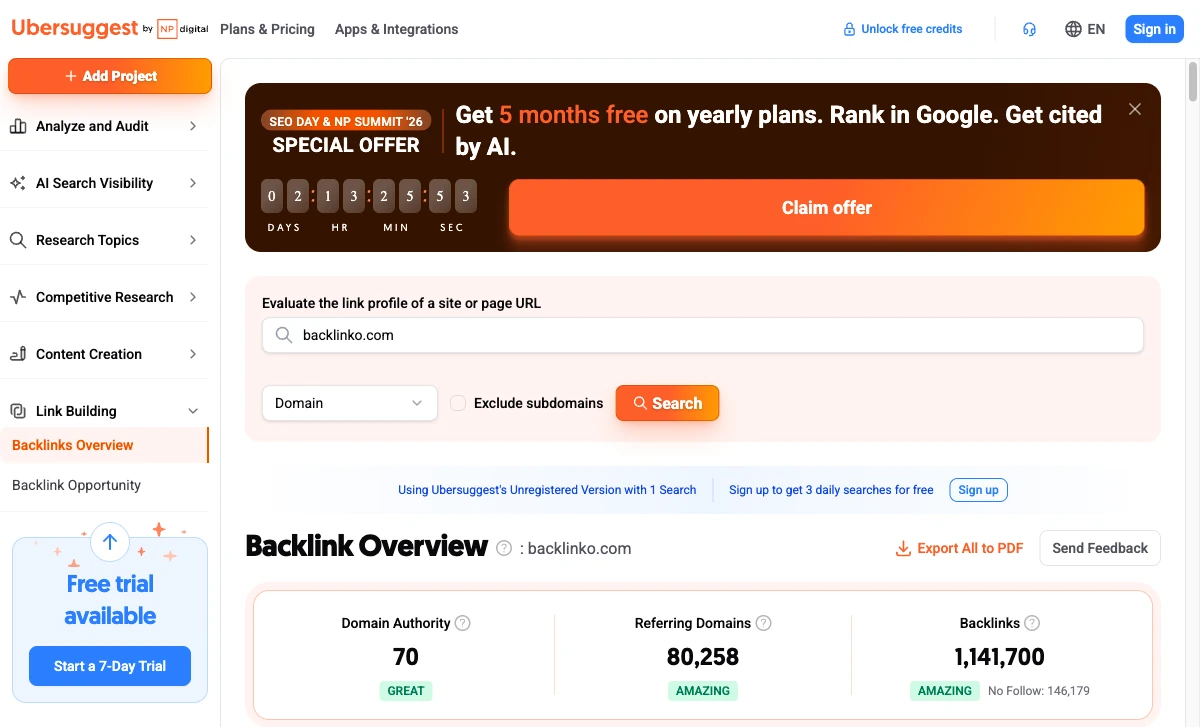
Results checked: 30 | Confirmed links: 21 | Relevant sources: 12 | Usable prospects: 5 | Free Prospect Yield: 16.7%
The Ubersuggest Backlink Checker produced five usable prospects from 30 tested backlinks. Its 16.7% Free Prospect Yield put it below Ahrefs, Semrush, Backlinko and Moz, but its value is not limited to the final prospect count.
The interface is easier for a content marketer, founder or generalist to understand than many specialist backlink tools. Its backlink overview combines information such as Domain Authority, referring domains, backlink totals, nofollow links and backlink growth, while the wider Ubersuggest backlink analysis workflow lets users explore competitor links inside the broader SEO platform.
Where we felt the limitation most strongly was moving from “this competitor has a strong backlink profile” to “these are the specific websites we’d contact.” Five usable prospects from 30 checks is adequate for occasional research, but it becomes restrictive if link prospecting is a recurring, high-volume activity.
Best for: beginners and generalist marketers who want backlink research inside a broader SEO workflow.
Main limitation: the free experience is stronger for understanding the profile than building a large prospect list.
Our verdict:useful for non-specialists, but we’d open Ahrefs or Semrush first when competitor prospecting is the main task.
For beginners who need more than backlink data, our best SEO tools for beginners comparison looks at how accessible different platforms are when you’re learning keyword research, site auditing and competitor analysis.
6. SEO Review Tools: Useful Free Sample, but Check the Data Source
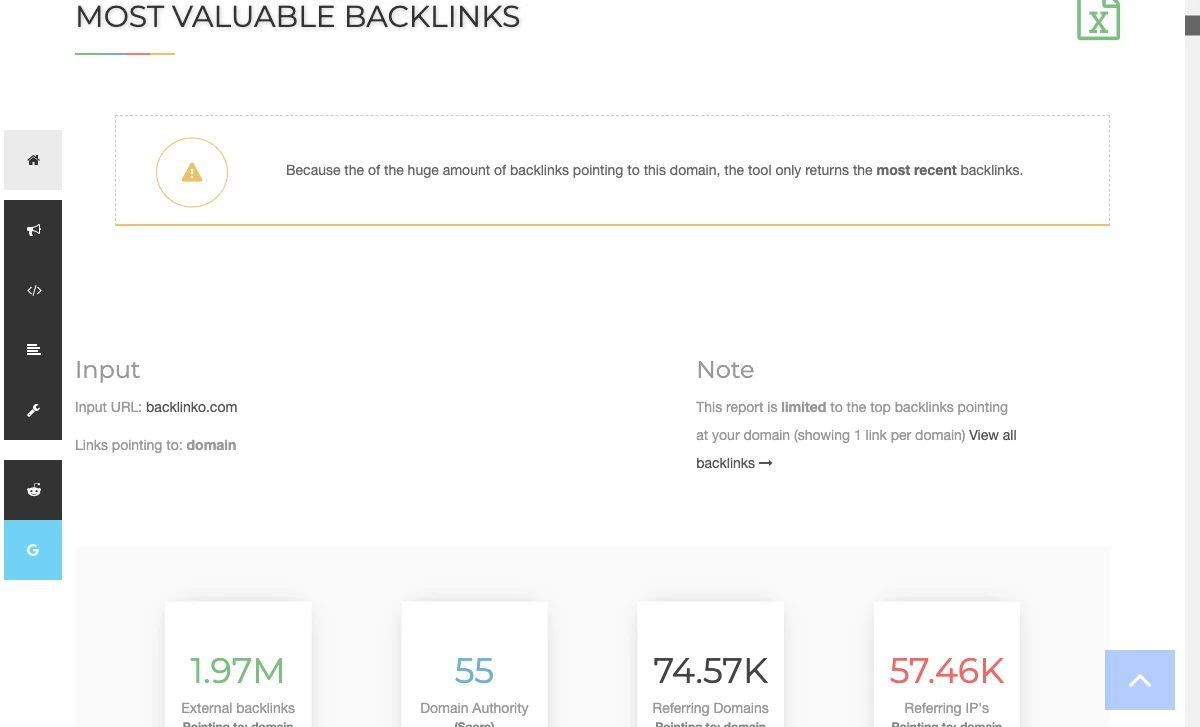
Results checked: 30 | Confirmed links: 22 | Relevant sources: 13 | Usable prospects: 5 | Free Prospect Yield: 16.7%
The SEO Review Tools Backlink Checker tied Ubersuggest with five usable prospects and a 16.7% Free Prospect Yield. Its utility-focused interface makes it appealing when you want backlink information without committing to a complete all-in-one SEO platform.
There is an important caveat. SEO Review Tools documents a switch to Semrush as the API provider for its backlink checker, which means Semrush, Backlinko and SEO Review Tools may present different samples and free interfaces but should not automatically be treated as three independent backlink indexes.
The same data provider does not guarantee identical output. Interfaces can expose different quantities of rows, sort them differently, apply their own filters or cache results differently, which helps explain why SEO Review Tools produced five usable prospects while the direct Semrush checker produced seven.
Best for: utility-style backlink checking without needing the complete Semrush environment.
Main limitation: it gives you another free interface, but not necessarily another independent crawling dataset.
Our verdict: useful on its own, but less valuable if your objective is to stack genuinely independent indexes.
7. RankParse: Most Transparent Free Limits, but Lower Prospect Yield
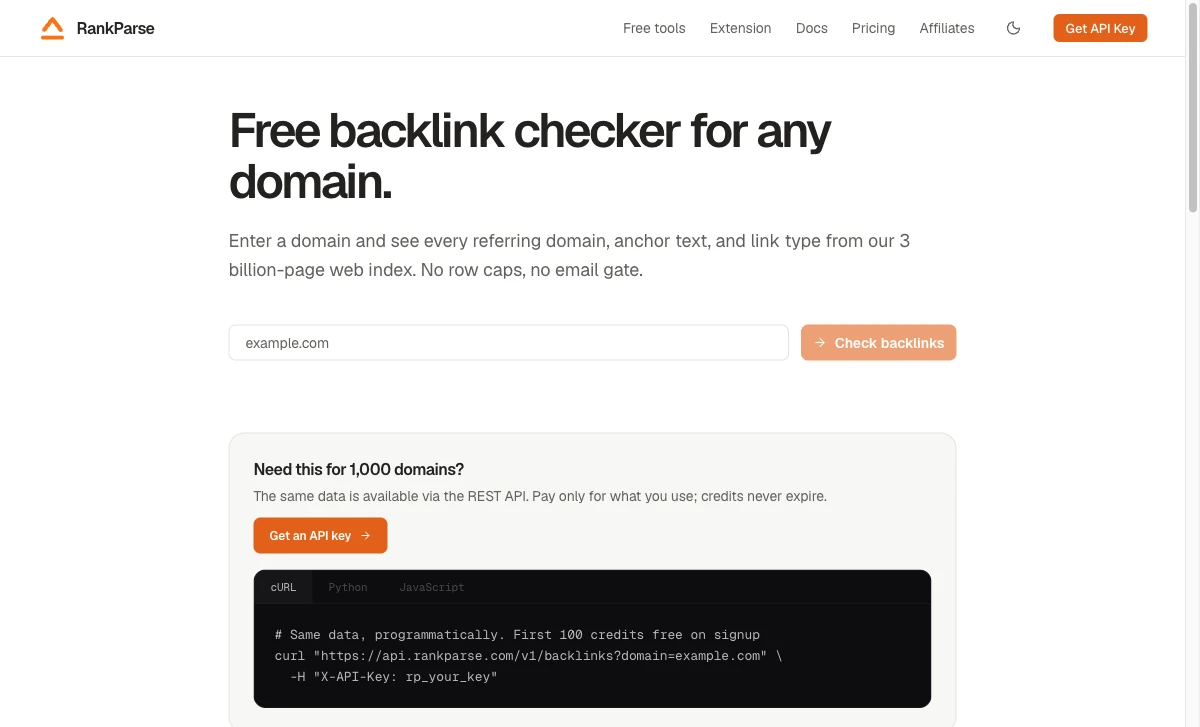
Results checked: 30 | Confirmed links: 21 | Relevant sources: 12 | Usable prospects: 4 | Free Prospect Yield: 13.3%
The RankParse Free Backlink Checker looks generous on paper. Anonymous users can currently run five checks per day and see up to 100 referring domains and 100 backlink samples per check, while the current dataset is built from an index containing more than three billion pages.
That gives a free user a lot of rows to work with, but our test shows why quantity still needs validation. Twenty-four of our 30 referring pages remained live, 21 still contained the confirmed link, 12 were relevant and four became usable prospects. That produced a 13.3% Free Prospect Yield.
The lower yield does not necessarily mean RankParse will produce fewer prospects in total. If Ahrefs gives you eight good opportunities from a smaller accessible sample but RankParse lets you inspect far more backlinks, the latter could eventually uncover more opportunities. You simply spend more time filtering them.
This creates an important distinction: Prospect Yield measures efficiency, while accessible row count affects total opportunity volume.
Best for: marketers who want clearly defined no-login limits and a larger free sample to inspect manually.
Main limitation: its crawl cycle and lower prospect yield mean more manual validation may be required.
Our verdict: not the most efficient checker in our test, but the generous result allowance makes it worth opening after stronger samples are exhausted.
8. Crawly: Independent Dataset, but Lowest Yield in Our Test
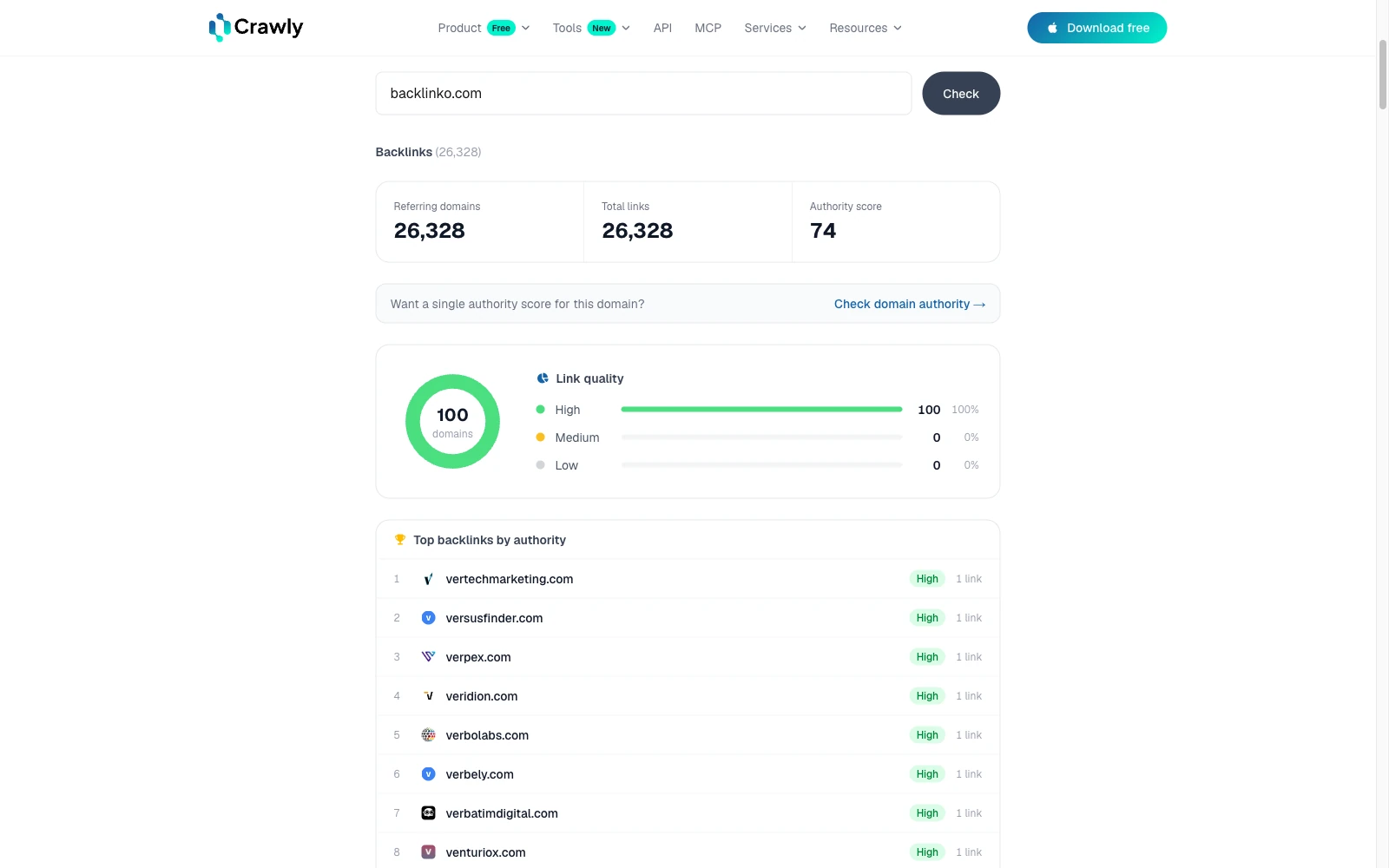
Results checked: 30 | Confirmed links: 19 | Relevant sources: 10 | Usable prospects: 3 | Free Prospect Yield: 10.0%
The Crawly Backlink Checker finished last on Free Prospect Yield. Of the 30 links we tested, 22 referring pages remained live, 19 links were confirmed, 10 were relevant and three became usable prospects, producing a 10% yield.
That does not make the tool useless. Crawly’s value is that it offers a no-login workflow and its own backlink index, which currently reports coverage across 124 million domains and 4.75 billion backlinks with monthly updates. It also provides CSV export, making it easier to move the free results into a spreadsheet or prospecting workflow.
Its smaller index and monthly update cycle can create more noise or older results than the largest commercial crawlers, but an independent source can also uncover links your first database missed. That is where we’d use Crawly. After checking Ahrefs or Semrush, we’d rather open a genuinely different index than another interface built on the same Semrush data.
Best for: adding another independent dataset to a free backlink research workflow.
Main limitation: our sample required substantially more filtering before reaching usable prospects.
Our verdict: not our first checker, but potentially more useful as a second opinion than another Semrush-powered surface.
Why Backlink Database Independence Matters
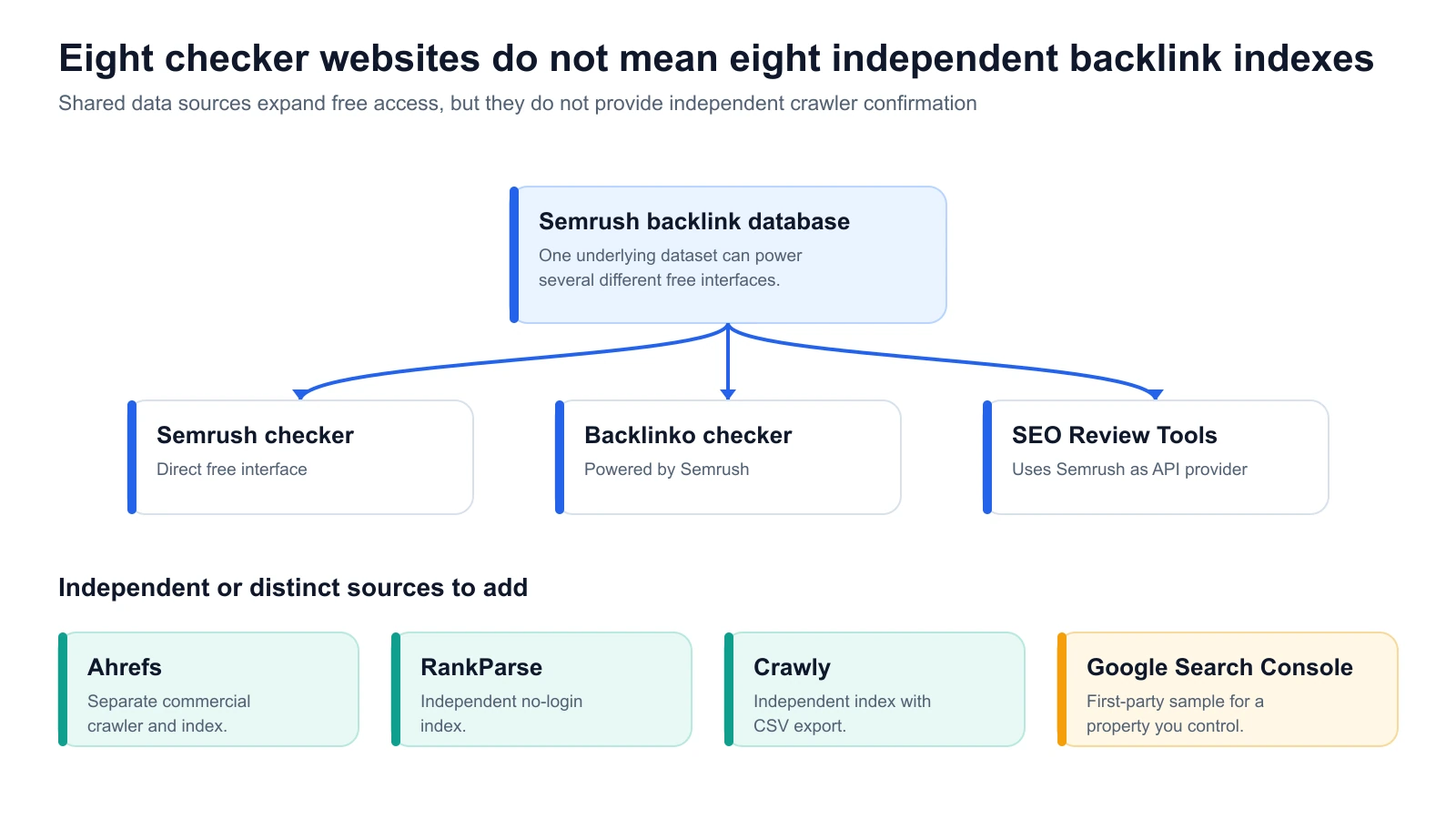
One of the more useful lessons from this comparison had nothing to do with Free Prospect Yield. Eight backlink checker websites do not necessarily mean eight different backlink indexes.
Backlinko explains on its free backlink checker that the tool is powered by Semrush, while SEO Review Tools documents its own switch to Semrush on the Backlink Checker page. That matters if your strategy is to run a competitor through several free tools, combine everything and assume you have broader independent coverage.
You may get broader free access, but not necessarily broader crawling coverage. If three interfaces expose the same underlying database, their biggest difference may be how many rows they show, how they sort the results and which metrics they expose.
For a free workflow, we’d rather combine Ahrefs or Semrush as the large commercial source, then add an independent option such as Crawly or RankParse, followed by Google Search Console for a property we control. That gives us a better chance of expanding actual coverage before we deduplicate the referring domains.
What About Google Search Console?
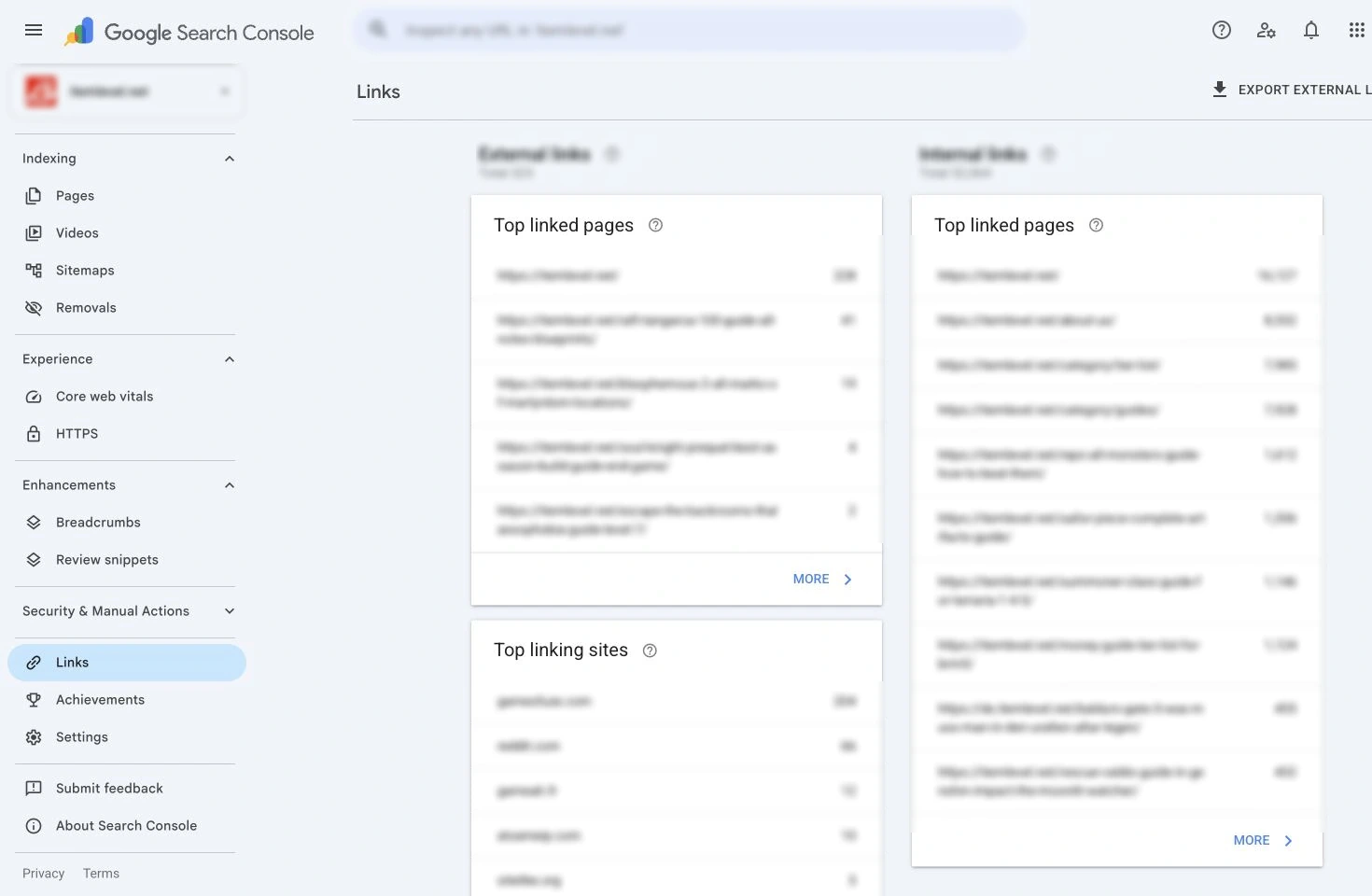
Google Search Console’s Links report belongs in a separate category because it solves a different problem. It can show external sites linking to a property you control, top-linked pages and linking text, but Google’s report is a sample rather than a complete inventory of every backlink.
The critical limitation for competitor research is ownership. You cannot enter a random competitor and retrieve their Search Console backlink data, so the report is useful for answering “Which sites does Google associate with our own property?” but not “Who links to our competitor but not us?”
For our own website, we’d absolutely bring Search Console into the backlink workflow. Competitor prospecting still requires an external backlink database.
A Backlink Checker Is Not a Link-Building Tool
This became obvious once we started manually opening the results. Consider three completely genuine backlinks: an industry publication citing a competitor’s original study, a supplier directory listing every business in the category and a scraper that copied the competitor’s article while preserving its links.
All three can legitimately appear in a backlink database, but they do not have equal value. The editorial citation may reveal a digital PR or research opportunity. The directory could be a legitimate citation prospect. The scraper is probably noise.
The backlink checker has done its job by finding the links. The marketer still needs to determine why each link exists and whether that underlying reason is realistically reproducible.
How We Turn Competitor Backlinks Into Prospects
Once a relevant backlink passes the initial validation, we classify the opportunity rather than immediately sending outreach.
| Competitor backlink pattern | What we’d investigate |
| Included in a “best tools/resources” page | Does our resource genuinely deserve consideration for the same list? |
| Original statistics or research cited | Could we publish stronger first-party data that earns similar citations? |
| Dead competitor page still earning links | Is there a legitimate broken-link replacement opportunity? |
| Industry directory | Are submissions open, and does the directory serve a real audience? |
| Expert or guest contribution | Does the publication accept qualified outside expertise? |
| Partner/vendor page | Is there a legitimate relationship we could build? |
| Editorial product mention | Why did the publication choose that competitor? |
| Generic scraper/spam | Ignore |
This is another reason more backlink results do not automatically mean more value. Every irrelevant result still costs time to open, understand and reject. Noise creates work too.
Should You Combine Multiple Free Backlink Checkers?
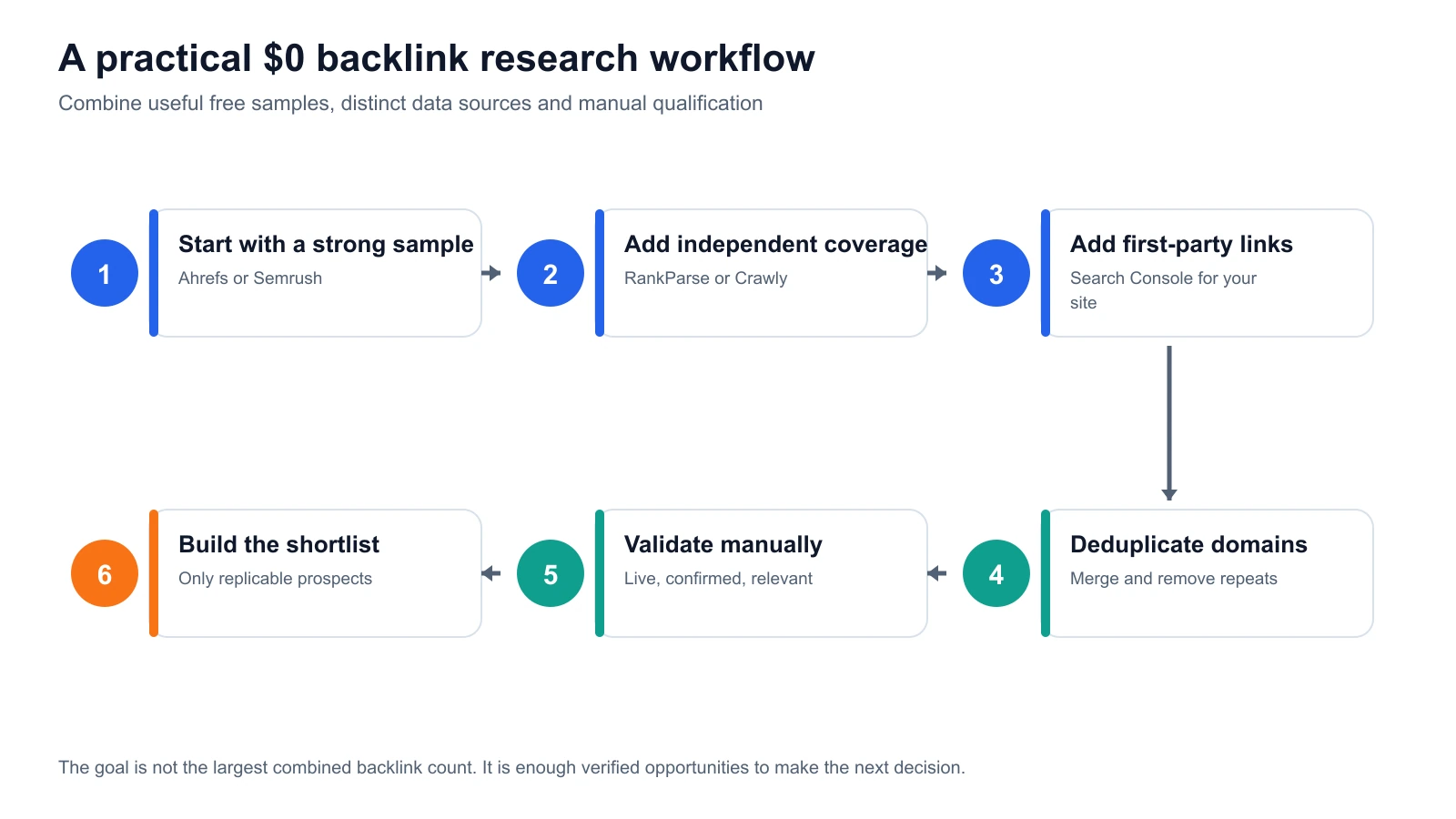
Yes, but the ideal free stack combines different strengths and, where possible, genuinely different data sources.
We’d start with Ahrefs because it produced the highest Free Prospect Yield in our test, then check Semrush because its sample also performed strongly and provides useful wider competitor context. After that, we’d add an independent source such as Crawly or RankParse, where the prospect yield was lower but the value comes from potentially finding backlinks the first database did not expose.
For our own domain, we’d also bring in Google Search Console, then deduplicate referring domains across all sources before evaluating prospects. We would not count Semrush, Backlinko and SEO Review Tools as three separate crawler confirmations simply because three different interfaces displayed the backlink.
Free backlink checkers work well for occasional research, but recurring competitor analysis may justify a broader SEO platform. Our best all-in-one SEO tools comparison tests how Ahrefs, Semrush and other platforms handle backlink research alongside the rest of an SEO workflow.
When Is a Free Backlink Checker Enough?
A free checker can be completely adequate when the job is narrow.
| Task | Are free tools enough? |
| Check whether a website has meaningful backlinks | Usually |
| Find five to ten competitor link prospects | Usually |
| Research two or three competitors manually | Often |
| Review backlinks to your own site | Often, especially with Search Console |
| Build hundreds of qualified prospects each month | Usually not |
| Run large Link Intersect analyses | Usually not |
| Continuously monitor new and lost links | Usually not |
| Filter massive backlink profiles efficiently | Usually not |
| Automate backlink research across many clients | No |
The upgrade trigger should not be “the checker says another 100,000 backlinks are available.” The real question is whether access to those additional links will materially improve the work you’re trying to complete.
If you need five viable prospects and the free tools already found ten, paying may not change the outcome. If an agency needs 500 qualified prospects across 30 competitors every month, manually combining free checkers becomes a cost of its own.
Free backlink checkers work well for occasional research, but recurring competitor analysis may justify a broader SEO platform. Our best all-in-one SEO tools comparison tests how Ahrefs, Semrush and other platforms handle backlink research alongside the rest of an SEO workflow.
Frequently Asked Questions
What Is the Best Free Backlink Checker?
Ahrefs performed best in our test, producing eight usable prospects from 30 manually checked results for a Free Prospect Yield of 26.7%. Semrush and Backlinko followed at 23.3%, although Backlinko uses Semrush’s database and should not be treated as an independent backlink index.
The best option still depends on the job. RankParse exposes more free rows, Moz provides useful DA and Spam Score context, and Crawly gives you another independent dataset without requiring a login.
Can I Check Competitor Backlinks for Free?
Yes. All eight tools in our comparison allowed some level of competitor backlink checking without purchasing a full SEO subscription. The major differences are how many individual results you can inspect, what context they expose and how quickly useful research functionality disappears behind a signup or paywall.
Are Free Backlink Checkers Accurate?
They can be accurate without being complete. Across our test, 183 of 240 sampled results still contained the backlink reported by the checker, giving us a confirmed-link rate of 76.3%.
That also means almost one in four sampled results did not result in a confirmed backlink during our manual check. Different databases crawl different parts of the web at different frequencies, so stale and missing results are unavoidable.
Which Free Backlink Checker Had the Freshest Results in Our Test?
Ahrefs had the strongest confirmed-link rate among the tools we checked, with 27 of 30 backlinks still confirmed, followed by Semrush and Backlinko at 25 of 30.
That does not prove Ahrefs will always have the freshest backlink database across every domain. Our figures represent the 30-result sample used in this experiment.
Which Free Backlink Checker Gave Us the Most Useful Prospects?
Ahrefs produced eight usable prospects from 30 results, the highest in our test. Semrush and Backlinko produced seven each, Moz produced six, Ubersuggest and SEO Review Tools produced five, RankParse produced four and Crawly produced three.
Is Google Search Console a Free Backlink Checker?
For your own website, yes. The Search Console Links report shows sampled backlink information for properties you control, but it cannot be used as a general competitor backlink checker.
Should I Use More Than One Free Backlink Checker?
Yes, particularly when the tools use different underlying backlink indexes. Combining Ahrefs or Semrush with an independent smaller index can expose different results.
Using several interfaces all powered by Semrush may still increase the number of free rows you can see, but it should not be treated as the same kind of independent confirmation.
Do I Need Ahrefs or Semrush for Backlink Research?
Not necessarily. For occasional competitor research, our test shows that free backlink checkers can uncover real, usable opportunities.
Paid software becomes easier to justify when backlink analysis is recurring, requires hundreds or thousands of prospects, needs advanced filtering or has to connect with broader competitive research and reporting.
Final Verdict: Count Useful Opportunities, Not Backlinks
We started this test because most backlink checker comparisons focus on how many links each database finds. After manually checking 240 results, that is no longer the number we’d focus on first.
Of those 240 results, 201 referring pages were still live, 183 still contained the reported backlink, 110 were topically relevant and only 45 became usable prospects. The average backlink we checked was therefore much more likely to become something we rejected than something we’d pursue.
Ahrefs gave us the strongest Free Prospect Yield at 26.7%, followed by Semrush and Backlinko at 23.3% and Moz at 20%. The test also showed why there is value in opening more than one checker. A smaller or less efficient independent database can still expose a prospect your first tool missed, while different free interfaces can change what you are able to access even when two tools share an underlying provider.
The best free workflow is not about finding the dashboard with the largest backlink number. It is about finding enough live, relevant and realistically reproducible links to make the next decision.
Don’t choose a free backlink checker by the size of the number it reports. Choose it by how much useful data reaches you before the paywall.
Disclosure: digitalmarketingtools.ai is sponsored by Digimetrics.ai. Sponsored Highlights are clearly labelled advertising. Our reviews, comparisons and guides are written to be useful and fair regardless of who sponsors the site. Read the full disclosure.


