
Best Semrush Alternatives in 2026: Can You Replace the Suite Without Building Another One?
Semrush is one of those subscriptions that’s easy to complain about until you actually try replacing it.
Keyword research by itself is easy to replace. So is rank tracking. You can find a separate crawler, backlink checker, competitor tool and AI-visibility platform without much trouble either.
The annoying part starts when all of those replacements live in different tabs.
Suddenly, the cheaper alternative needs another crawler. The crawler needs a reporting workflow. Your AI visibility lives somewhere else. You’re exporting CSVs between platforms, and that Semrush subscription you were trying to escape starts looking a little less expensive.
So for this comparison, I didn’t want to ask which alternative had the longest feature list.
I wanted to answer something more useful:
If I cancel Semrush, can one alternative actually replace my workflow, or am I just building another software stack around the hole it leaves behind?
We used Semrush as the control and tested the same seven jobs across every alternative: keyword research, competitor research, backlinks, technical auditing, rank tracking, SEO/reporting workflow and AI/GEO visibility.
We also tracked something feature comparisons often ignore: switching cost. How many additional tools did I need? How many handoffs did the workflow create? And how much longer did it take me to get to the same answer?
That changed the result quite a bit.
Quick Answer: What Is the Best Semrush Alternative?
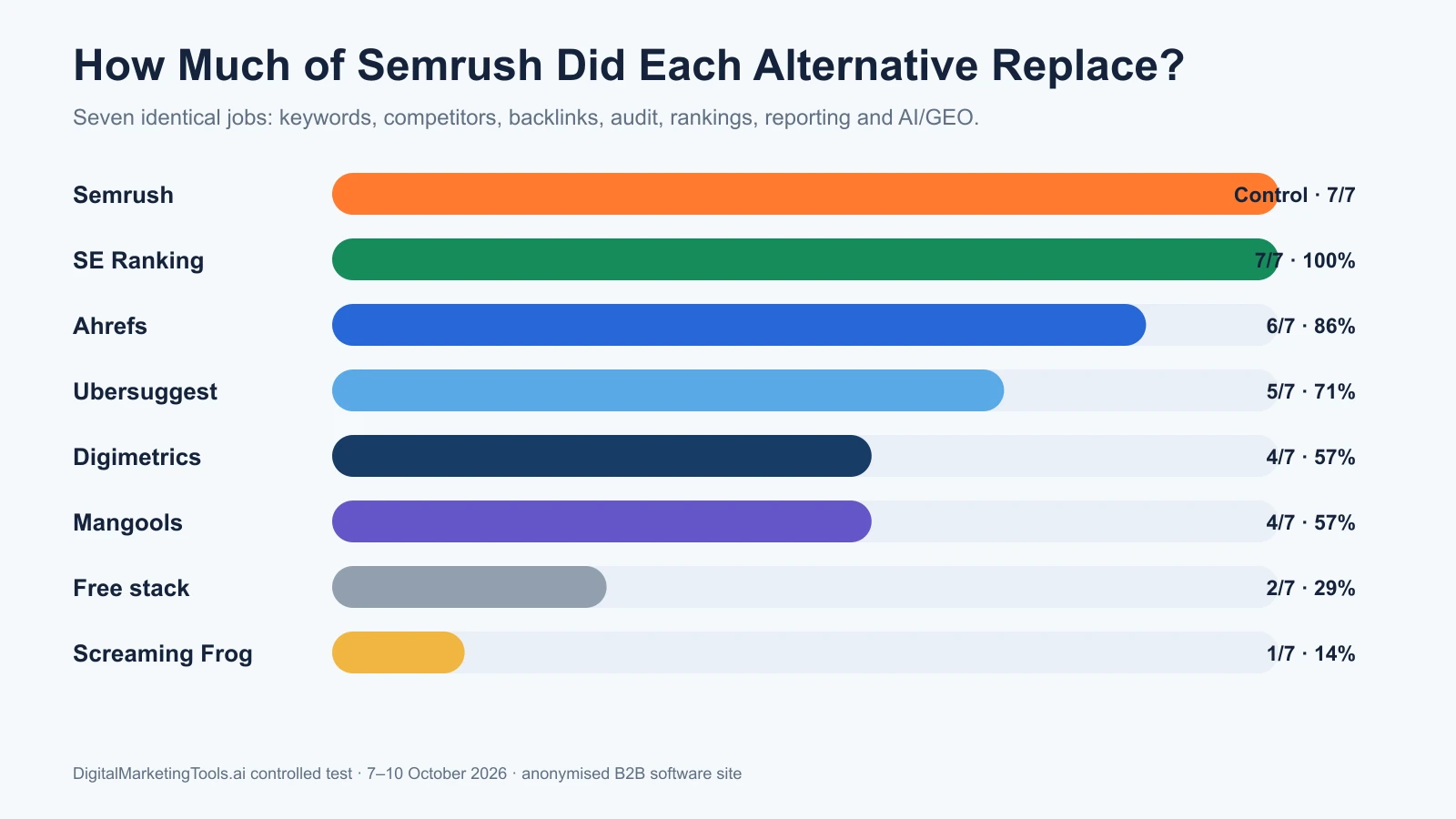
SE Ranking was the closest overall Semrush alternative in our test. It completed all 7 of 7 workflows without requiring another paid platform.
Ahrefs was the strongest choice for SEO-heavy research, particularly competitors and backlinks. Ubersuggest offered the most useful lower-cost coverage for a smaller team that didn’t need Semrush-level backlink depth or AI monitoring.
Digimetrics stood out for a different reason: it didn’t match Semrush for competitive or backlink depth, but it did the best job of connecting SEO and GEO findings to a clear next action.
| Need | Best Semrush alternative | Why |
| Closest overall replacement | SE Ranking | Completed all 7 workflows in one platform |
| Best value | Ubersuggest | Replaced 5/7 jobs at a much lower entry price |
| Best for competitor research | Ahrefs | Strongest combination of keyword, page, history and backlink context |
| Best for backlinks | Ahrefs | Highest usable backlink yield among full SEO suites |
| Best for rank tracking | SE Ranking | Strong manual-check consistency with daily tracking and useful controls |
| Best guided SEO + GEO workflow | Digimetrics | Clearest connection between findings and prioritised next actions |
| Best for technical SEO | Screaming Frog | Detected all 25 validated technical issues |
| Best for beginners | Mangools | Simpler individual tools with a gentler learning curve |
| Best free Semrush alternative | Google + Bing + Screaming Frog Free | Useful first-party measurement and small-site auditing, with major gaps elsewhere |
The winner matters, but the bigger takeaway was this:
Replacing Semrush gets much easier once you admit which parts of Semrush you actually use.
Pricing: How Much Do Semrush Alternatives Cost in 2026?
Pricing matters, but it only tells part of the story.
A cheaper tool is only a better deal if it actually replaces the parts of Semrush you use. If the lower monthly price still forces you to add another crawler, backlink tool or reporting workflow, the real cost climbs quickly.
That’s why I’d look at pricing in two layers: the starting subscription price and the practical replacement cost once missing workflows are accounted for.
| Tool | Starting price* | What that price gets you | Main cost caveat |
|---|---|---|---|
| Semrush | $139.95/mo | Full all-in-one SEO workflow with strong competitor research, backlinks, auditing, tracking and reporting | Higher upfront cost, but fewer extra tools needed |
| Ahrefs | $129/mo | Strong SEO-first workflow, especially for keywords, competitors and backlinks | AI/GEO coverage may require a higher setup depending on prompt needs |
| SE Ranking | $129/mo | Closest full Semrush replacement in this test, with rankings, auditing, reporting and AI/GEO workflows in one platform | Slightly lighter data depth than Semrush in some areas |
| Digimetrics | From $39/mo | SEO + GEO workflow with guided next actions and AI visibility support | Still weaker for backlinks, competitor depth and reporting flexibility |
| Ubersuggest | $29/mo | Lower-cost coverage for keywords, audits, basic competitors and rankings | Backlinks and AI-monitoring limits become noticeable quickly |
| Mangools | $49/mo | Simpler stack for keywords, backlinks, rankings and AI monitoring | Still needs another tool for technical auditing |
| Screaming Frog | £199/year | Specialist technical crawler with strong audit depth | Not a complete suite, so other workflows still need separate tools |
| Free stack | $0 | Basic first-party SEO workflow using Google and Bing tools | Highest time cost and most workflow fragmentation |
*Prices should be rechecked on publication day, since SaaS pricing and plan limits change regularly.
What the pricing actually means
On paper, tools like Ubersuggest and Mangools look much cheaper than Semrush. For a solo site owner or smaller business, that can be completely fair. If you mainly need keyword research, basic rankings and light audits, paying for a full Semrush subscription may be unnecessary.
The problem is that lower pricing often comes with trade-offs in backlink depth, reporting, AI visibility limits or technical workflow coverage. Once you start adding missing tools back into the stack, the savings can shrink fast.
That’s why SE Ranking was especially strong in this comparison. It didn’t always match Semrush dataset-for-dataset, but it preserved the full workflow in one platform at a lower entry price. By contrast, a cheaper stack built from smaller tools may lower software cost while increasing the number of handoffs, exports and manual checks needed to get the same work done.
Cheapest doesn’t always mean lowest real cost
If you only manage one site, a lighter tool can absolutely save money.
If you manage multiple websites or clients, the real cost is not just the monthly subscription. It’s also the time spent switching between tools, verifying missing data, rebuilding reports and filling workflow gaps manually.
That’s the part pricing tables often miss, and it’s exactly why comparing software cost alone can be misleading in a Semrush alternatives article.
Why Look for a Semrush Alternative?
Semrush covers a lot of ground.
Depending on the plan and toolkits you use, the platform can sit somewhere in the middle of keyword research, competitor intelligence, backlinks, technical SEO, rankings, reporting and AI-search monitoring.
That’s useful when you actually use those things together.
It’s harder to justify when most of your week consists of Keyword Magic Tool, Position Tracking and the occasional Site Audit.
So I wouldn’t start this decision with:
Does this alternative have keyword research?
Almost every serious SEO suite does.
A better question is:
How much of the Semrush workflow am I actually paying for?
If you only use two or three recurring jobs, a lighter platform can make much more sense. If you regularly move between competitors, links, rankings, reports and AI visibility, replacing Semrush without creating extra work becomes considerably harder.
If you’re still deciding whether you need a specialist tool or an all-in-one suite at all, our guide to choosing the right SEO tool covers that decision separately.
How We Tested the Best Semrush Alternatives
We kept the core inputs consistent across every product.
| Test detail | Input |
| Test dates | 7–10 October 2026 |
| Test site | Anonymised established B2B software site with 412 crawlable URLs |
| Target market | United States, English, Google desktop |
| Tester | DigitalMarketingTools.ai editorial SEO team with 15 years of combined SEO experience |
| Keyword research | Same 10 commercial and informational seed keywords |
| Competitor research | Same 3 organic-search competitors |
| Backlink research | First 50 comparable linking-page candidates available in each paid tool |
| Site audit | Same 412-URL site with 25 independently validated technical issues |
| Rank tracking | Same 20 keywords, market and desktop device |
| SEO/reporting workflow | Same 6 recurring research questions ending in a client-readable summary |
| AI/GEO visibility | Same brand, 3 competitors and 20 prompts across supported AI-search surfaces |
The backlink samples were manually checked for live status, actual link presence and topical relevance. Duplicate competitor opportunities were removed before counting.
For ranking, we compared every platform against the same neutral manual snapshot rather than treating Semrush as the truth.
AI results need a little more caution because generative outputs naturally vary between runs. We’re evaluating workflow coverage and usability, not claiming one vendor has a universally complete index of AI answers.
How We Defined a Replacement
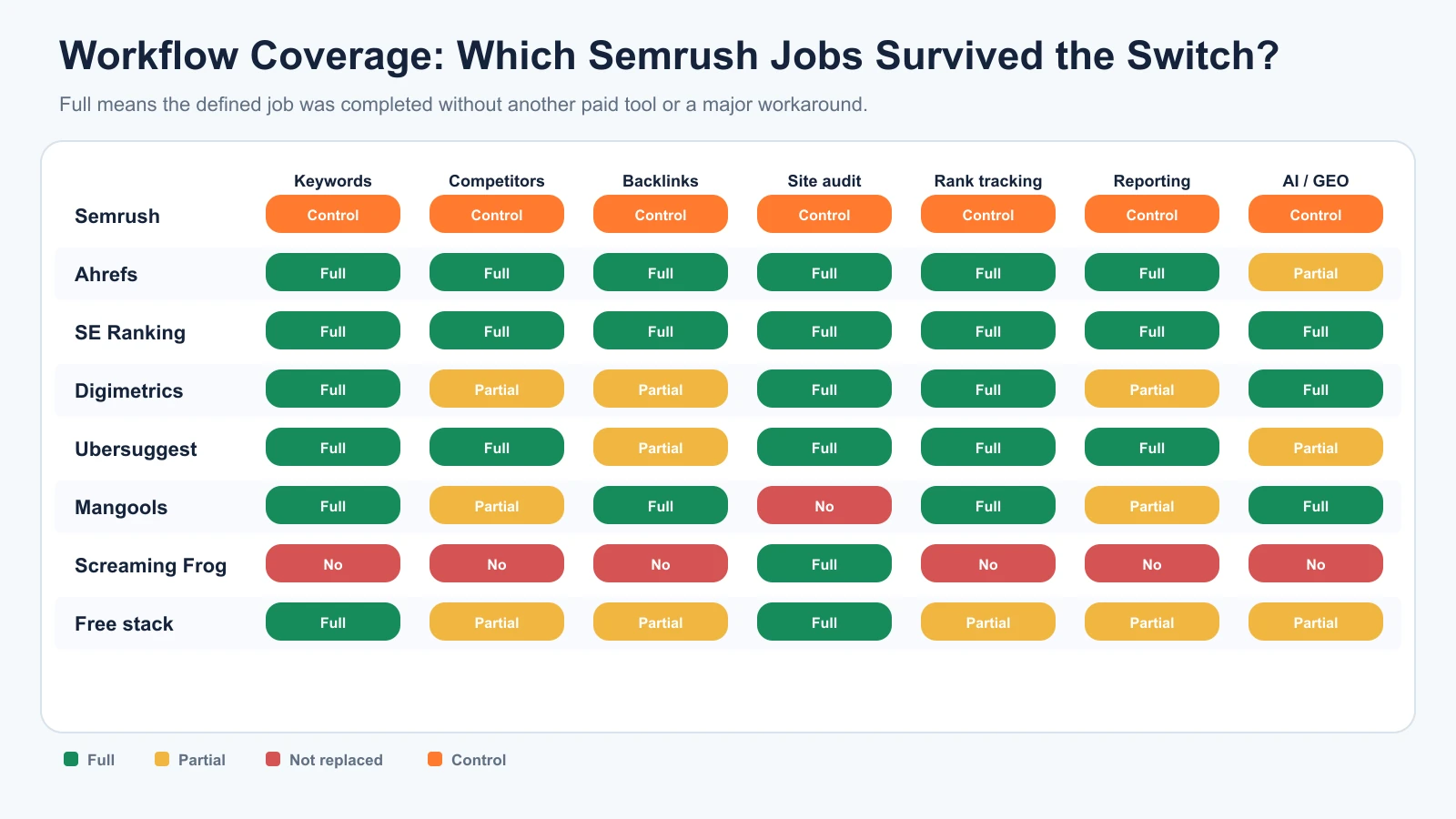
Full: The job could be completed satisfactorily without another paid platform or a major workaround.
Partial: We could get useful output, but an important part of the workflow was missing, capped or required manual reconstruction.
Not replaced: The tool didn’t offer a genuinely comparable workflow.
Semrush Replacement Rate
We calculated:
Semrush Replacement Rate = fully replaced workflows ÷ 7 × 100
A larger dataset didn’t automatically earn a Full score. The result had to be useful enough to complete the actual task.
That matters because an alternative can return fewer keywords or backlinks than Semrush and still replace the workflow perfectly well.
Results at a Glance
| Tool | Keywords | Competitor opportunities | Usable backlinks | Audit issues confirmed | Rank median difference | Workflow time | AI/GEO | Replacement rate |
| Semrush | 30 | 158 | 23/50 | 23/25 | 0.8 positions | 26 min | Full | Control |
| Ahrefs | 29 | 151 | 24/50 | 22/25 | 0.9 positions | 24 min | Partial on Lite | 6/7 · 86% |
| SE Ranking | 27 | 142 | 20/50 | 22/25 | 1.0 positions | 31 min | Full | 7/7 · 100% |
| Digimetrics | 24 | 96 | 10/50 | 21/25 | 1.2 positions | 29 min | Full | 4/7 · 57% |
| Ubersuggest | 22 | 118 | 12/50 | 20/25 | 1.6 positions | 34 min | Partial | 5/7 · 71% |
| Mangools | 24 | 103 | 15/50 | Not available | 1.4 positions | 41 min | Full | 4/7 · 57% |
| Screaming Frog | Not comparable | Not comparable | Not comparable | 25/25 | Not available | 18 min audit only | Not replaced | 1/7 · 14% |
| Free stack | 20 | 47 | 8/30 | 23/25 | Not comparable | 67 min | Partial/manual | 2/7 · 29% |
The numbers aren’t a feature-count leaderboard.
SE Ranking returned fewer keywords, competitor opportunities and backlinks than Semrush, but it still gave us enough to complete all seven jobs.
Digimetrics did well where its workflow was complete, but we deliberately marked competitor, backlink and reporting tasks Partial where the smaller dataset or workflow still created a gap.
Semrush as the Control
Semrush produced 30 qualified keyword opportunities, 158 deduplicated competitor gaps and 23 usable backlink prospects from our 50-result sample.
Site Audit confirmed 23 of 25 known issues, while Position Tracking differed from our manual ranking snapshot by a median 0.8 positions.
The six recurring SEO questions took 26 minutes.
But again, the biggest advantage wasn’t one number.
It was continuity.
I could move from a competitor domain to its ranking pages, isolate a keyword gap, investigate backlinks, move targets into Position Tracking and get the findings into a report without rebuilding the research context.
That’s the annoying part of Semrush to replace.
The individual features aren’t rare. Having them cooperate is.
1. Ahrefs: The Best Semrush Alternative for SEO Research
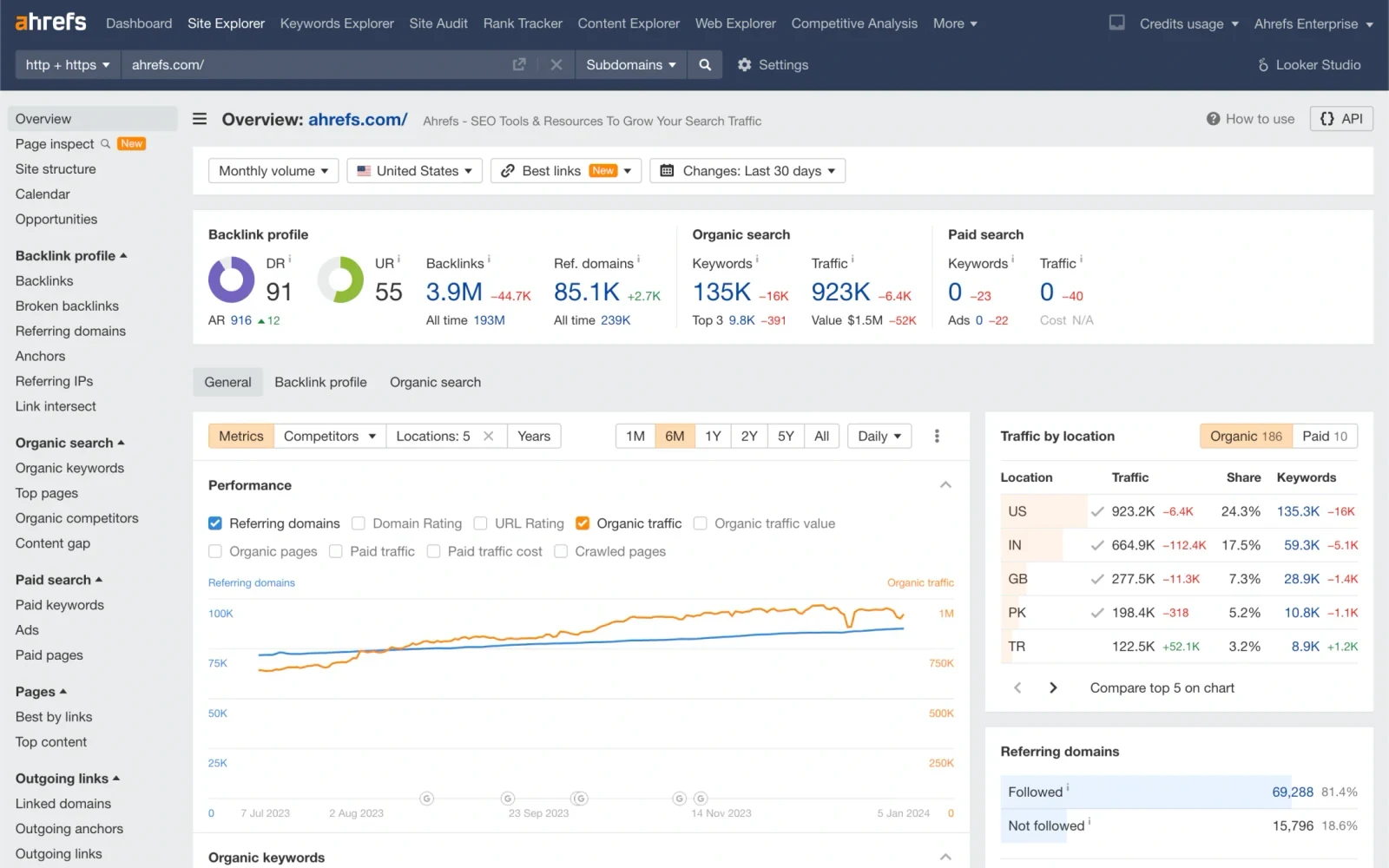
Ahrefs satisfactorily replaced 6 of the 7 workflows.
This was the first alternative where I didn’t feel like I’d moved to a cheaper version of Semrush. It felt more like moving into a different premium SEO workflow.
What Ahrefs Replaced Well
Keyword research returned 29 qualified opportunities, just one fewer than Semrush, and Ahrefs offered particularly useful SERP history and parent-topic context.
Competitor research produced 151 deduplicated opportunities, while moving from a domain into top pages and organic keywords felt quicker than in Semrush.
Backlinks were even stronger in our sample. Of the first 50 candidates, 44 were live, 35 were relevant and 24 were usable prospects compared with Semrush’s 23.
Site Audit found 22 of the 25 validated issues, and rankings finished within a 0.9-position median difference of the manual check.
The six-question workflow took 24 minutes, two minutes faster than Semrush.
Semrush Replacement Rate: 6/7 · 86%
Where Ahrefs Fell Short
AI/GEO visibility was the only workflow that didn’t fully survive under the tested Lite setup.
Brand Radar itself was useful, but Lite allowed only five tracked prompts. Our test required 20, so completing the same task would have needed a larger prompt allowance, additional package or manual checking.
That matters because a product can look cheaper at checkout but become much closer to Semrush once you recreate the specific workflow you actually need.
Would I Switch?
I’d choose Ahrefs if most of my Semrush usage revolved around SEO research, competitor analysis and backlinks.
If broader AI monitoring and integrated suite coverage were major reasons I used Semrush, I’d calculate the real plan cost before switching.
If Ahrefs itself is the platform you’re thinking about replacing, we also ran the comparison in reverse in our best Ahrefs alternatives test.
2. SE Ranking: The Closest Complete Semrush Replacement
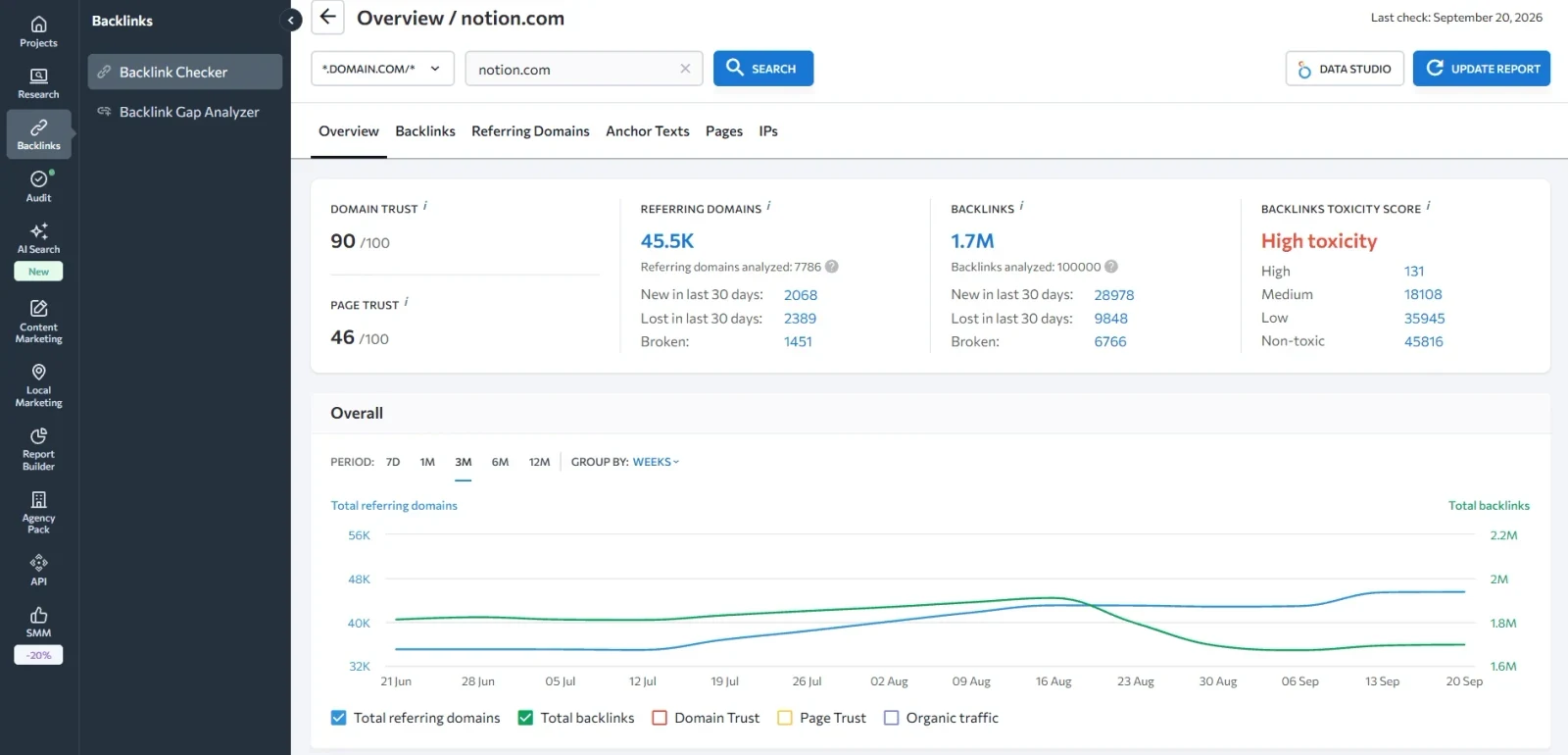
SE Ranking was the only alternative that fully replaced all seven workflows under our test setup.
That doesn’t mean it beat Semrush everywhere.
It means I could finish every job without opening or purchasing another paid platform.
And for this article, that distinction matters more.
What SE Ranking Replaced Well
Keyword research returned 27 qualified opportunities, which was smaller than Semrush’s 30 but enough to build the same content plan.
Competitor research produced 142 deduplicated gaps, while backlink research returned 20 usable prospects from our validation sample.
The audit identified 22 of 25 known issues.
Rank tracking was one of its strongest areas. The 20-keyword sample came within a 1.0-position median difference of our manual check, with daily tracking plus useful location and device controls.
The six-question workflow took 31 minutes, and the reporting and analytics workflow stayed within the same platform.
The full 20-prompt AI/GEO task also fit inside the tested setup.
Semrush Replacement Rate: 7/7 · 100%
Where I Started Missing Semrush
Depth.
Rebuilding the competitor view required two additional report changes, and the backlink test produced three fewer usable prospects than Semrush.
The whole workflow also took five minutes longer.
But importantly, I never hit the point where I had to buy another tool.
That’s why SE Ranking won this comparison even though it didn’t produce the largest dataset.
Would I Switch?
I’d switch to SE Ranking if the parts of Semrush I actually use are:
keyword research, competitors, backlinks, audits, daily rankings, reporting and AI visibility.
I’d keep Semrush if its broader marketing ecosystem or deeper cross-tool data were genuinely part of the job rather than just menu items I rarely touch.
For a wider look at platforms designed to cover several SEO jobs in one subscription, see our best all-in-one SEO toolscomparison.
3. Digimetrics: The Guided SEO + GEO Alternative
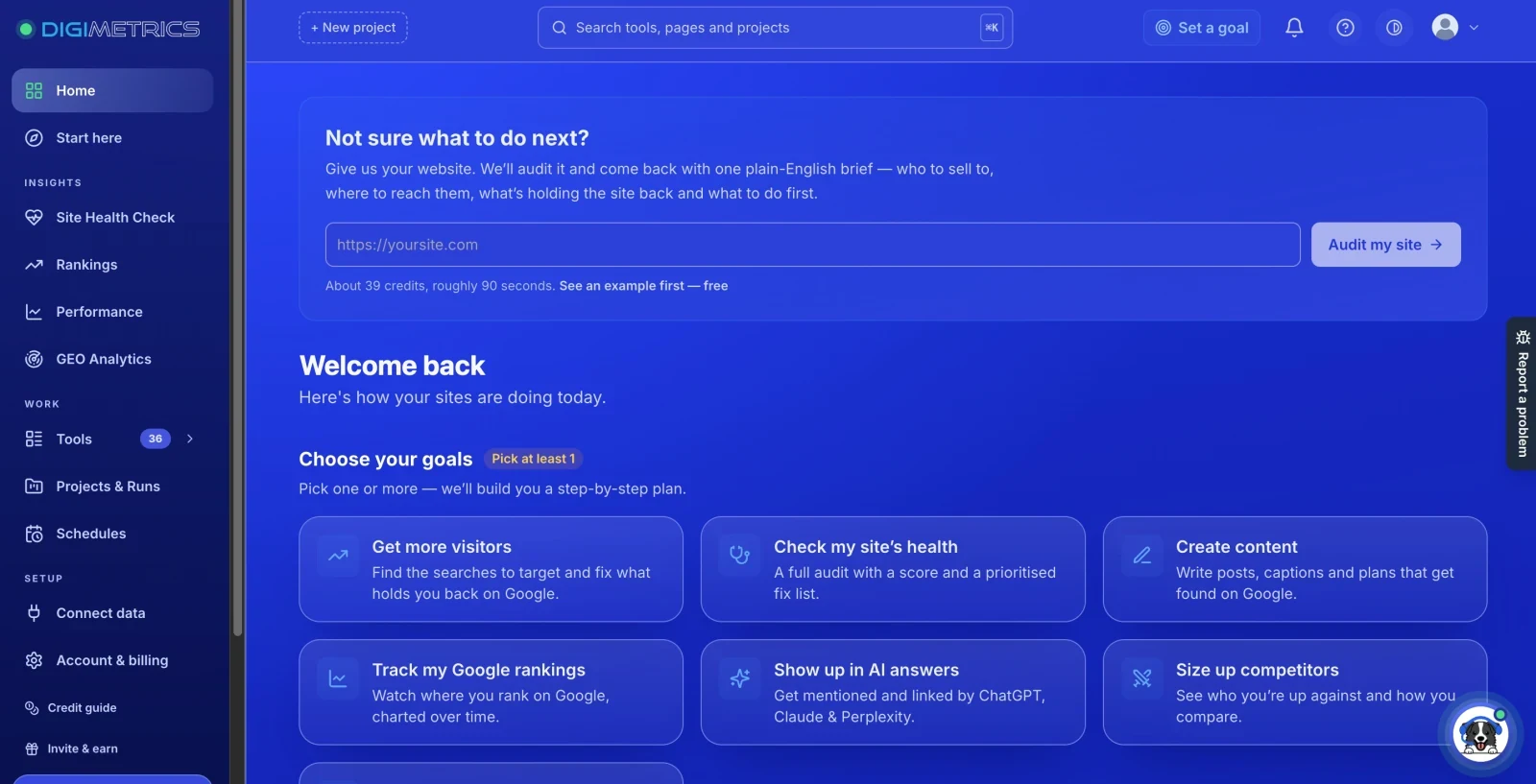
Digimetrics takes a noticeably different approach.
Semrush tends to give me more places to investigate a problem. Digimetrics puts more effort into telling me which problem deserves attention next.
That sounds like a small distinction until you actually spend a day bouncing between dashboards.
Disclosure: Digimetrics is developed by the MediaOne team, which also operates DigitalMarketingTools.ai. We included it because its SEO and GEO workflow is directly relevant to this comparison. It received no preferential weighting; workflows that didn’t fully replace Semrush were scored Partial.
What Digimetrics Replaced Well
Digimetrics fully replaced 4 of 7 workflows.
Keyword research produced 24 qualified opportunities, enough to create a useful prioritised content shortlist.
The site audit found 21 of the 25 validated issues, and the recommended sequence made the output easier to turn into an actual fix list.
Rank tracking came within a median 1.2 positions of our manual sample.
AI/GEO was also a Full replacement. The same brand, competitor and prompt task could be completed inside the platform, with the clearest connection in the test between an AI-visibility finding and an actual recommended action.
Semrush Replacement Rate: 4/7 · 57%
Where It Felt Different From Semrush
The six-question workflow took 29 minutes, only three minutes longer than Semrush.
That was interesting because Digimetrics clearly had less research depth.
Semrush surfaced 158 competitor opportunities. Digimetrics returned 96.
The reason the overall workflow remained fairly quick was that I spent less time figuring out which report I should open next.
That’s the trade-off in a sentence:
Semrush gave me more places to investigate. Digimetrics gave me more guidance about what to do.
Where Digimetrics Fell Short
Competitor research, backlinks and reporting were the main compromises.
Backlink prospecting returned 10 usable candidates versus 23 in Semrush.
The competitor workflow had less historical and page-level depth, while client reporting needed more manual assembly.
Those are meaningful gaps, particularly for agencies or specialists, so I wouldn’t call Digimetrics a complete Semrush replacement yet.
Would I Switch?
I’d consider Digimetrics if I wanted SEO + GEO in the same workflow with stronger prioritisation and next-step guidance.
I’d keep Semrush if backlink exploration, historical competitive research and flexible client reporting were central to my day.
For a closer look at the platform itself, see our Digimetrics overview.
4. Ubersuggest: The Best Lower-Cost Semrush Alternative
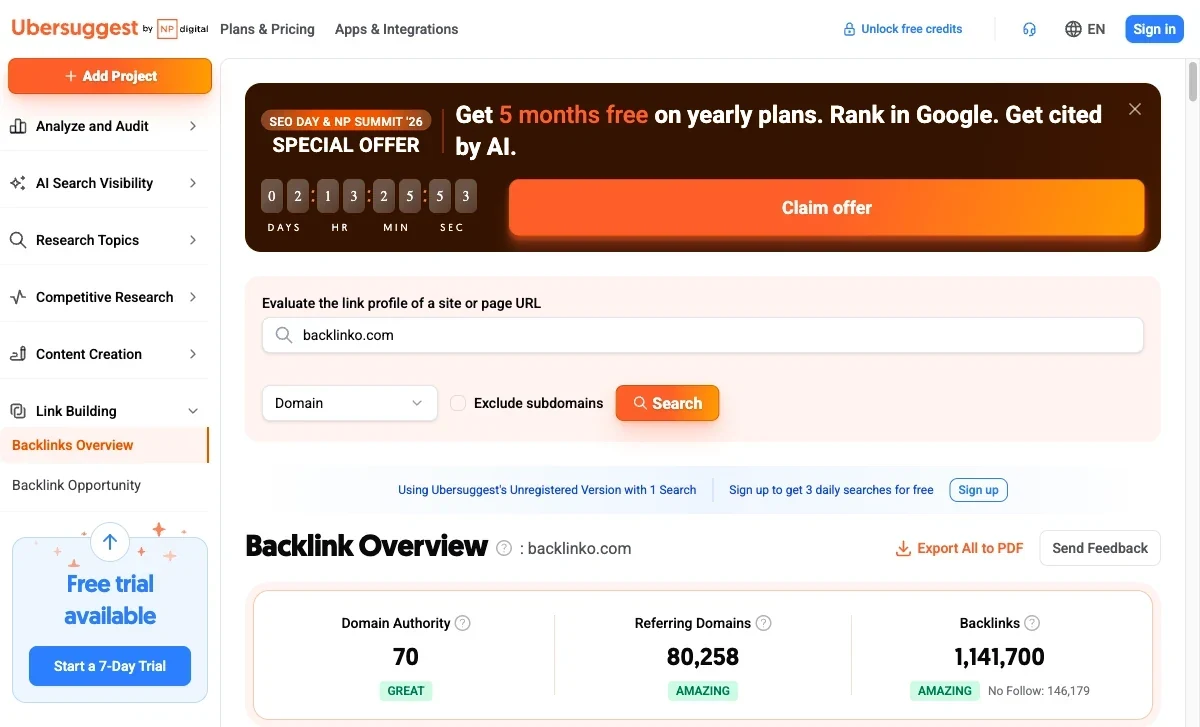
Ubersuggest replaced 5 of 7 workflows under the Individual plan.
This was probably the most interesting result for anyone whose main complaint about Semrush is price.
The normal day-to-day SEO jobs were more capable than the price difference might suggest.
What Ubersuggest Replaced Well
Keyword research produced 22 qualified opportunities.
Competitor research returned 118 deduplicated gaps, enough to complete the task even though the historical and filtering depth was lighter.
The audit detected 20 of 25 known issues, with clear fix instructions that felt particularly suitable for smaller sites.
Rank tracking differed from the manual check by a median 1.6 positions.
And the six-question reporting workflow could be completed in 34 minutes using its exports.
Semrush Replacement Rate: 5/7 · 71%
Where the Lower Price Became Noticeable
Backlinks and AI visibility.
Backlink research produced only 12 usable prospects from 50 candidates, compared with Semrush’s 23.
The Individual plan also covered only half of our 20-prompt AI protocol.
Those limitations are manageable for one smaller website.
Across multiple clients, the extra verification and workarounds start becoming a much bigger part of the actual cost.
Would I Switch?
I’d choose Ubersuggest if I mainly used Semrush for:
keywords, basic competitor work, auditing, rank tracking and straightforward reporting.
I wouldn’t choose it because I wanted every part of Semrush for less money.
Its value comes from recognising that a lot of smaller teams never needed every part of Semrush in the first place.
5. Mangools: What If Semrush Is More Tool Than You Need?
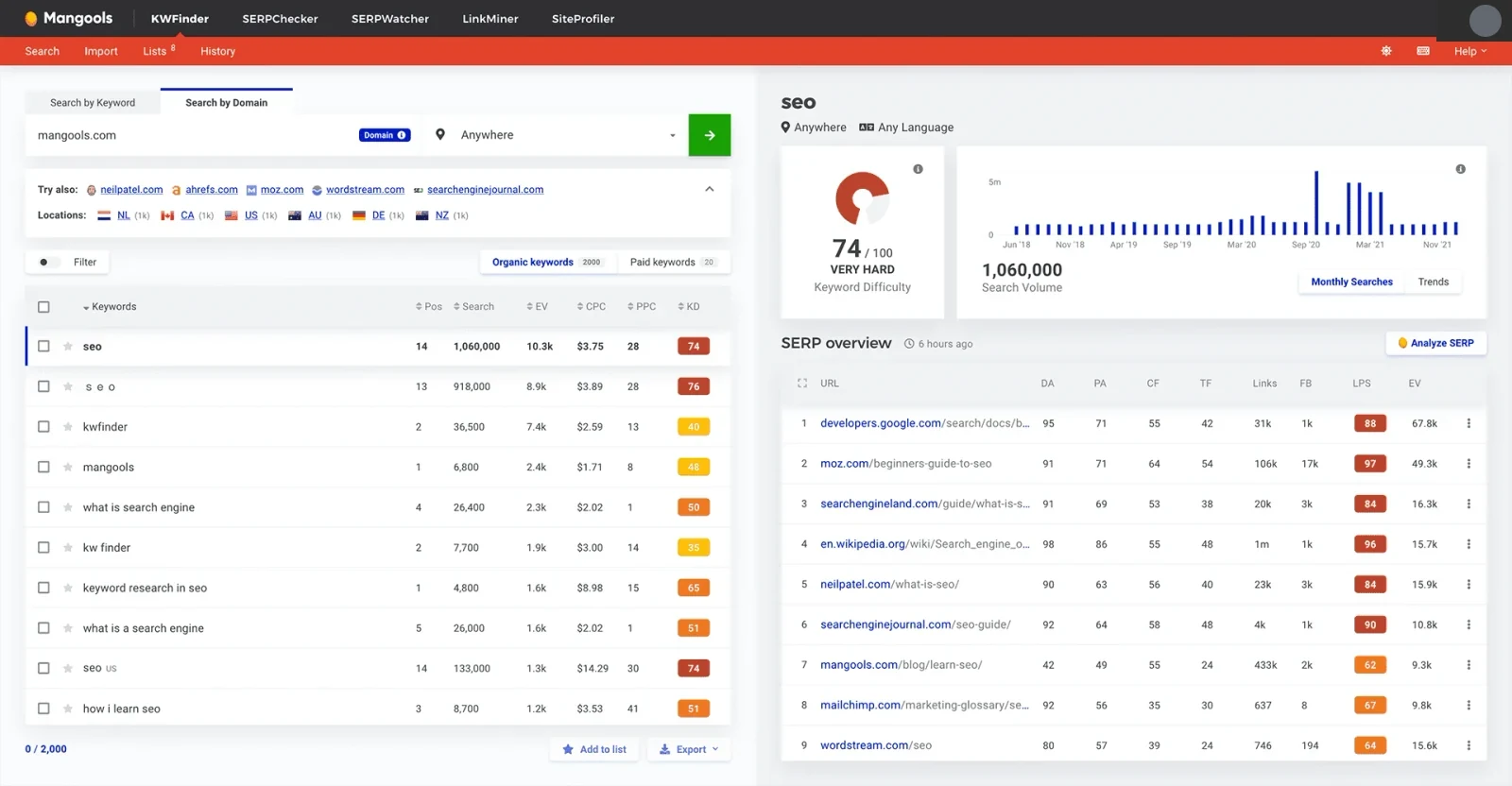
Mangools replaced 4 of 7 workflows.
Its tools are separated much more clearly than Semrush:
KWFinder for keywords, SERPChecker for results, LinkMiner for backlinks, SERPWatcher for rankings and AI Search Watcher for generative visibility.
That split adds handoffs, but it can also make individual jobs easier to understand.
What Mangools Replaced Well
Keyword research produced 24 qualified opportunities, with one of the easiest learning curves in the test.
LinkMiner completed the defined backlink-prospecting job with 15 usable prospects, while SERPWatcher came within a median 1.4 positions of our manual check.
The full 20-prompt AI/GEO task could also be completed.
Semrush Replacement Rate: 4/7 · 57%
What I Liked
For straightforward keyword and SERP work, having less on screen was genuinely helpful.
I knew which tool I needed and what it was supposed to do.
That’s not always true in giant SEO suites.
Where It Stops Being a Semrush Alternative
Technical auditing is the hard stop.
SiteProfiler isn’t a technical crawler, so another audit tool was still required.
Competitor research and reporting also needed more manual assembly, and the six-question workflow took 41 minutes.
Mangools is a good smaller SEO stack.
It isn’t one connected replacement for everything Semrush does.
6. Screaming Frog: The Specialist Alternative for Technical SEO
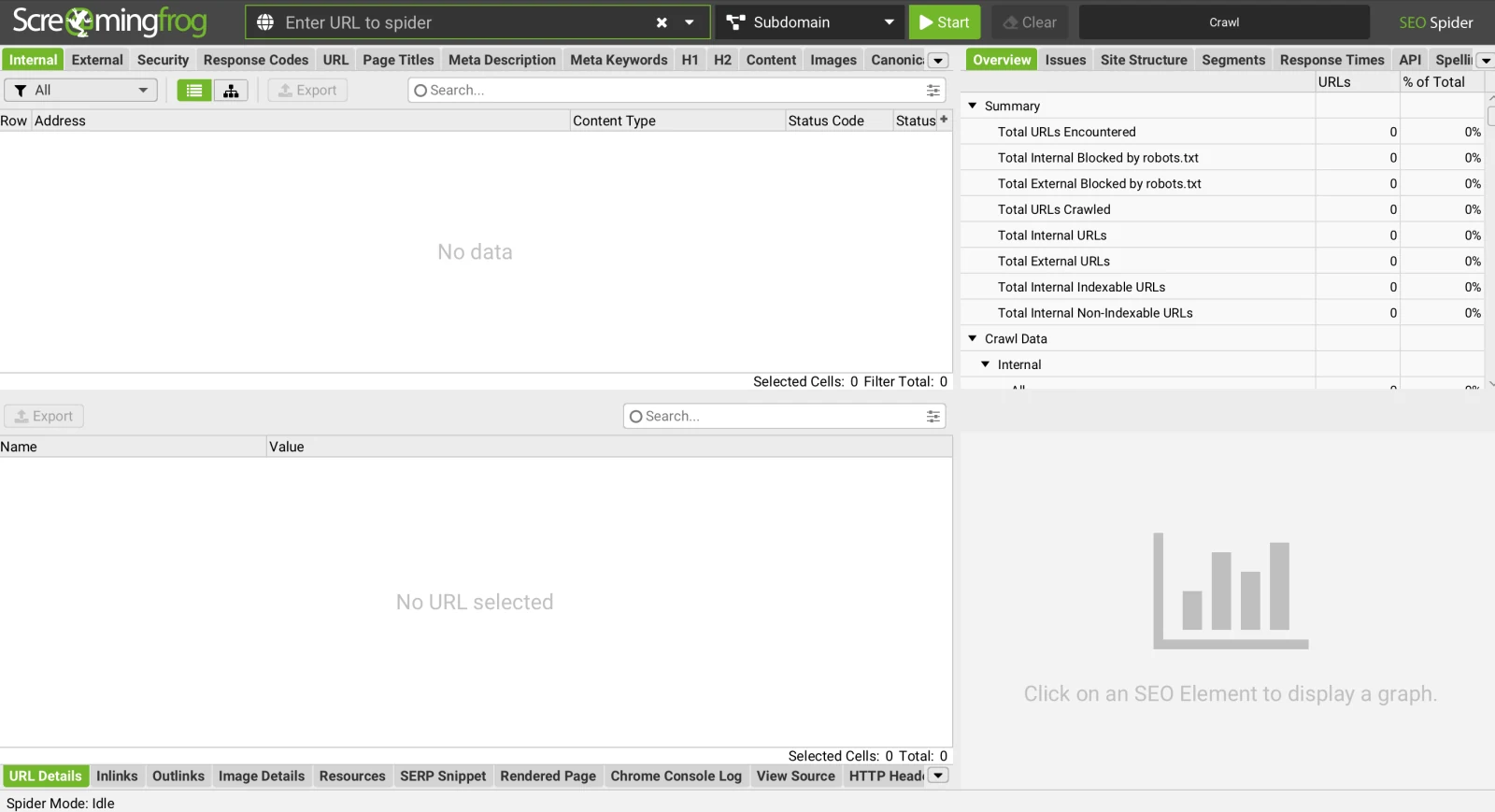
Screaming Frog SEO Spider replaced just 1 of 7 Semrush workflows.
And it won that workflow comfortably.
The crawler detected all 25 of our 25 validated technical issues, generated one low-impact false positive and completed the crawl plus active review in 18 minutes.
Its crawl configuration, JavaScript rendering options, custom extraction and exports also offered more technical control than the Semrush audit workflow we used as the benchmark.
Semrush Replacement Rate: 1/7 · 14%
That score makes Screaming Frog look terrible if you misunderstand the comparison.
It isn’t supposed to replace Semrush’s keywords, links, rankings and reporting.
If Site Audit is the main reason you pay for Semrush, though, you may not need another huge suite at all.
You may simply need a better crawler.
That’s why specialist alternatives deserve to stay in this conversation even when their overall replacement percentage is low.
Are You Replacing Semrush, or Just the Part You Actually Use?
This is probably the most important question in the article.
If You Mainly Use Keyword Research and Rank Tracking
You have plenty of room to downsize.
Every broad paid alternative produced a usable keyword shortlist, and the dedicated rank trackers in our sample remained within two positions of the manual check.
You probably don’t need the entire Semrush ecosystem purely for these two jobs.
If You Mainly Use Competitor and Backlink Research
The shortlist gets smaller.
Ahrefs came closest to Semrush and actually produced one more usable backlink prospect in our sample.
SE Ranking still completed the job, but with fewer opportunities and a slightly slower workflow.
Lower-cost platforms required progressively more verification.
If Site Audit Is the Main Reason You Use Semrush
Screaming Frog changes the discussion entirely.
It found 25/25 issues versus Semrush’s 23/25.
If you don’t need everything else in the suite, replacing Semrush with another all-in-one platform just to keep a crawler may be solving the wrong problem.
If You Want SEO + GEO Guidance
Digimetrics becomes more interesting.
It wasn’t the deepest competitor or backlink platform, but it combined SEO and AI visibility with particularly clear prioritisation.
SE Ranking was stronger as a complete replacement, while Digimetrics was more compelling if the problem was:
“I have all this data. What should I work on first?”
If You Actually Use Most of Semrush
This is where the subscription becomes difficult to beat.
Replacing the individual features is easy.
Replacing the workflow without adding cost, tools and context switching is not.
One Suite vs a Cheaper Specialist Stack
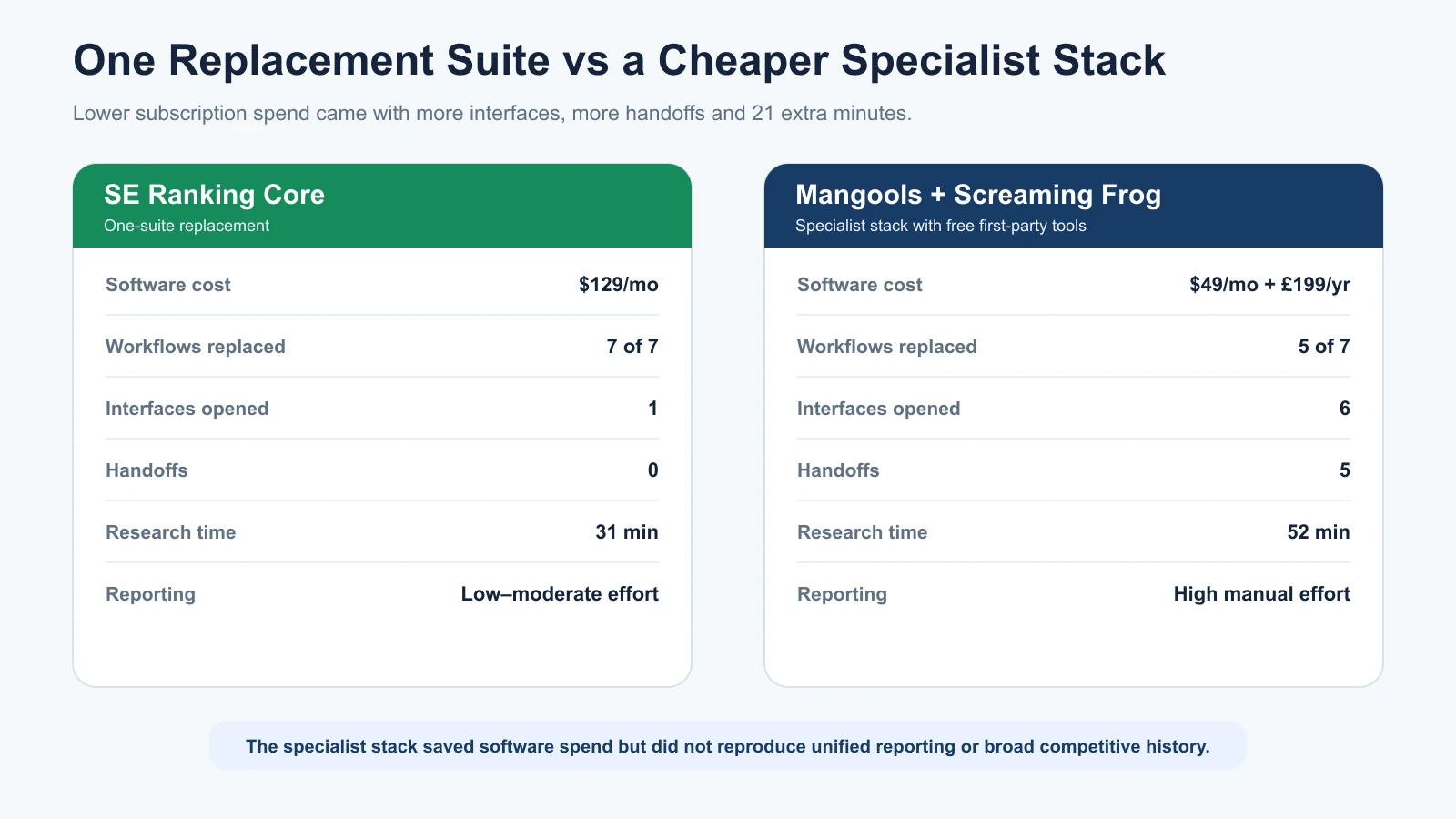
We also tested whether abandoning the all-in-one model entirely would make more sense.
For the one-suite option, we used SE Ranking Core.
For the specialist stack, we used Mangools Basic + Screaming Frog, with Google Search Console and Bing Webmaster Tools providing first-party data.
| Factor | SE Ranking | Specialist stack |
| Software cost | $129/mo | $49/mo + £199/year |
| Workflows fully replaced | 7/7 | 5/7 |
| Product interfaces opened | 1 | 6 |
| Handoffs | 0 | 5 |
| Research time | 31 min | 52 min |
| Reporting effort | Low–moderate | High |
The specialist stack definitely reduced software spend.
It also took 21 additional minutes, needed five handoffs and still didn’t fully reproduce broad competitive history or unified reporting.
For a solo operator, that can be a completely reasonable trade.
Repeat it across 20 clients and it starts looking very different.
This is why I wouldn’t compare SEO subscriptions purely by monthly price.
Is There a Free Semrush Alternative?
Not as one platform.
We tested a free stack built around:
Google Search Console, GA4, Google Keyword Planner, Screaming Frog Free, Bing Webmaster Tools and limited free vendor reports.
It fully replaced 2 of 7 workflows.
Keyword research produced 20 qualified opportunities, and the technical audit found 23 of our 25 known issueswithin Screaming Frog Free’s 500-URL limit.
The rest was much more manual.
Competitor research produced 47 consistently usable opportunities. Backlink research resulted in eight usable prospects. Rank monitoring relied on Search Console rather than a neutral scheduled tracker.
AI visibility could only be spot-checked manually rather than monitored consistently.
The biggest number was the time:
67 minutes, with six handoffs.
Semrush Replacement Rate: 2/7 · 29%
So yes, you can do a surprising amount of SEO for free.
But “free” stops meaning much once recurring competitor research and reporting consume more staff time than the subscription would have cost.
If keywords are the main job you’re trying to cover without paying for a full suite, our comparison of the best free SEO keyword tools goes deeper into that workflow.
What Do You Actually Lose When You Leave Semrush?
| What changes | What our test showed |
| Keyword research | Every broad paid alternative still produced a useful shortlist |
| Competitor research | Ahrefs came closest; lighter platforms needed progressively more manual validation |
| Backlinks | Ahrefs slightly exceeded Semrush’s usable yield; SE Ranking remained sufficient |
| Technical SEO | Screaming Frog actually improved the audit workflow |
| Rank tracking | SE Ranking provided the strongest value-adjusted match |
| AI/GEO visibility | SE Ranking, Digimetrics and Mangools completed the 20-prompt task under the tested setup |
| Reporting | SE Ranking and Ahrefs produced the easiest client-readable outputs after Semrush |
| Number of tools | A one-suite replacement stayed at one interface; the specialist stack needed six |
| Active research time | Ranged from 24 minutes in Ahrefs to 67 minutes using the free stack |
| Switching cost | Mostly appeared as verification, exports, plan workarounds and context switching |
The biggest thing you lose isn’t necessarily keywords, backlinks or audit findings.
It’s convenience between the jobs.
That’s what surprised me most about the comparison.
Several alternatives could reproduce individual Semrush outputs perfectly well. The difference only became obvious when I tried to move from one job into the next without losing context.
Which Semrush Alternative Should You Choose?
| If your main problem is… | Choose… | Why |
| You want the closest complete replacement | SE Ranking | Completed all 7 workflows without another paid platform |
| Semrush is too expensive | Ubersuggest | Covered 5 common workflows at a much lower price |
| You mainly care about SEO research | Ahrefs | Fastest competitor/backlink workflow and strongest usable backlink sample |
| You need rank tracking and audits | SE Ranking | Daily tracking plus 22/25 audit findings in one platform |
| You want SEO + GEO guidance | Digimetrics | Best at turning SEO/AI findings into prioritised actions |
| Technical SEO is your main job | Screaming Frog | Found all 25 validated technical issues |
| You mainly need keywords, rankings and AI monitoring | Mangools | Simpler workflow at a lower price |
| Your budget is $0 | Google + Bing + Screaming Frog Free | Useful first-party data and small-site auditing |
You can also start with our broader SEO tools guide if you’re choosing around a particular job rather than specifically replacing Semrush.
Final Verdict: What Is the Best Semrush Alternative?
SE Ranking was the closest complete Semrush alternative in our test.
It replaced 7 of 7 workflows without another paid platform.
It didn’t beat Semrush on every dataset. Its backlink sample produced three fewer usable prospects, competitor research returned fewer opportunities and the recurring workflow took five minutes longer.
But it preserved the complete process at a lower entry price.
Ahrefs is the better choice if most of your work is heavily focused on SEO research. It replaced 6 of 7 workflows, produced the strongest backlink result among the full SEO platforms and actually completed the recurring research questions two minutes faster than Semrush.
Ubersuggest is the more practical lower-cost option for smaller teams. It replaced 5 of 7 workflows at $29 per month under the tested setup, provided you can live with its backlink and AI-monitoring limits.
Digimetrics and Mangools both replaced 4 of 7, but for very different users. Digimetrics made more sense for marketers who wanted SEO, GEO and clearer next actions in the same place. Mangools suited someone who wanted a simpler keyword, backlink, ranking and AI-monitoring workflow.
Screaming Frog isn’t really a Semrush alternative at all.
It’s something potentially more useful: a reminder that you might not need to replace the suite.
You might just need to replace the one part you actually use.
So before cancelling Semrush, I’d ask:
Am I replacing Semrush—or am I replacing the small part of Semrush I actually use?
If it’s the second one, a lighter tool may save both money and interface complexity.
If it’s the first, SE Ranking was the only alternative in this test that completed every job without turning the replacement into another stack.
Frequently Asked Questions
What Is the Best Semrush Alternative?
SE Ranking was the closest overall Semrush alternative in our test. It completed all seven workflows without requiring another paid platform. Semrush still produced a larger competitor set and slightly stronger backlink sample, while SE Ranking took five additional minutes for the recurring workflow.
What Is the Best Cheaper Alternative to Semrush?
Ubersuggest was our strongest lower-cost choice for a solo user or smaller site. Under the tested Individual plan, it completed keyword research, competitor research, technical auditing, rank tracking and basic reporting. Backlinks and the limited AI-monitoring allowance were its main compromises.
Is Ahrefs Better Than Semrush?
Neither was universally better. Ahrefs produced 24 usable backlink prospects versus Semrush’s 23 and completed our six research questions in 24 minutes versus 26. Semrush retained the stronger all-in-one setup for our complete 20-prompt AI/GEO workflow and broader suite continuity.
Is SE Ranking a Good Semrush Alternative?
Yes. SE Ranking achieved a 7/7 replacement rate in our test. Its strongest results were rank tracking, auditing, integrated reporting and AI/GEO monitoring. The main trade-off was smaller competitor and backlink samples than Semrush and Ahrefs.
Is Digimetrics a Good Semrush Alternative?
It can be if guidance matters more than maximum research depth. Digimetrics replaced 4 of 7 workflows and performed best in keyword prioritisation, auditing, rank tracking and AI/GEO visibility. Competitor research, backlinks and reporting remained Partial.
Is Ubersuggest a Good Alternative to Semrush?
Yes, for a narrower small-business workflow. Ubersuggest replaced 5 of 7 jobs in our test. Its lower price remained attractive as long as the user could accept shallower backlink research and the AI-monitoring limit of the tested plan.
Is Mangools a Good Semrush Alternative?
Mangools works well if you mainly need keywords, SERP analysis, backlinks, rankings and AI monitoring. It replaced 4 of 7 workflows, but technical auditing and connected reporting still required additional tools or manual work.
Is Screaming Frog Better Than Semrush for Technical SEO?
In our specific technical test, Screaming Frog detected 25 of 25 validated issues, compared with Semrush’s 23. It also provided more crawl configuration and export control. That doesn’t make it a broader Semrush replacement, but it was the stronger specialist crawler in this test.
Is There a Free Semrush Alternative?
There wasn’t one free platform that replaced Semrush completely. Our Google, Bing and Screaming Frog Free stack completed 2 of 7 workflows, required six handoffs and took 67 minutes. It works well for first-party measurement and small-site auditing, but not as a complete competitor, backlink, rank-tracking, reporting and AI-visibility system.
Should I Cancel Semrush for a Cheaper Alternative?
Only if the replacement covers the workflows you actually use. In our test, the cheaper specialist stack reduced software spend but required five handoffs and 21 more minutes than SE Ranking. Repeated across multiple sites or clients, analyst time can quickly erase the subscription saving.
Disclosure: digitalmarketingtools.ai is sponsored by Digimetrics.ai. Sponsored Highlights are clearly labelled advertising. Our reviews, comparisons and guides are written to be useful and fair regardless of who sponsors the site. Read the full disclosure.


